
Trace of the Villa — an atmospheric, clue-driven mansion mystery built around power, access, and reconstruction
Trace of the Villa frames its mystery around one concrete mechanical loop: restore power, reopen sealed spaces, and piece together scattered records to reconstruct what happened. Released on 28 May, 2026 and developed/published by Steadyturtle Co., Ltd., it centers on Jin’s search for a missing sister in a deliberately erased, off‑grid mansion.

What Trace of the Villa is
According to its Steam page, Trace of the Villa is an action/adventure indie that stages a psychological investigation inside a decaying mansion. The official short description opens with a simple premise: “Jin has spent years searching for his missing sister,” and follows him into a remote property whose occupants appear to have been erased. The plain description expands the method: when Jin restores power to the estate, secured systems come back online, hidden compartments and safes yield fragments of encrypted documents and transfer records, and each discovery ties into a broader pattern of arrivals and departures without records.
Who this is for
If you prefer exploration that rewards careful reading of the environment — signage, manifests, locked systems and decrypted fragments — Trace of the Villa aims squarely at you. It will appeal to players who enjoy slow-burn suspense, environmental storytelling, and clue chains that build into a timeline rather than instant-action thrills. The Steam metadata lists it under Action, Adventure, and Indie and marks it Single-player with accessibility options like Color Alternatives and Subtitle Options, which suits players who want a solitary, narrative puzzle experience on PC.
When and where
Trace of the Villa released on 28 May, 2026 and is available on Steam for PC. The game’s Steam page lists Steadyturtle Co., Ltd. as both developer and publisher.
Why the power/unlock/reconstruct loop matters
The game’s central mechanic — restoring power to reveal locked systems and evidence — converts exploration into a layered detective loop. Power is not just atmosphere; it’s a progression gate. Systems that were deliberately offline become sources of new clues once reactivated. Safes and encrypted documents yield fragments rather than full answers, so the player is asked to assemble a case from partial records. That design places emphasis on chained discovery: one unlocked console leads to a key, a key opens a room, and a room contains a ledger that recontextualizes earlier notes.
How you progress — reading the house
Trace of the Villa favours environmental reading and chained puzzles over timed reflexes. The official description highlights elements you’ll repeatedly encounter: secured systems that come back online, hidden compartments, safes with fragments of documents and transfer records, and falsified identities. Progress therefore feels like cataloguing and cross‑referencing — you reassemble a timeline by connecting manifests, suspicious transfers, and patterns of occupancy.
That means the game loop is investigative rather than inventory-heavy: returned power translates to new interfaces and locations to examine, and each piece of evidence nudges the narrative forward rather than delivering blunt plot beats. If you enjoy fitting fragments into a larger picture — or prefer puzzles that require deduction from partially complete data — this is the intended rhythm.

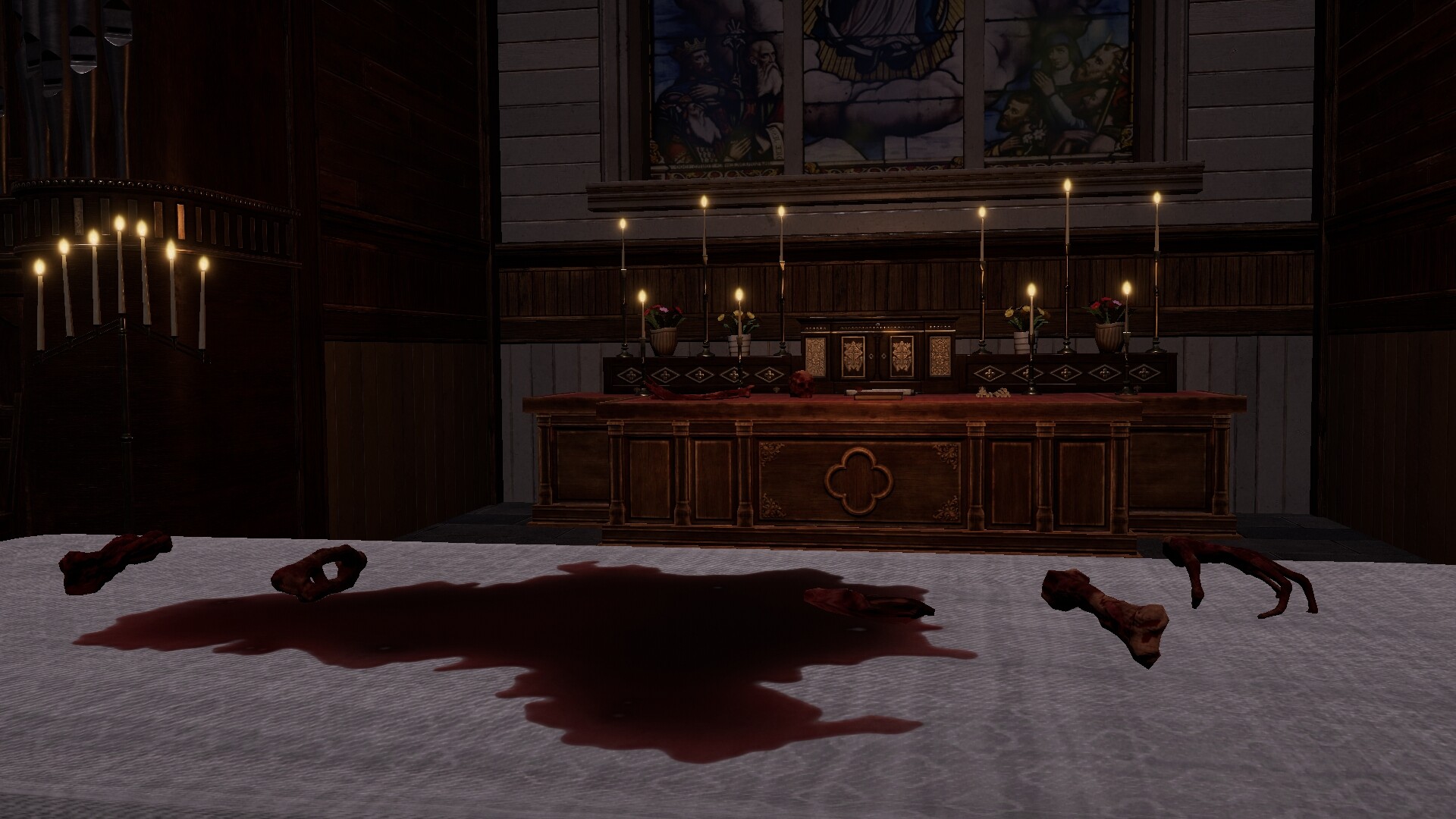
Player scenarios — who will get the most out of Trace of the Villa
- The slow investigator: You enjoy methodical, atmospheric exploration where documents and unlocked devices replace combat as the primary reward.
- The clue chainer: You like puzzles that form multi-step chains — restoring power, activating a console, decrypting fragments, then cross-referencing manifests to open the next sealed space.
- The story-first player: You’re drawn to narrative puzzles and psychological investigation rather than action set-pieces; the mansion’s erased identities and falsified transfers are the narrative engine.
- The accessibility-conscious PC player: The Steam page shows options such as Color Alternatives, Custom Volume Controls, and Subtitle Options, which can help players tailor the experience.
Compact facts
| Title | Trace of the Villa |
|---|---|
| Steam App ID | 3483660 |
| Release date | 28 May, 2026 |
| Developer / Publisher | Steadyturtle Co., Ltd. |
| Genres | Action, Adventure, Indie |
| Key Steam categories | Single-player; Color Alternatives; Custom Volume Controls; Playable without Timed Input; Subtitle Options; Family Sharing |
| Protagonist / Premise | Jin searches for his missing sister in a remote, decaying mansion; restoring power reveals secured systems, hidden compartments and documentary fragments. |
How it compares to nearby mystery/puzzle games
Below is a focused editorial comparison on lawful grounds: genre, atmosphere, puzzle focus, exploration style, story tone and suggested player fit.
| Game | Genre / Atmosphere | Puzzle focus | Exploration style | Story tone / Pacing | Player fit |
|---|---|---|---|---|---|
| Trace of the Villa | Action / Adventure / Indie — mansion mystery, erased identities | Clue chains, systems reactivation, document reconstruction | Single-player, scripted environment with locked spaces that open as you restore power | Slow-burn, investigative, psychological | Players who like environmental storytelling and piecing together fragmented records |
| The Room | Adventure / Indie — intimate, tactile locked-room vibe | Mechanical safes and layered physical puzzles | Single-room, highly focused object interaction | Compact, puzzle-centric, mysterious | Players who enjoy carefully crafted, object-based puzzles in confined spaces |
| The Room Two | Adventure / Indie — atmospheric, expanded scope from the first | Advanced mechanical puzzles, sequence-based unlocking | Series of connected rooms and set pieces | Measured pacing with escalating puzzle complexity | Players who want multi-room locked puzzles with tactile solutions |
| Escape Simulator | Adventure / Casual / Indie — interactive escape-room sandbox | Highly interactive object manipulation, community rooms | Room-to-room puzzles with physics interactions and level editor | Variable pacing depending on room design; often hands-on and playful | Players who like interactive tinkering, co-op options and community content |
Editorially: if your preference is narrative reconstruction across a single estate and you like the idea of power restoration as a progression mechanic, Trace of the Villa leans more toward atmospheric investigation than the tight mechanical rooms of The Room or the physics-first sandbox of Escape Simulator.
Trailer / further discovery
For video trailers and gameplay clips, search YouTube using this discovery path (useful for trailers and playthrough snippets; not a verified single official video):
Leave a Reply