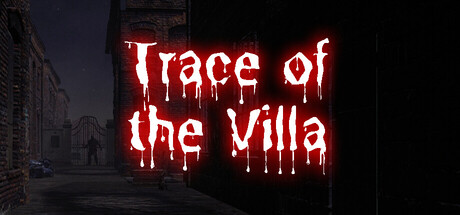
Who should consider Trace of the Villa after enjoying atmospheric mystery adventures
Trace of the Villa is a slow-burning, clue-driven investigation set in a remote, deliberately forgotten mansion — a narrative puzzle experience built around environmental storytelling and discovery. Released on 28 May, 2026 by Steadyturtle Co., Ltd., it asks players to follow Jin’s trail of manifests, restored systems and encrypted fragments to learn whether his missing sister might still be alive.

Quick facts
| Title | Trace of the Villa |
|---|---|
| Release date | 28 May, 2026 |
| Developer / Publisher | Steadyturtle Co., Ltd. |
| Genres | Action · Adventure · Indie |
| Steam categories | Single-player; Color Alternatives; Custom Volume Controls; Playable without Timed Input; Subtitle Options; Family Sharing |
| Steam page | View Trace of the Villa on Steam |
What the game is
Trace of the Villa centers on Jin’s search for his missing sister. The official description frames the mansion as “less abandoned than erased”: rooms left mid-routine, locked doors, personalized belongings with missing identities. Progress comes from restoring power, unlocking secured systems, and solving puzzles that reveal encrypted documents, suspicious transfers and other fragments of a carefully concealed operation. That combination places it in the territory of atmospheric mystery adventure with a strong narrative-puzzle emphasis rather than fast action or arcade-style gameplay.
When and where
The game released on Steam on 28 May, 2026. It’s presented on Steam as an Action / Adventure / Indie title and listed with single-player and accessibility-friendly categories such as subtitle options and controls that do not require timed input.
Why this theme matters
The mansion-mystery premise lets the game lean on environmental storytelling and gradual disclosure. Official copy highlights financial trails, falsified identities and controlled movements — narrative elements that reward players who prefer piecing together motive and context from artifacts, logs and restored systems. If you enjoy story-first games where each solved puzzle yields a new layer of explanation, the setting and stated design focus suggest Trace of the Villa aims to satisfy that appetite.
How you read clues and progress
The Steam description explicitly mentions restoring power, secured systems coming back online, hidden compartments unlocking, safes yielding encrypted documents and suspicious transfer records. From that, readers can expect progression to hinge on investigative actions (power, access, decryption) and on interpreting found documents to advance the timeline. The listed categories — playable without timed input and subtitle options — also indicate a pace meant for careful reading and considered interaction rather than reflex-driven sequences.
Player fit: who should wishlist it
Consider Trace of the Villa if you:
- Prefer atmospheric mystery adventure and narrative puzzle design to fast combat.
- Enjoy slow-burn suspense that unfolds via environmental storytelling and recovered documents.
- Like exploration focused on restoring systems and unlocking narrative layers rather than timed action challenges.
- Value accessibility options that support reading and deliberate play (subtitles, no timed input).
It may be less suited if you expect high-octane survival mechanics or gameplay built primarily around stealth or resource management; the official materials emphasize investigation and uncovering a concealed operation.
How Trace of the Villa compares — lawful editorial discovery
The table below compares Trace of the Villa with a handful of neighbouring mystery and horror-adjacent titles on Steam using tone, pacing, clue focus and exploration style as the editorial criteria.
| Title | Tone | Pacing | Clue / Puzzle Focus | Exploration Style | Player fit |
|---|---|---|---|---|---|
| Trace of the Villa | Investigative, atmospheric mansion mystery | Slow-burn — discovery over time (per official description) | Document fragments, encrypted files, secured systems, safes | System restoration and environmental reading | Players who want narrative-driven, clue-led exploration |
| Amnesia: The Dark Descent | Immersive survival horror (first-person) | Often tense and immediate | Environmental threats and psychological clues | First-person navigation with emphasis on immersion | Players seeking chilling immersion and horror tension |
| SOMA | Sci‑fi horror, existential | Measured but with periods of urgency | Story and setting reveal philosophical and plot clues | Underwater sci‑fi environments; narrative exploration | Those who want story-driven horror with sci‑fi themes |
| Layers of Fear (2016) | Psychological horror with painterly themes (first-person) | Atmospheric and shifting; psychological beats | Story through changing rooms and symbolic puzzles | Shifting mansion spaces; focus on mood and narrative | Players attracted to psychological story and atmosphere |
| The Room | Mysterious, tactile puzzle experience | Puzzle-focused, deliberate | Mechanical, multi-layered puzzles (locked objects) | Confined, intimate puzzle spaces | Fans of tightly-designed, tactile puzzle solving |
| Rusty Lake Hotel | Dark, eerie point-and-click puzzle tone | Compact chapter-based pacing | Logical puzzle chains and macabre reveals | Point-and-click rooms with discrete puzzles | Players who prefer short, puzzle-centric episodes with strange tone |
Specific player scenarios
Scenario A — You loved The Room’s object puzzles but wanted more narrative
If you enjoy mechanical puzzles that unlock story, Trace of the Villa’s emphasis on safes, encrypted documents and secured systems will likely appeal. Expect puzzles to be integrated into a broader investigative arc rather than confined standalone boxes.
Scenario B — You liked Layers of Fear for atmosphere and dread
Trace of the Villa leans into a similarly oppressive mansion atmosphere, but official materials highlight investigatory mechanics (power, systems, financial traces) rather than psychological room-shifts. If you want atmosphere combined with document-driven explanation, this could match your taste.
Scenario C — You prefer narrative horror with philosophical weight (SOMA)
SOMA is framed as sci‑fi horror with existential themes; Trace of the Villa is more grounded in a human-scale missing-person investigation and a concealed operation. Pick Trace if you prefer a mystery rooted in documents and systems rather than speculative questions about consciousness.
Screenshots

YouTube discovery
For trailer and gameplay discovery, use YouTube search rather than relying on unverified embeds: Find Trace of the Villa trailer and gameplay searches on YouTube.
Leave a Reply