Trace of the Villa — rooms as puzzle spaces and story containers
Trace of the Villa frames its investigation inside a decaying mansion where Jin follows manifests, encrypted records and locked doors toward the possibility that his missing sister is still alive. The game blends atmospheric mystery adventure with close, room-by-room puzzle design that asks you to read clues, reason about objects, and let each room tell a piece of the story.

Quick facts
| Title | Trace of the Villa |
|---|---|
| Release date | 28 May, 2026 |
| Developer / Publisher | Steadyturtle Co., Ltd. |
| Steam AppID | 3483660 |
| Genres | Action / Adventure / Indie |
| Steam categories | Single-player; Color Alternatives; Custom Volume Controls; Playable without Timed Input; Subtitle Options; Family Sharing |
| Premise (official short) | “Jin has spent years searching for his missing sister… a remote, decaying mansion where he recovered manifests and hints that indicate his sister may still be alive.” |
Who this is for
If you prefer story-rich adventure games built around environmental storytelling, Trace of the Villa targets players who enjoy slow-burn suspense and mansion mystery. It’s aimed squarely at single-player PC players who like interpreting evidence — reading notes, logs and manifests — and using object logic to solve progressively revealing systems inside rooms rather than action-heavy, reflex-led encounters.
What the game is
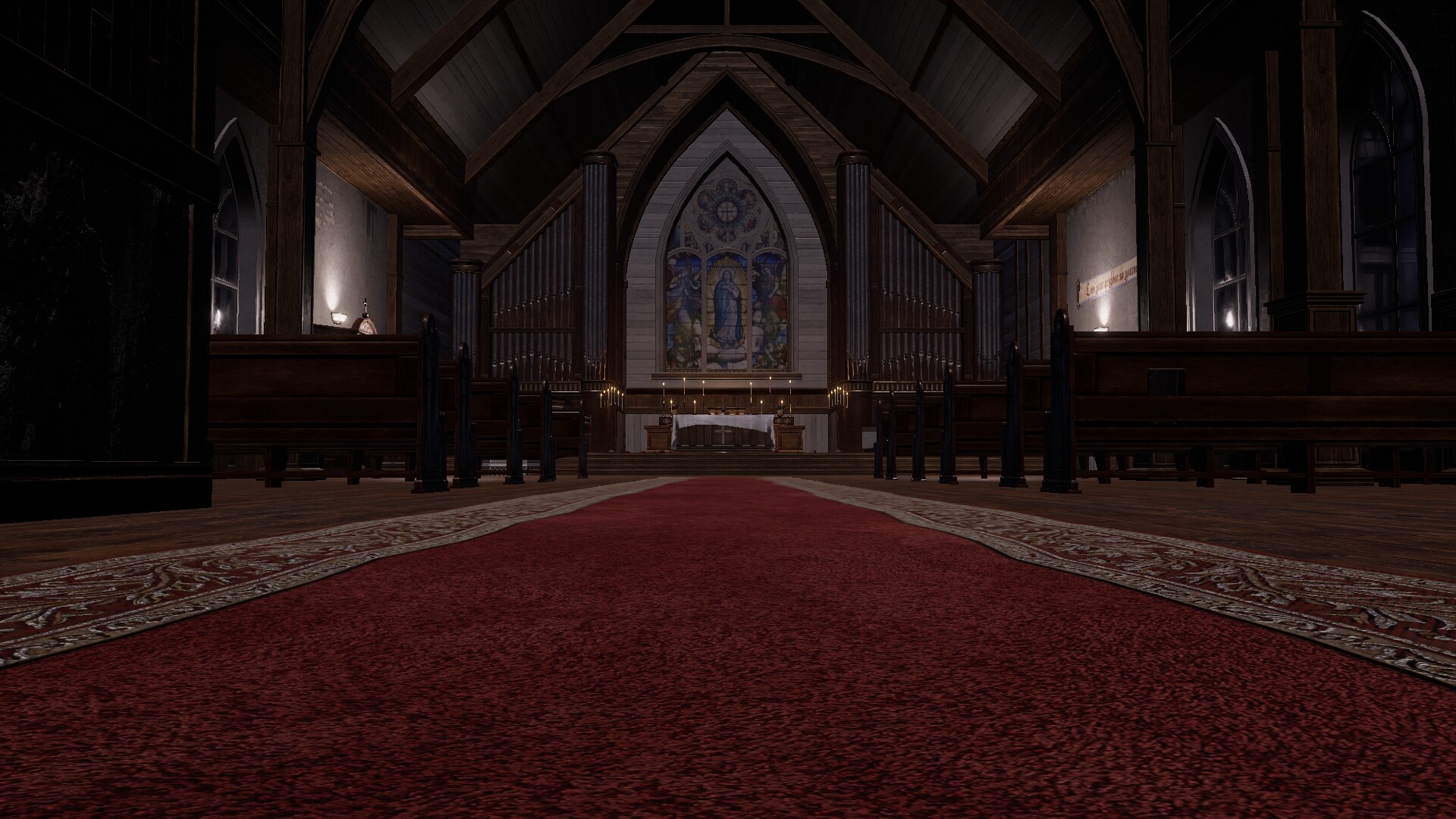
Trace of the Villa is an atmospheric mystery adventure in which protagonist Jin investigates a deliberately forgotten estate. The official description makes the design priorities clear: rooms staged as if occupants vanished mid-routine, locked doors, hidden compartments, safes and fragments of encrypted documents. Restoring power to the mansion is a gameplay hinge that brings secured systems back online and lets the house reveal layer after layer of concealed operations and falsified identities.
When and where
Trace of the Villa released on Steam on 28 May, 2026. It’s a PC (Steam) release listed under Action, Adventure, Indie and is presented as single-player with accessibility options such as subtitle options and controls that avoid timed input.
Why the mansion-as-room structure matters
Rooms function here as both mechanical puzzles and narrative containers. A bedroom, study or utility closet doesn’t only hold a lock puzzle — it houses habits, omissions and financial traces that together build the mystery. That dual role sharpens the player’s task: you must read clues (handwritten notes, manifests, transfer records), infer object logic (how items interrelate, which device powers what) and solve story puzzles that unlock the next room and the next fragment of truth. The result is an investigation that feels procedural and personal at once: every technical reveal doubles as emotional evidence for Jin’s search.
How you progress — clue reading, object logic and story puzzles
- Clue reading: The official description highlights manifests, encrypted documents and suspicious transfer records. Those pieces act as anchors for the narrative, so careful note-taking and pattern recognition matter.
- Object logic: Restoring power and re-enabling secured systems are explicitly mentioned. Expect puzzles that require combining items, activating systems, and using recovered evidence as keys — the kind of logic where an object’s narrative context tells you what it can do.
- Story puzzles: Safes that yield fragments of encrypted documents and hidden compartments that unlock new leads mean the puzzle loop is story-driven; each solved puzzle advances both gameplay and the timeline Jin is reconstructing.

How it compares — brief editorial table
Below are lawful editorial comparisons to nearby room- and puzzle-focused titles, focused on genre, atmosphere, puzzle focus, exploration style and player fit.
| Title | Release | Genre / Tone | Core puzzle focus | Exploration & Pacing | Player fit |
|---|---|---|---|---|---|
| The Room | 28 Jul, 2014 | Adventure / Indie — tactile, enigmatic | Mechanical safes and layered physical puzzles (single-room centric) | Focused, intimate, puzzle-by-puzzle; slow, deliberate | Players who love tactile, handcrafted puzzle boxes and tight, isolated puzzle scenarios |
| The Room Two | 5 Jul, 2016 | Adventure / Indie — expanded, cryptic | Extended multi-scene puzzle sequences with layered mechanics | Gradual expansion across setpieces; deliberate narrative mystery | Those who want a similar tactile puzzle style with broader spatial variety |
| Escape Simulator | 19 Oct, 2021 | Adventure / Simulation — interactive escape rooms | Highly interactive object manipulation across rooms (including physics) | Room-to-room, actorless escape style; often faster and more physics-driven | Players who like interactive, tool-based puzzles and speedier escape-room beats |
| Unpacking | 1 Nov, 2021 | Casual / Indie — zen, domestic | Spatial, object-placement and contextual storytelling through possessions | Quiet, episodic, reflective; less puzzle challenge, more narrative inference | Players who prefer gentle environmental storytelling through objects |
| hack_me | 5 Jan, 2017 | Indie / Simulation — hacker sim | System and command-line style simulation puzzles (hacking mechanics) | Abstract, systems-driven, less environmental; faster logical loops | Those who prefer simulated systems and coding-like puzzle logic over physical rooms |
Player scenarios — would you
Steam page
View Trace of the Villa on Steam
YouTube discovery
For trailer and gameplay discovery, use YouTube search rather than relying on unverified embeds: Find Trace of the Villa trailer and gameplay searches on YouTube.
Leave a Reply