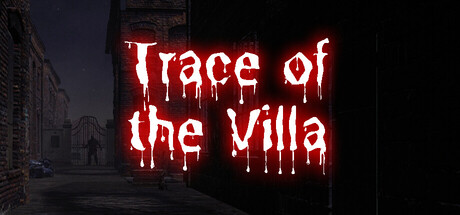
Trace of the Villa — a clue-driven, story-first mansion mystery
Trace of the Villa places you in Jin’s long hunt for his missing sister inside a deliberately forgotten, crumbling estate where the house itself holds the evidence of people erased from history. The game promises slow-burn suspense built around environmental storytelling, puzzles that unlock systems and documents, and a mystery that unfolds as you restore power and piece together manifest fragments.

Quick facts
| Title | Trace of the Villa |
|---|---|
| Steam AppID | 3483660 |
| Release date | 28 May, 2026 |
| Developer | Steadyturtle Co., Ltd. |
| Publisher | Steadyturtle Co., Ltd. |
| Genres | Action, Adventure, Indie |
| Notable categories | Single-player; Color Alternatives; Custom Volume Controls; Playable without Timed Input; Subtitle Options; Family Sharing |
Who is this for?
Players who prize narrative curiosity over combat thrills — especially those who enjoy atmospheric mystery adventure and psychological investigation — will be most interested. If you like slow-burn suspense, exploring ruined domestic spaces for small, meaningful objects, and reading meaning into technical traces (manifests, transfer records, encrypted fragments), Trace of the Villa is aimed at that audience.
What the game is (and what the premise tells you)
Officially, Jin has spent years searching for his missing sister. A lead brings him to a decaying mansion cut off from the grid where he recovers manifests and hints indicating his sister may still be alive somewhere down the trail. Inside, rooms feel “erased” rather than simply abandoned: furnished but stripped of identification, with locked doors, secured systems, safes and fragments of encrypted documents. Restoring power causes the house to reveal more of its concealed systems and records — each discovery peels back another layer of a carefully concealed operation.
When and where you can play
Trace of the Villa released on Steam on 28 May, 2026. It appears as a PC title on Steam with the store page and images available to preview the tone and screenshots.
Why the theme matters — story-first mystery design
This is a story-first mystery in the sense that the narrative premise drives exploration design: the estate is telling you its story through systems coming back online, locked compartments, and financial-paper traces. That design philosophy favors players who read context over being handed answers — you reconstruct timelines from indirect evidence rather than following expository cutscenes. For players who value atmosphere and slowly assembling a backstory from found records, that thematic focus is the main draw.
How you uncover meaning — gameplay and clue reading
The official description emphasizes investigation through restoration: when Jin restores power, secured systems reactivate, safes open to yield encrypted documents, and puzzles unlock further evidence. The progression loop is investigative: power and access → decrypted fragments and records → pattern recognition across manifests and transfers → narrative inference. Expect environmental storytelling and clue-driven exploration rather than reflex-based encounters; categories like “Playable without Timed Input” and subtitle/accessibility options support that pace.


Player scenarios — who will enjoy it and why
- Slow-reader, evidence-first: You enjoy pausing to read encrypted logs, cross-check manifests, and draw your own conclusions. This game’s design rewards that patience.
- Exploration minimalists: If you prefer environments that tell their own story rather than NPCs delivering exposition, Trace of the Villa’s “erased identities” motif will appeal.
- Puzzle-preferring story players: You want puzzles that open narrative doors rather than puzzles as isolated obstacles. The official description suggests each solved puzzle reveals new documentary evidence.
- Accessibility-minded players: With subtitle options, color alternatives and custom volume controls listed, the title supports varied play styles and reading-focused discovery.
How it compares — editorial comparison table
| Title | Genre / Tone | Puzzle vs. Exploration | Story delivery | Pacing / Player fit |
|---|---|---|---|---|
| Trace of the Villa | Action / Adventure / Indie — atmospheric mansion mystery | Puzzle-driven access to records; environmental clues | Found documents, system restores, implied backstory | Slow-burn, investigative; for players who construct meaning from traces |
| Inscryption | Adventure / Indie / Strategy — dark, card-based | Deckbuilding plus meta-puzzles | Layered secrets revealed through play and meta-narrative | Players who like emergent mystery and mechanic-driven reveals |
| Outer Wilds | Action / Adventure — cosmic mystery, exploratory | Exploration-focused; environmental puzzles across locations | World clues and timelines reveal cause-and-effect | Players who prefer open discovery and systemic puzzles |
| The Forgotten City | Adventure / Indie / RPG — narrative-driven mystery | Dialogue and time-loop puzzles with ethical implications | Player choices and repeated exploration reveal history | Story-first players who like moral puzzles and branching outcomes |
| The Medium | Adventure — psychological horror | Exploration with dual-reality puzzle mechanics | Atmospheric clues and interactions with the spirit realm | Players who want eerie tone and psychological themes |
Trailer and additional discovery
If you want to see trailers or gameplay, search YouTube for Trace of the Villa trailers and gameplay — this search link points to public results and may help you find official or community videos: YouTube: Trace of the Villa trailer & gameplay. (Use this as a discovery path; a specific official video is not asserted here.)
Decide whether to wishlist
Wishlist Trace of the Villa if you prefer narrative puzzle design where reading documents, restoring systems and inferring hidden operations replace non-stop action. If you want quick answers or heavily guided story beats, note that the game emphasizes player-led reconstruction of meaning from environmental traces.
View Trace of the Villa on Steam
Referenced titles and trademarks belong to their respective owners. Comparisons in this article are editorial discovery only and do not imply endorsement or sponsorship.