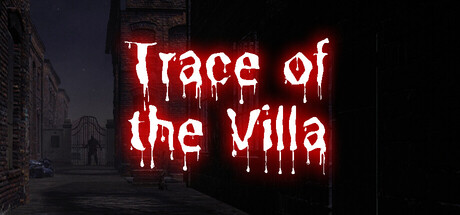
Trace of the Villa — a slow-burn mansion mystery about erased lives and a single man’s trail
Jin has spent years searching for his missing sister, pursuing leads that took him to a remote, decaying mansion where he recovered manifests and hints that indicate his sister may still be alive. Trace of the Villa (Steadyturtle Co., Ltd.) opens on that premise: an atmospheric, clue-driven investigation inside a house that looks less abandoned than deliberately erased.

Quick facts
| Title | Trace of the Villa |
|---|---|
| Release date | 28 May, 2026 |
| Developer / Publisher | Steadyturtle Co., Ltd. |
| Genres | Action, Adventure, Indie |
| Steam categories | Single-player; Color Alternatives; Custom Volume Controls; Playable without Timed Input; Subtitle Options; Family Sharing |
| Steam page | View on Steam |
Who this is for
If you favor atmospheric mystery adventure over non-stop action, Trace of the Villa aims at players who enjoy environmental storytelling, psychological investigation, and slow-burn suspense. The game’s premise centers on piecing together erased identities and financial trails, so expect a narrative-first experience for players who like to read clues, reconstruct timelines, and follow forensic threads rather than constant combat or timed reflex tests — the Steam categories include “Playable without Timed Input” and subtitle options that support that style.
What the game is (no spoilers)
Officially: Jin follows a lead to a remote, decaying mansion where manifests and hints suggest his missing sister might still be alive. Inside the estate, rooms look as if occupants vanished mid-routine, with personal belongings present but names and histories stripped away. Restoring power and systems uncovers encrypted documents, suspicious transfer records, and the sense that the house was part of a larger, carefully concealed operation.

When and where
Trace of the Villa launched on Steam on 28 May, 2026. The Steam listing shows it as a single-player indie built and published by Steadyturtle Co., Ltd. If you prefer PC discovery and wishlisting, use the Steam page link in the facts table to follow updates and system notes.
Why the theme matters
The premise — identities removed, transactions masked, people moving through a controlled environment — frames the game’s emotional core. That context sets expectations: you’ll be rewarded for attention to detail, patience with layered reveals, and the willingness to reconstruct a timeline from fragments. Atmosphere replaces exposition; the horror here, where present, is procedural and institutional rather than jump-scare heavy. For readers who want story context without spoilers, the important takeaway is that the mystery is built on documents, locked systems, and environmental puzzles rather than on spectacle alone.
How you read clues and progress (game systems implied by Steam copy)
- Exploration and restoration: the official description notes that restoring power brings systems back online and unlocks hidden compartments — expect progression tied to environmental fixes.
- Document fragments and encrypted files: the Steam copy references manifests, safes, and fragments of encrypted documents, implying investigation and puzzle-solving linked to narrative advancement.
- Puzzle-to-story pipeline: solving a puzzle or reactivating a system appears to reveal new records and financial trails, each answer pointing to another locked layer of the mansion’s purpose.
Player scenarios — who should wishlist this
- The methodical investigator: you enjoy collecting fragments, cross-referencing manifests, and slowly stitching motive and timeline together.
- The atmospheric explorer: you value mood, set dressing, and a game that tells much of its story through environment rather than heavy dialogue.
- The player who dislikes timed reflex constraints: Steam metadata lists “Playable without Timed Input”, signaling accessibility for readers who want thinking over twitch.
- The completionist documentarian: if you like unlocking systems, opening safes, and decrypting files to see the whole narrative map, the premise suggests that approach.
How Trace of the Villa compares to nearby story-rich mystery games
Below is a concise editorial comparison on lawful criteria (genre, atmosphere, puzzle focus, exploration style, story tone, pacing, and player fit). These comparisons are for editorial discovery and not endorsements.
| Title | Genre / Core feel | Atmosphere | Puzzle vs. Exploration | Story tone | Pacing | Good for players who… |
|---|---|---|---|---|---|---|
| Trace of the Villa | Action / Adventure / Indie | Decaying mansion; erased identities; institutional unease | Clue-driven puzzles, document decryption, system restoration | Investigative, procedural, personal (search for a missing sister) | Slow-burn, layered reveals | Prefer methodical environmental storytelling and forensic investigation |
| Inscryption | Adventure / Indie / Strategy | Dark, occult, card-table dread | Card-based puzzles blended with escape-room mechanics | Psychological, meta-textual, unsettling | Variable — can be tense and claustrophobic | Enjoy surreal, mechanics-driven narrative surprises |
| Outer Wilds | Action / Adventure | Curious, cosmic, melancholic | Exploration-focused, physics and environmental puzzles | Speculative, wonder-tinged mystery (noted as critically acclaimed/GOTY in some outlets) | Open-ended, discovery-led | Like open exploration and piecing together a world-scale mystery |
| Journey | Adventure / Indie | Minimalist, elegiac, serene | Traversal and visual/environmental discovery | Poetic, wordless narrative | Steady, contemplative | Prefer emotional atmosphere over complex puzzles |
| The Forgotten City | Adventure / Indie / RPG | Ancient, moral, investigative | Puzzle and dialogue with time-loop mechanics | Philosophical, consequential | Deliberate, systems-driven | Like moral puzzles and branching narrative consequences |
| The Medium | Adventure | Psychological, eerie, dual-reality tension | Puzzles split between realms with narrative beats | Psychological horror, trauma-forward | Measured; alternates between calm exploration and tense sequences | Enjoy dual-reality storytelling and atmospheric horror |
Specific signing-off scenarios
Wishlist Trace of the Villa if you answered yes to any of these:
- You want a narrative driven by documents, manifests, and encrypted records rather than by cutscenes or heavy exposition.
- You prefer exploration that reveals systems to interact with (power, safes, locked compartments) and ties each solved lock to a story beat.
- You play slower, take notes, and like tracing financial or identity trails as a form of storytelling.
YouTube discovery
If you want trailers or gameplay clips, use YouTube search to find community uploads and potential trailers: Search Trace of the Villa on YouTube. This link is provided as a discovery path; it does not imply a verified official video in this post.
Disclaimer
Referenced titles and trademarks belong to their respective owners. Comparisons in this article are editorial discovery only and based on genre, atmosphere,
Leave a Reply