
Trace of the Villa: where locked-room thinking, clue chains, and environmental reading meet a slow-burn mansion mystery
Trace of the Villa is an atmospheric mystery adventure about Jin, a man who follows a trail of manifests and hints to a remote, decaying mansion in search of his missing sister. With a release date of 28 May, 2026 and developed and published by Steadyturtle Co., Ltd., the game positions itself as a story-rich adventure on Steam that emphasizes environmental storytelling and puzzle-driven investigation.

| Title | Trace of the Villa |
|---|---|
| Steam appid | 3483660 |
| Release date | 28 May, 2026 |
| Developer / Publisher | Steadyturtle Co., Ltd. |
| Genres | Action, Adventure, Indie |
| Categories | Single-player; Color Alternatives; Custom Volume Controls; Playable without Timed Input; Subtitle Options; Family Sharing |
| Official premise | “Jin has spent years searching for his missing sister, pursuing leads that took him to a remote, decaying mansion where he recovered manifests and hints that indicate his sister may still be alive, somewhere at the end of the trail he is about to follow.” |
Who this is for
If you favor PC mystery games that reward careful observation over twitch reflexes, Trace of the Villa will sit well with you. The Steam categories explicitly list single-player, subtitle options, and “playable without timed input,” which signals a pace suitable for players who prefer slow-burn suspense, clue-driven exploration, and methodical puzzle-solving rather than action-only encounters.
What the game is
Trace of the Villa is a mansion mystery and psychological investigation framed around Jin’s search for his missing sister. The official Steam description lays out the structure: a decaying, off-grid estate where signs of past occupancy are “unmistakable… and deeply unsettling.” Restoring power opens secured systems, hidden compartments, and safes containing encrypted fragments and suspicious transfer records — a setup built for environmental storytelling and chained puzzles rather than shortcuts or opaque random chance.
When and where
Trace of the Villa released on 28 May, 2026 and is available on Steam for PC. The store listing and its visual assets are the primary public source of details about tone, mechanics implied by categories, and developer/publisher credits (Steadyturtle Co., Ltd.).
Why the theme matters
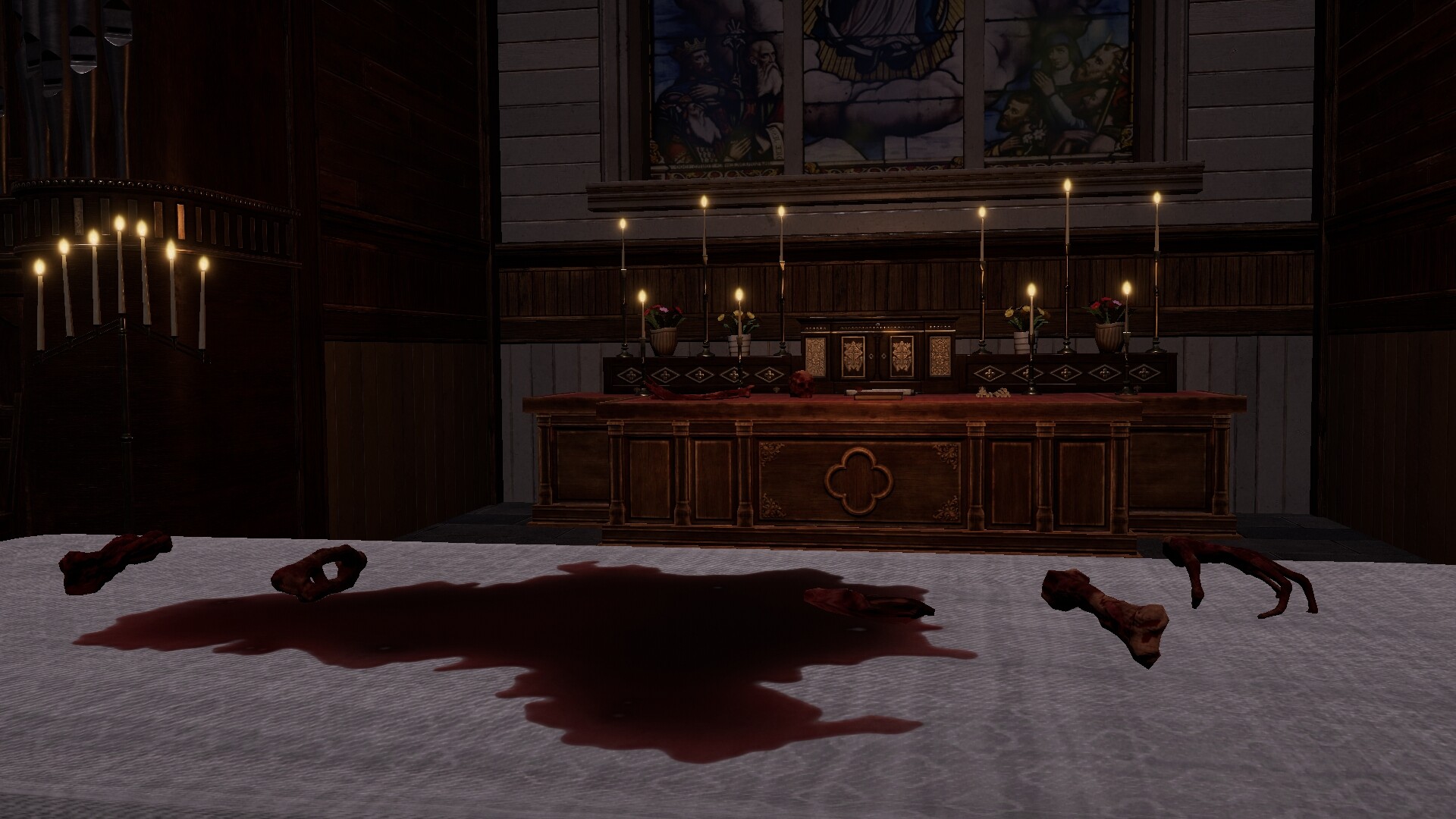
Mansion mysteries work because they turn space into narrative: rooms, objects, and locked doors become chapters in a story that the player reconstructs. Trace of the Villa leans into that idea directly — “rooms remain furnished as if their occupants vanished mid-routine,” and the house “feels less abandoned than erased.” For players drawn to environmental storytelling, this kind of world design makes reading the setting a primary tool for uncovering motive and timeline.
How you read clues and progress
Based on the official descriptions and Steam categories, the game sets up a sequence of investigative beats that rely on object clues and puzzle-chain momentum:
- Observation-first pacing: rooms and props are presented as story elements (missing photographs, personal items, lists) rather than purely decorative objects.
- Systems restoration as unlocking: restoring power or re-enabling estate systems appears to be a core progression mechanic that converts the environment from static to interactive, opening new puzzle avenues.
- Chained puzzles and fragments: safes, encrypted documents, and manifests suggest layered puzzles — solving one lock or decoding a fragment leads to another clue that points to a location or a new system to reactivate.
- Readable momentum: because the Steam page lists “playable without timed input” and subtitle options, the pacing supports deliberate problem-solving and thematic reading rather than time-pressure trial-and-error.
Put simply: Trace of the Villa seems designed for players who enjoy building a timeline from objects, unlocking systems to reveal new nodes in a puzzle chain, and following an investigative thread that gradually exposes a larger operation suggested by falsified identities and suspicious transfers.

Comparison: where Trace of the Villa sits among related mystery and puzzle titles
Below is a concise editorial comparison focused on genre, atmosphere, puzzle emphasis, exploration style, story tone, and player fit. These comparisons are for discovery and to help you pick the right game for your preferences.
| Title | Genre / Focus | Atmosphere & Story Tone | Puzzle / Exploration Style | Player fit |
|---|---|---|---|---|
| Trace of the Villa | Action / Adventure / Indie (mansion mystery) | Slow-burn, unsettling; erased identities and controlled movements (mansion mystery) | Object clues, chained puzzles, systems restoration, environmental storytelling | Players who prefer narrative puzzle design, careful reading of space, and slow investigation |
| The Room | Adventure / Indie | Claustrophobic, tactile mystery | Mechanical safes and tactile object puzzles with single-room focus | Fans of precision puzzle boxes and mechanical problem-solving |
| The Room Two | Adventure / Indie | Expanded, atmospheric; still intimate but broader locales | Linked mechanical puzzles across multiple locations | Players who enjoyed the original but want more scope and sustained mystery |
| Escape Simulator | Adventure / Simulation / Indie | Playful, interactive escape-room variety | Highly interactive rooms, physics, community-made levels, sandbox tools | Those who like cooperative or replayable escape rooms and toy-like interaction |
| Hi-Fi RUSH | Action | Upbeat, music-driven | Rhythm-action combat and set pieces rather than environmental puzzles | Players seeking fast-paced, music-synced action — not a puzzle-first crowd |
Player scenarios — who will enjoy Trace of the Villa and why
Scenario A: The methodical detective
You like taking notes, mapping timelines, and returning to a room with new context. Trace of the Villa’s manifest fragments, safes, and secured systems feed that loop: one discovery unlocks another, and the mansion’s layout becomes a narrative you assemble.
Scenario B: The atmospheric explorer
You value tone and setting over constant action. The official description’s emphasis on “furnished as if their occupants vanished mid-routine” suggests the game uses props and staging as story beats — ideal for players who treat environments as the primary narrator.
Scenario C: The puzzle-chainer
If you enjoy puzzles that act as nodes on a chain — decode, open, read, react — Trace of the Villa appears to
Steam page
View Trace of the Villa on Steam
YouTube discovery
For trailer and gameplay discovery, use YouTube search rather than relying on unverified embeds: Find Trace of the Villa trailer and gameplay searches on YouTube.
Leave a Reply