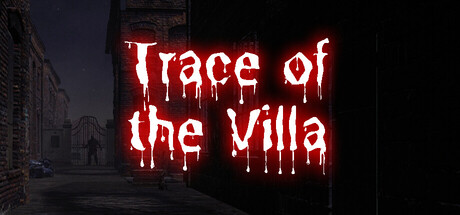
Trace of the Villa: How puzzles-as-evidence steer a mansion mystery
Trace of the Villa frames its investigation around tangible clues — manifests, encrypted documents and locked systems — asking players to read objects as forensic evidence rather than abstract brain-teasers. Released on 28 May, 2026 by Steadyturtle Co., Ltd., the game plants you in a decaying mansion where each story puzzle and piece of recovered data reshapes both what you know and how you act.

Quick facts
| Title | Trace of the Villa |
|---|---|
| Release date | 28 May, 2026 |
| Developer / Publisher | Steadyturtle Co., Ltd. |
| Genres | Action, Adventure, Indie |
| Key Steam categories | Single-player, Color Alternatives, Custom Volume Controls, Playable without Timed Input, Subtitle Options, Family Sharing |
| Steam appid | 3483660 |
What the game is
Trace of the Villa follows Jin, who has spent years searching for his missing sister. A lead takes him to a remote, deliberately forgotten mansion; inside, rooms appear erased of identity and occupied records have been scrubbed. Restoring power and unlocking secured systems reveals fragments of encrypted documents, suspicious transfer records and other artifacts that function as puzzles and narrative evidence.


Who it’s for
If you prefer atmospheric mystery adventure and slow-burn suspense driven by environmental storytelling, Trace of the Villa is aimed at you. Players who like reading clues in the world — manifests, records, locked compartments and systems that have to be restored — will appreciate puzzles that double as evidence. The Steam categories (Single-player; Playable without Timed Input; Subtitle Options) also indicate a paced, contemplative experience rather than twitch action.
When and where
Trace of the Villa launched on Steam on 28 May, 2026. It is listed under Action / Adventure / Indie on the Steam store and comes with accessibility and comfort options such as subtitle support, color alternatives, custom volume controls and no requirement for timed inputs.
Why the theme matters: puzzles as evidence and narrative logic
What distinguishes Trace of the Villa from puzzle collections that reward pattern recognition alone is how object logic feeds the plot. The game positions each solved safe, restored system or decrypted fragment as an evidentiary advance: puzzles are not isolated mechanical hurdles but steps in reconstructing a timeline of arrivals, departures and falsified identities. That narrative logic — clues that explain or contradict earlier assumptions — creates a playing field where reading the room becomes equivalent to reading a case file.
How you read clues and progress
According to the official description, Jin restores power, reactivates secured systems and opens hidden compartments to reveal fragments of encrypted documents and suspicious transfers. Practically, that means progress relies on three interlocking approaches:
- Close object reading: items and manifests function as primary evidence; their details have weight for the next puzzle or narrative beat.
- Interpreting systems: bringing electricity and systems back online changes the environment and unlocks new puzzle types (safes, encrypted files, locked archives).
- Timeline assembly: each recovered record fills gaps in the mansion’s erased history, so assembling documents becomes both a puzzle and the central storytelling mechanic.
Expect puzzles that reward patience, curiosity, and an ability to connect subtle clues across rooms rather than reflexes or minigame dexterity.
Player scenarios — who should wishlist
- You like methodical detective play: You enjoy interpreting notes, manifests and environmental cues to build a theory about events — wishlist.
- You value atmosphere and story tone over fast action: If slow, environmental storytelling with investigative puzzles appeals, wishlist.
- You prefer social or co-op puzzle play: The game is Single-player; if you want multiplayer puzzle rooms, consider other titles instead.
- You need accessibility settings: Steam categories show subtitle options, color alternatives and no timed input, which helps players who prefer adjustable pacing.
How it compares — concise editorial table
| Title | Puzzle emphasis | Atmosphere / Tone | Exploration style | Player fit |
|---|---|---|---|---|
| Trace of the Villa | Clue-driven puzzles as narrative evidence (manifests, encrypted docs, safes) | Decaying mansion, investigative, slow-burn suspense | Methodical, environment-based investigation | Players who read objects as evidence and prefer story-led mystery |
| The Room | Mechanical puzzle boxes and tactile object puzzles | Mysterious, intimate, uncanny | Isolated puzzle environments focused on single-object examination | Fans of tactile, self-contained puzzle boxes |
| The Room Two | Continued focus on layered mechanical puzzles across locales | Cryptic and atmospheric | Linear progression through themed puzzle rooms | Players who like puzzle series with escalating complexity |
| Escape Simulator | Highly interactive escape-room puzzles, physics interactions | Playful to tense, depending on room | Interactive, item-manipulation, can be cooperative | Players wanting brute interactivity and community rooms |
| Unpacking | Domestic, object-placement puzzles that reveal life stories | Zen, bittersweet, quietly narrative | Calm, vignette-based exploration of possessions | Players who favour narrative through objects over encrypted clues |
| hack_me | Hacker-simulator tasks (CMD, brute force, SQL injections) | Technical, simulator-style | Task-driven, system-focused rather than environmental | Players seeking simulator-style hacking gameplay |
Where to learn more (YouTube discovery)
For trailers and gameplay searches, use this YouTube search path (search results may include community videos): Trace of the Villa trailer & gameplay on YouTube.
Decision checklist
Wishlist Trace of the Villa if you want a Steam indie mystery where puzzles function as pieces of a case file and environmental detail matters to story progression. Consider other, more interaction-heavy titles if you want cooperative escape-room play or tactile single-object puzzles with less emphasis on documentation and timeline reconstruction.
View Trace of the Villa on Steam
Referenced titles and trademarks belong to their respective owners. Comparisons above are editorial discovery only, based on publicly available Steam app summaries and provided research notes.
Leave a Reply