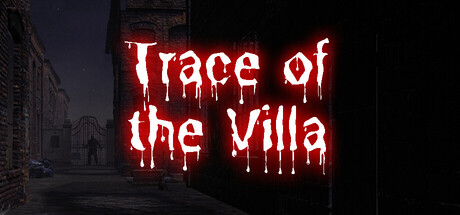
Trace of the Villa — Rooms as Puzzle Spaces and Story Containers
Trace of the Villa is an atmospheric mystery adventure that puts a single investigator into a remote, decaying mansion to follow clues about a missing sister. Developed and published by Steadyturtle Co., Ltd., the game uses furnished, half-erased rooms to deliver puzzle-driven investigation and slow-burn suspense.

Who, What, When, Where, Why, How
Who it’s for
Players who enjoy atmospheric mystery adventure and PC mystery games — people who prefer clue-driven exploration over twitch mechanics and who value environmental storytelling, object logic, and narrative puzzle design. If you like slow-burn suspense and investigating a house that feels like a story waiting to be read room-by-room, Trace of the Villa aims at that audience.
What the game is
Officially: “Jin has spent years searching for his missing sister, pursuing leads that took him to a remote, decaying mansion where he recovered manifests and hints that indicate his sister may still be alive, somewhere at the end of the trail he is about to follow.” The Steam page frames the game as a personal investigation inside a property that was “deliberately forgotten,” where rooms look lived-in but identities appear scrubbed. The listed genres are Action, Adventure, Indie and categories include Single-player, Color Alternatives, Custom Volume Controls, Playable without Timed Input, Subtitle Options, and Family Sharing.
When and where
Trace of the Villa released on 28 May, 2026 and is available on Steam for PC. The developer and publisher listed on Steam are Steadyturtle Co., Ltd.
Why the theme matters
The mansion-as-container is not just aesthetic here; the Steam description stresses rooms that “remain furnished as if their occupants vanished mid-routine” and doors that “conceal hastily secured secrets.” That approach turns domestic spaces into evidence archives—every drawer, appliance, and piece of furniture can be a fragment of narrative. When a game commits to that model, puzzle design becomes proof-reading: reading objects, juxtaposing details across rooms, and using environmental mini-stories to reconstruct what happened.
How you progress — clue reading, object logic, and story puzzles
The Steam text describes restoring power, systems coming back online, safes and encrypted documents, and layers of concealed operations. That suggests a progression built from:
- Clue reading: interpreting manifests, transfer records, and fragments found in the environment;
- Object logic: treating furniture, appliances, and locked compartments as functional puzzle nodes that reveal context rather than abstract symbols;
- Story puzzles: chaining discoveries so that each solved lock or decoded record changes what rooms mean and where you can go next.
Rooms as Puzzle Spaces and Story Containers
In Trace of the Villa the room is the primary unit of gameplay and narrative. Rooms are staged to look like ordinary domestic spaces yet stripped of personal identifiers; this absence forces players to treat objects as evidence rather than ornament. A bedside drawer isn’t only a container for a key — it’s testimony. A half-powered terminal isn’t just a device to unlock, it’s a reveal that re-frames a sequence of rooms. That design tends to make pacing feel episodic: you solve one room’s problem, the room’s meaning shifts, and the mansion yields a new wing of puzzles.


Compact Facts — Trace of the Villa
| Title | Trace of the Villa |
|---|---|
| Developer | Steadyturtle Co., Ltd. |
| Publisher | Steadyturtle Co., Ltd. |
| Release date | 28 May, 2026 |
| Genres | Action; Adventure; Indie |
| Key Steam categories | Single-player; Color Alternatives; Custom Volume Controls; Playable without Timed Input; Subtitle Options; Family Sharing |
| Steam page | View on Steam |
How Trace of the Villa compares — quick editorial guide
Below is a concise editorial comparison to help readers decide if Trace of the Villa fits their tastes relative to nearby puzzle/adventure experiences.
| Title | Core genre | Atmosphere / story tone | Puzzle focus | Exploration style | Player fit |
|---|---|---|---|---|---|
| Trace of the Villa | Action / Adventure / Indie | Mansion mystery, personal investigation, slow-burn suspense | Clue reading, object logic, context-driven safes and encrypted records | Room-by-room, evidence-led | Players who want narrative puzzle design and environmental storytelling |
| The Room | Adventure / Indie | Mysterious, tactile puzzle cabinet atmosphere (attic/locked objects) | Mechanical and tactile safes/boxes | Focused single-room/object puzzles | Players who like physical, tactile puzzle boxes and precise manipulation |
| The Room Two | Adventure / Indie | Cryptic, atmospheric continuation of mechanical puzzle scenarios | Progressive puzzle chambers and devices | Discrete, chapter-like locations | Fans of structured, device-centric puzzles with layered reveals |
| Escape Simulator | Adventure / Casual / Indie / Simulation | Playful, cooperative escape-room style | Highly interactive objects, physics-based manipulation | Room puzzles that emphasize interaction and experimentation | Players who want interactive, social or solo escape-room design and sandbox exploration |
| Unpacking | Casual / Indie / Simulation | Zen, domestic, slice-of-life narrative told through possessions | Spatial, object-placement puzzles that reveal life-lore | Home-by-home, vignette exploration | Players who prefer low-tension, narrative revealed via objects and placement |
Player scenarios — who will enjoy the mansion model
Scenario A — The methodical clue-reader
You like inventory-light investigation: cross-referencing manifests, turning on power to reveal new evidence, and following a financial or identity trail across rooms. Trace of the Villa’s emphasis on manifests, encrypted fragments
YouTube discovery
For trailer and gameplay discovery, use YouTube search rather than relying on unverified embeds: Find Trace of the Villa trailer and gameplay searches on YouTube.
Leave a Reply