
Trace of the Villa — a slow-burn mansion mystery for meticulous investigators
Trace of the Villa puts you in Jin’s shoes: an investigator piecing together manifests, encrypted documents, and the emptied traces of people who vanished. For players who prize environmental storytelling, clue-by-clue reconstruction, and narrative puzzles, this one is built to reward patience and careful reading.

Quick facts
| Title | Trace of the Villa |
|---|---|
| Steam AppID | 3483660 |
| Release date | 28 May, 2026 |
| Developer | Steadyturtle Co., Ltd. |
| Publisher | Steadyturtle Co., Ltd. |
| Genres | Action · Adventure · Indie |
| Key categories | Single-player · Color Alternatives · Custom Volume Controls · Playable without Timed Input · Subtitle Options · Family Sharing |
| Steam store page | Trace of the Villa on Steam |
| Steam user reviews | No user reviews (as of release data) |
Who this is for
Trace of the Villa is aimed at meticulous players, lore readers, and investigation fans who enjoy assembling a narrative from fragments. If you like cataloguing evidence, following financial and identity anomalies, and letting atmosphere build the tension rather than jump scares, this is tailored to that temperament.
What the game is
Official Steam material frames the premise plainly: Jin has spent years searching for his missing sister and follows a lead to a remote, decaying mansion where manifests and hints suggest she may still be alive. The estate is “deliberately forgotten,” with rooms that look frozen in time and systems that, when restored, reveal encrypted documents, suspicious transfers, and falsified identities. Expect environmental storytelling, locked doors, safes, and layered mysteries that expose a concealed operation rather than a single isolated crime.
When and where
Trace of the Villa released on 28 May, 2026 and is available on Steam for PC. The Steam page lists developer and publisher as Steadyturtle Co., Ltd., and shows the game categorized under Action, Adventure, and Indie. The store entry also notes accessibility features such as subtitle options, color alternatives, and custom volume controls.
Why this kind of narrative matters
Stories built from fragments—manifests, transfer records, encrypted notes—reward players who look for patterns and inconsistencies. The premise here explicitly threads identity erasure, financial obfuscation, and controlled movement of people; that creates a detective-style loop where every recovered artifact can reframe previous assumptions. For players who prefer inference and reconstruction over exposition, the mansion acts as a forensic stage.
How you investigate and progress
According to the official description, progression hinges on restoring systems and uncovering sealed compartments. When power returns, secured systems come back online, safes yield fragments, and the mansion’s timeline begins to cohere. That implies gameplay centered on searching rooms thoroughly, solving puzzles tied to locked devices or documents, and reading clues in order to unlock the next area — a pacing that privileges careful observation and note-taking.
Screenshots: atmosphere and detail

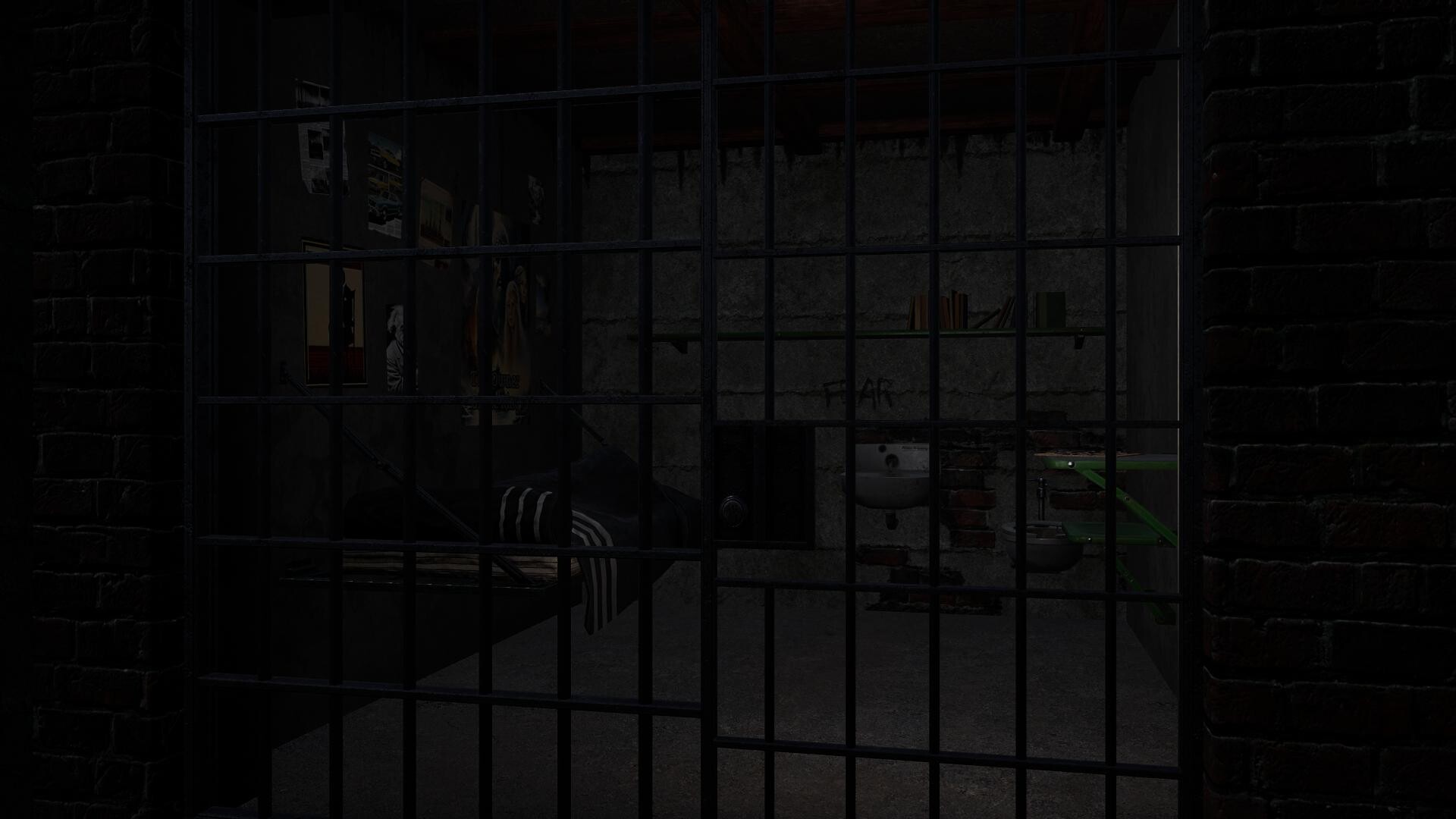
Player scenarios: who will enjoy their time here
- The meticulous archivist: You’ll take notes, cross-check manifests against transfer records, and savor small reveals as they refocus the investigation.
- The detective-by-logic: You prefer reconstruction — building a timeline from physical evidence and deductions rather than cinematic cutscenes.
- The atmospheric reader: You care about the tone and implied backstory in objects; a room’s layout or a missing photograph tells as much as a found ledger.
- The slow-burn player: You enjoy games that resist constant action and instead pace revelations so each solved puzzle recontextualizes previous work.
How Trace of the Villa compares (editorial snapshot)
Below is a concise editorial comparison focused on genre, atmosphere, puzzle focus, exploration style, story tone, and the player profile best served by each title. This is descriptive — not a ranking.
| Game | Core mystery type | Puzzle style | Exploration | Story tone & pacing | Who it’s for |
|---|---|---|---|---|---|
| Trace of the Villa | Mansion-based identity & financial mystery | Clue-driven locks, encrypted documents, environmental puzzles | Room-by-room forensic exploration of a single estate | Slow-burn, investigative, reveals via recovered systems | Meticulous investigators and lore readers |
| Inscryption | Meta card mystery with escalating revelations | Card-based puzzles mixed with escape-room mechanics | Contained areas that transform as systems change | Bleak, psychological, layered twists (inky, game-of-its-own-nature) | Players who like cryptic meta-narratives and emergent mystery |
| Outer Wilds | Cosmic/systemic mystery about a trapped solar system | Environmental puzzles, observational problem solving | Open-system exploration across multiple locations | Curious, contemplative, nonlinear pacing (time-loop structure) | Explorers who enjoy piecing a big-picture cosmic puzzle |
| The Forgotten City | Time-loop legal/moral mystery in an ancient setting | Dialogue-driven and environment puzzles with moral decisions | Exploration of a defined location with a cycle mechanic | Narrative-focused, investigative, driven by player choices | Players who want narrative consequence and ethical puzzles |
| The Medium | Psychological mystery with dual-reality exploration | Puzzle-solving across parallel realms | Linear, scene-based exploration with supernatural elements | Atmospheric, haunting, and introspective | Players who like psychological horror and dual-reality puzzles |
YouTube discovery
If you want trailers or gameplay searches, use this YouTube search path (search results may include official and non-official videos
YouTube discovery
For trailer and gameplay discovery, use YouTube search rather than relying on unverified embeds: Find Trace of the Villa trailer and gameplay searches on YouTube.
Leave a Reply