
Trace of the Villa — an inspection-heavy mansion mystery for clue-driven explorers
Trace of the Villa is a slow-burn, story-rich adventure about Jin following leads to a decaying mansion where recovered manifests and hints suggest his missing sister may still be alive. Released on 28 May, 2026 by Steadyturtle Co., Ltd., the game blends object logic and environmental puzzles with a focus on restoring systems and reading the house like a chain of clues.

At a glance
| Title | Trace of the Villa |
|---|---|
| Release date | 28 May, 2026 |
| Developer / Publisher | Steadyturtle Co., Ltd. |
| Genres | Action · Adventure · Indie |
| Steam categories | Single-player; Color Alternatives; Custom Volume Controls; Playable without Timed Input; Subtitle Options; Family Sharing |
| Where to find it | Trace of the Villa on Steam |
Who this fits
Trace of the Villa is for players who enjoy methodical clue chains, reading the environment for narrative detail, and puzzles that emerge from interaction with objects and systems rather than abstract minigames. If you prefer atmospheric mystery adventure and psychological investigation that rewards close inspection and patience, this is aimed at you. If you’re after fast-paced action or online co-op puzzle rooms, this title’s single-player, exploration-first design may feel deliberately slow.
What the game actually is
The official premise positions Jin as a protagonist who has spent years searching for his missing sister and arrives at an isolated, decaying mansion with no recent records of occupancy. As power is restored, the estate reacts: secured systems come back online, hidden compartments unlock, and safes yield fragments of encrypted documents and suspicious transfer records. The discovery trail suggests falsified identities and a controlled flow of people through the property — the pacing and story are built around uncovering layer after layer of concealment.
How progression and puzzles are structured — object logic and environmental reading
Trace of the Villa foregrounds inspection-heavy play. The official description indicates several recurring puzzle patterns you can expect:
- Restoration mechanics: powering up sections of the mansion changes the environment and exposes new interaction points.
- Physical containment and secrets: locked doors, safes and hidden compartments are common; solving one often yields a document or component that informs the next step.
- Clue chains and document trails: recovered manifests, encrypted fragments and financial records form connective tissue for the narrative and guide your investigation.
- Environmental storytelling: empty rooms with personal belongings (but without names or photos) are used as implicit clues — you read the staging as much as you solve explicit puzzles.
In practice, that means progress is frequently non-linear but heavily interdependent: a circuit completed in one wing enables an unlock in another, a decrypted document reframes prior observations, and careful inspection of objects and systems is the primary tool for forward movement.

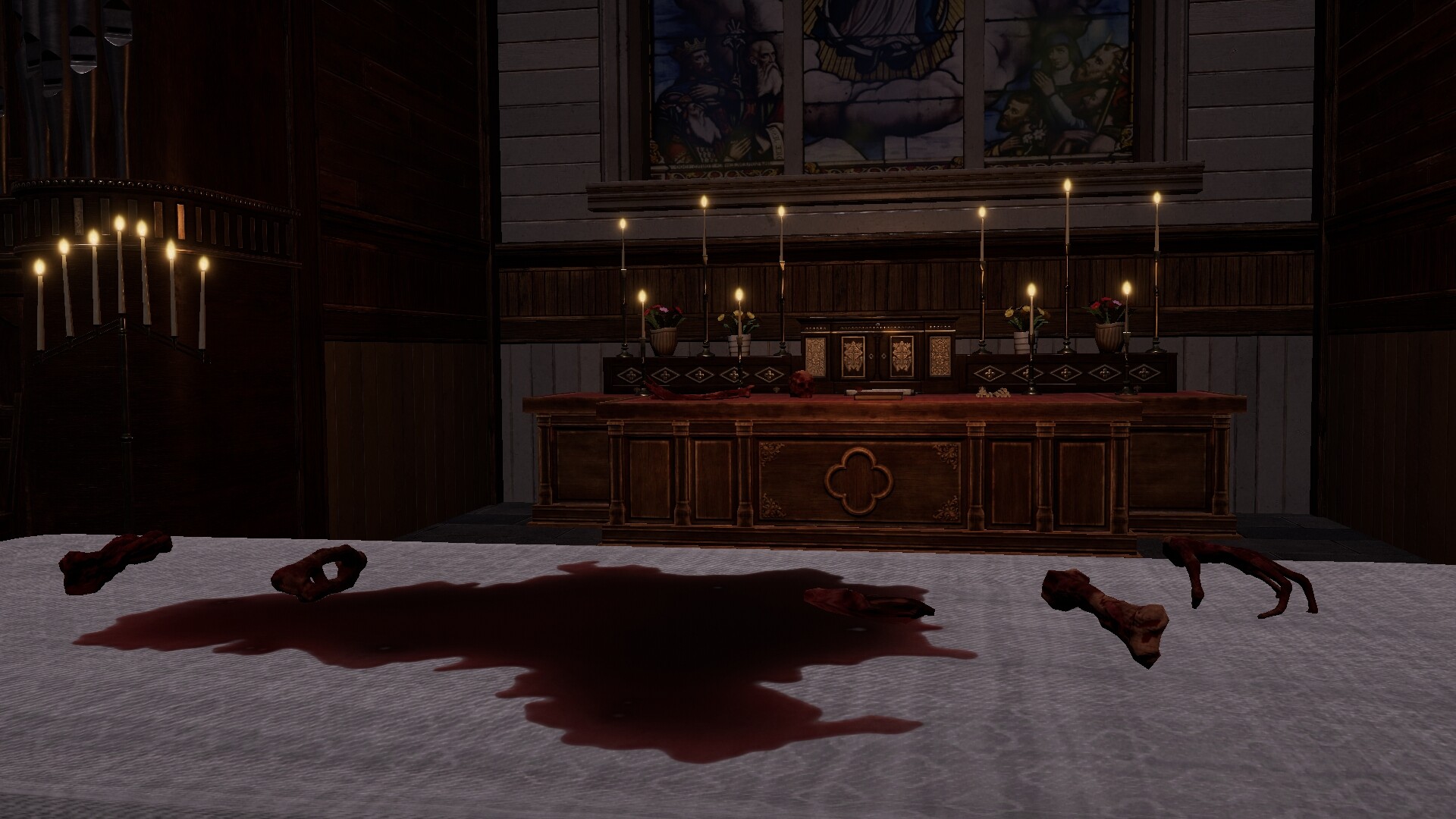
When and where — Steam details
Trace of the Villa launched on Steam on 28 May, 2026. The Steam page lists Steadyturtle Co., Ltd. as both developer and publisher and highlights single-player, accessibility options like subtitle support and custom volume controls, and “playable without timed input.” Use the Steam link below to wishlist or view system requirements.
Player scenarios — who should wishlist this
Concrete situations where Trace of the Villa will likely satisfy:
- Slow-burn investigators: you enjoy tracing document fragments and unlocking narrative threads by combining found objects with environmental states.
- Object-logic puzzle players: you prefer puzzles grounded in believable interactions (power, locks, safes) rather than abstract pattern-matching.
- Atmosphere-first explorers: reading staged rooms and interpreting what’s missing (names, photos, records) matters as much as solving a code.
Less likely to fit: players seeking competitive or online co-op escape-room play, or fast action/puzzle hybrids that prioritize reflexes over inspection. The Steam categories confirm single-player focus and explicit support for non-timed pacing.
How Trace of the Villa compares to nearby mystery and puzzle games
Below is an editorial comparison emphasizing genre, atmosphere, puzzle focus, exploration style, story tone and pacing to help you position this title against other games you may know.
| Title | Primary genre / tone | Puzzle focus | Exploration style | Pacing / best for |
|---|---|---|---|---|
| Trace of the Villa | Action · Adventure · Indie — atmospheric mansion mystery | Inspection-heavy object logic, systems restoration, clue chains | Single-player, narrative rooms that change with restored systems | Slow-burn, for players who want environmental storytelling and document trails |
| The Room | Adventure · Indie — intimate, tactile puzzle boxes | Mechanical puzzles focused on a central safe/box; tactile inspection | Contained, single-location puzzle chambers | Focused puzzle-solvers who enjoy short, intricate challenges |
| The Room Two | Adventure · Indie — larger, slightly more varied locations than the original | Continues tactile, object-based puzzles with layered mechanical devices | Series of connected rooms and devices; exploratory but puzzle-centric | Players who appreciate escalating, interlinked puzzle devices |
| Escape Simulator | Adventure · Simulation · Indie — community-made escape rooms | Highly interactive object manipulation, physics and emergent solutions | Room-by-room escape scenarios; solo or co-op options | Fans of sandbox interaction and cooperative problem solving |
YouTube discoveryFor trailer and gameplay discovery, use YouTube search rather than relying on unverified embeds: Find Trace of the Villa trailer and gameplay searches on YouTube. CommentsMore posts |
Leave a Reply