
Trace of the Villa: an inspection-first mansion mystery for players who think like locksmiths
Trace of the Villa casts you as Jin, a searcher piecing together a vanished life from the debris of a decaying mansion — restores power, pries open safes, and follows manifests that may lead to a missing sister. If you prize locked-room logic, chained clues and environmental reading over action spectacle, this Steam release (28 May, 2026) explicitly pitches itself at that kind of slow-burn investigation.

Quick facts
| Title | Trace of the Villa |
|---|---|
| Steam App ID | 3483660 |
| Release date | 28 May, 2026 |
| Developer / Publisher | Steadyturtle Co., Ltd. |
| Genres | Action, Adventure, Indie |
| Categories | Single-player; Color Alternatives; Custom Volume Controls; Playable without Timed Input; Subtitle Options; Family Sharing |
| Store page | Trace of the Villa on Steam |
Who this is for
Trace of the Villa suits players who enjoy inspection-heavy gameplay: those who patiently catalogue rooms, test every interactive surface, and treat the environment like a ledger of clues. If you prefer narrative puzzle design where solving one object or restoring a subsystem unlocks the next lead, this is aimed squarely at you. It’s not positioned as a timing-pressured or reflex-driven thriller — the Steam categories explicitly note “Playable without Timed Input” and subtitle options for accessibility.
What the game actually is
According to the Steam listing, Jin has followed a lead to “a decaying mansion” where restoring power and sifting through hidden compartments reveal manifests, encrypted documents and suspicious transfer records. The house reads like an engineered puzzle box: locked doors, safes and secured systems yield fragments of an operation rather than simple diary pages. The tone suggested by the official description is atmospheric and investigative — a mansion mystery that leans on buried bureaucracy and falsified identities as much as on ghosts of the past.
When and where
Trace of the Villa was released on Steam on 28 May, 2026. It is presented for PC via Steam with the store page and Steam widget (link below). The store metadata lists typical single-player and accessibility categories that make it approachable to players who prefer fewer UI frictions and more slow investigation.
Why the theme matters: object logic and the erased house
The mansion in Trace of the Villa behaves like a curated puzzle environment. The official copy emphasises that rooms look “furnished as if their occupants vanished mid-routine” and that identities seem removed — an intention that shifts the game from ordinary haunted-house tropes toward an investigation of erasure. That emphasis makes object logic and the chain of evidence meaningful: puzzles are not just obstacles but connective tissue that explains who was here, what systems were used to control movement, and why records were falsified. For players who enjoy narrative puzzle design that rewards patient reconstruction, the premise gives every drawer and system a potential story beat.
How you read clues and progress
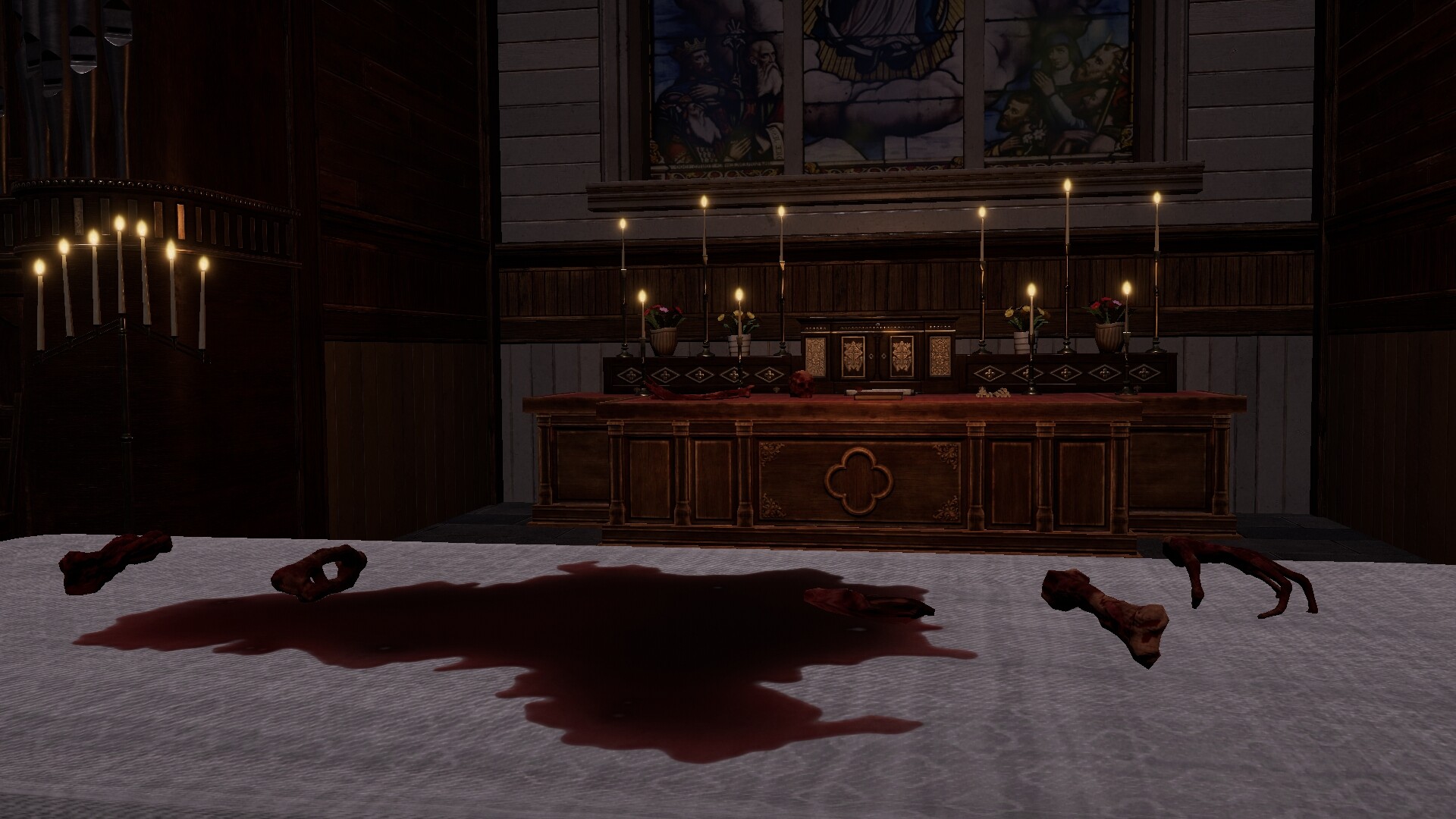
The Steam description outlines a concrete progression loop: restore power to the estate, bring secured systems back online, and then use those systems to open hidden compartments and decode fragments. Progress is driven by unlocking layers — power, safes, manifests, encrypted documents — so success depends on careful observation and chaining small discoveries into a larger timeline. Expect inspection-heavy moments where a recovered manifest changes how you interpret previous clues, and systems that require a sequence of steps rather than a single key item.

How it compares to nearby mystery/puzzle experiences
For readers deciding whether to wishlist Trace of the Villa, the table below compares it to a few well-known inspection- and escape-style titles. The comparison uses lawful editorial criteria: genre, atmosphere, puzzle focus, exploration style and pacing.
| Title | Genres (from source) | Puzzle focus | Exploration style | Pacing / Tone |
|---|---|---|---|---|
| Trace of the Villa | Action, Adventure, Indie | Inspection-heavy: restoring systems, safes, manifests and encrypted documents (official listing) | Mansion-scale, layered discovery; progression via systems and hidden compartments | Slow-burn, investigative and atmospheric |
| The Room | Adventure, Indie | Object-centric mechanical puzzles (cast-iron safe and tactile devices noted in description) | Focused, single-room / chamber sequences that emphasise close manipulation | Methodical, puzzle-box atmosphere |
| The Room Two | Adventure, Indie | Cryptic object puzzles across connected spaces | Broader set-piece rooms vs. single-chamber focus | Atmospheric, puzzle-led exploration |
| Escape Simulator | Adventure, Casual, Indie, Simulation | Highly interactive physics and object interaction; sandboxable items and co-op play | Multiple rooms with strong object interaction and community-made levels | Playful, puzzle-sandbox pace; less emphasis on single narrative mystery |
Editorial note: these comparisons are meant to clarify player fit. Trace of the Villa’s official description places it closer to methodical, narrative-linked object puzzles than to social or physics-driven puzzle sandboxes.
Player scenarios — will you enjoy it?
Scenario A: You love locked-room logic
If your satisfaction metric is “one small mechanical discovery opening an entire new line of inquiry,” Trace of the Villa’s emphasis on safes, secured systems and manifests should hit that sweet spot. The game’s stated loop of restoring power and unlocking documents rewards methodical, sequential problem-solving.
Scenario B: You prefer environmental storytelling
Players who read a room for implied history — absence of photographs, staged furnishings, erased identities — will find material here. The narrative payoff appears tied
YouTube discovery
For trailer and gameplay discovery, use YouTube search rather than relying on unverified embeds: Find Trace of the Villa trailer and gameplay searches on YouTube.
Leave a Reply