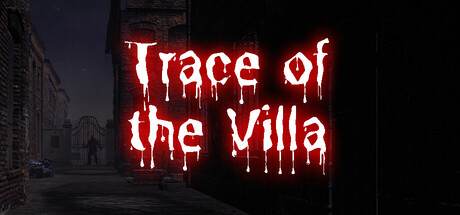
Trace of the Villa: puzzles as evidence and the logic of a disappearing household
Trace of the Villa frames its mystery as a chain of material clues — manifests, safes and locked rooms — that read like forensic evidence. That editorial logic shapes gameplay: object-based puzzles and narrative fragments combine to make the mansion itself the protagonist of a slow-burn investigation.

Who this is for
Players who prefer atmospheric mystery adventure and methodical clue reading over fast action. If you enjoy psychological investigation, environmental storytelling, and puzzles that feel like uncovering evidence rather than abstract logic exercises, Trace of the Villa is aimed at you.
What the game is
Trace of the Villa (developer/publisher: Steadyturtle Co., Ltd.) is listed on Steam as an Action / Adventure / Indie title with single-player support and accessibility options such as Subtitle Options, Color Alternatives, and Playable without Timed Input. The official short description sets up the premise: “Jin has spent years searching for his missing sister, pursuing leads that took him to a remote, decaying mansion where he recovered manifests and hints that indicate his sister may still be alive, somewhere at the end of the trail he is about to follow.”
When and where
Release date on Steam: 28 May, 2026. The Steam store page is the primary PC entry point for the title and lists the game’s official assets and system-facing categories.
Why the theme matters: puzzles as evidence and narrative logic
The game leans into the idea that puzzles are not isolated obstacles but pieces of a timeline. When power is restored and safes yield fragments, the discovery process reads like assembling a case file: encrypted manifests, suspicious transfers, falsified identities and rooms staged as if occupants vanished mid-routine. That design choice makes each solved puzzle a narrative beat — the player isn’t simply advancing mechanically, they are building an evidentiary argument about what the mansion was used for and who passed through it.
How you read clues and progress
Trace of the Villa structures progression around three puzzle types that intersect in play: clue reading (documents, manifests, logs), object logic (mechanical interaction with furniture, safes and devices), and story puzzles (sequence tasks that unlock narrative fragments). The official store copy emphasizes restored systems, hidden compartments and safes yielding fragments of encrypted documents — all elements that reward careful inspection and the habit of treating visual and textual details as corroborating evidence.


Compact facts — Trace of the Villa
| Title | Trace of the Villa |
|---|---|
| Steam AppID | 3483660 |
| Release Date | 28 May, 2026 |
| Developer / Publisher | Steadyturtle Co., Ltd. |
| Genres | Action, Adventure, Indie |
| Key Steam Categories | Single-player; Color Alternatives; Custom Volume Controls; Playable without Timed Input; Subtitle Options; Family Sharing |
Player scenarios — will you enjoy this?
- If you like slow-burn mansion mysteries: You’ll value the staged rooms and absence-of-record details that align with investigations where context is more important than sudden jump-scares.
- If you prize object-based puzzlecraft: Expect interaction with safes, restored systems and items that must be read as evidence; the game privileges deduction from material traces.
- If you want a narrative puzzle game that prioritizes atmosphere: The store text and visuals point to environmental storytelling and deliberate pacing rather than rapid action loops.
- If you prefer multiplayer or editor-driven experiences: Trace of the Villa is single-player and focused on authored narrative puzzles rather than community-made rooms or co-op mechanics.
How it compares — editorial discovery
Below is a concise editorial comparison with other puzzle-adjacent titles to help match player tastes. These comparisons are based on public store descriptions and visible genre/feature signals.
| Title | Primary Genre(s) | Puzzle focus | Atmosphere / Story Tone | Pacing / Exploration Style | Release Date |
|---|---|---|---|---|---|
| Trace of the Villa | Action, Adventure, Indie | Clue reading + object logic + story puzzles (evidence-driven) | Mansion mystery; investigative, slow-burn | Authored exploration, narrative-led progression | 28 May, 2026 |
| The Room | Adventure, Indie | Mechanical, object-based safe and box puzzles | Cryptic, tangibly mysterious | Room-by-room puzzle boxes, tactile interactions | 28 Jul, 2014 |
| Escape Simulator | Adventure, Casual, Indie, Simulation | Highly interactive escape-room style puzzles; physics and object use | Varied tones depending on room; puzzle-first | Room-centric, often fast problem-solving; supports co-op and community content | 19 Oct, 2021 |
| Unpacking | Casual, Indie, Simulation | Item placement as puzzle + environmental storytelling | Quiet, domestic, revealing of life through objects | Calm, zen-like pacing with a focus on interpretation of personal belongings | 1 Nov, 2021 |
YouTube discovery
If you want trailer or gameplay footage to judge visual tone and pacing, search YouTube using this discovery path (results may include previews, streams and independent clips): Search Trace of the Villa trailer & gameplay on YouTube.
Decide whether to wishlist: If you value puzzle mechanics that operate as narrative evidence, and prefer exploration that rewards careful reading of objects and documents, Trace of the Villa fits that appetite. If you want rapid action loops, large-scale multiplayer or community-made rooms, this single-player authored mystery may not match those priorities.
Official Steam page: Trace of the Villa on Steam
Disclaimer: Referenced titles and trademarks belong to their respective owners; comparisons above are editorial discovery based on public store descriptions and feature signals.
Leave a Reply