
Trace of the Villa — how puzzles become evidence in a mansion mystery
Trace of the Villa casts you as Jin, a searcher piecing together a missing-person trail inside a remote, decaying mansion. Released on 28 May, 2026 by Steadyturtle Co., Ltd., it frames puzzles as scraps of evidence: objects, manifests and locked systems that steadily reconstruct a hidden operation and a possible lead on Jin’s sister.

Who, what, when, where, why, how — quick orientation
- Who: Players who prefer slow-burn, story-rich adventure and methodical puzzle investigation; those who read clues and treat items as forensic leads rather than isolated riddles.
- What: An atmospheric mystery adventure (listed as Action, Adventure, Indie on Steam) about a protagonist, Jin, following signs that his missing sister may still be alive after he finds manifests and hints inside a forgotten estate.
- When / Where: Released 28 May, 2026 on Steam for PC; the Steam page lists standard PC-friendly accessibility options (subtitle options, color alternatives, custom volume controls, playable without timed input, family sharing).
- Why: Thematically the game uses a mansion’s staged absence — furnished rooms without names or photographs, falsified records and encrypted documents — to explore identity, control, and the idea that puzzles can be the narrative’s evidence.
- How: By restoring power and unlocking systems, Jin exposes hidden compartments, safes and encrypted manifests. Each solved puzzle yields fragments — financial trails, falsified identities, timelines — that function as clues in a larger investigation rather than isolated obstacles.
What to expect from the puzzle design: evidence, logic, and narrative
Trace of the Villa privileges puzzles that behave like pieces of a case file. The official description emphasizes restoring estate power, secured systems coming back online, hidden compartments unlocking and safes yielding fragments of encrypted documents and suspicious transfer records. These are not merely mechanical gates: they are narrative evidence. In practice that means players are frequently translating object logic (how items interrelate) into story logic (what those items imply about the people who lived here).
That design choice frames two player tasks simultaneously: read objects for functional use (open a safe, repair a circuit) and read objects as testimony (what does a missing photograph or a set of transfer records suggest about the occupants’ identities and where they went?). Puzzles therefore serve dual roles — utility and exposition — which can make each solved lock feel like a discovered fact rather than just progression.
Steam/PC context and accessibility
| Title | Trace of the Villa |
|---|---|
| Developer / Publisher | Steadyturtle Co., Ltd. |
| Release date | 28 May, 2026 |
| Genres | Action, Adventure, Indie |
| Steam categories / features | Single-player; Color Alternatives; Custom Volume Controls; Playable without Timed Input; Subtitle Options; Family Sharing |
| Steam store | Trace of the Villa on Steam |
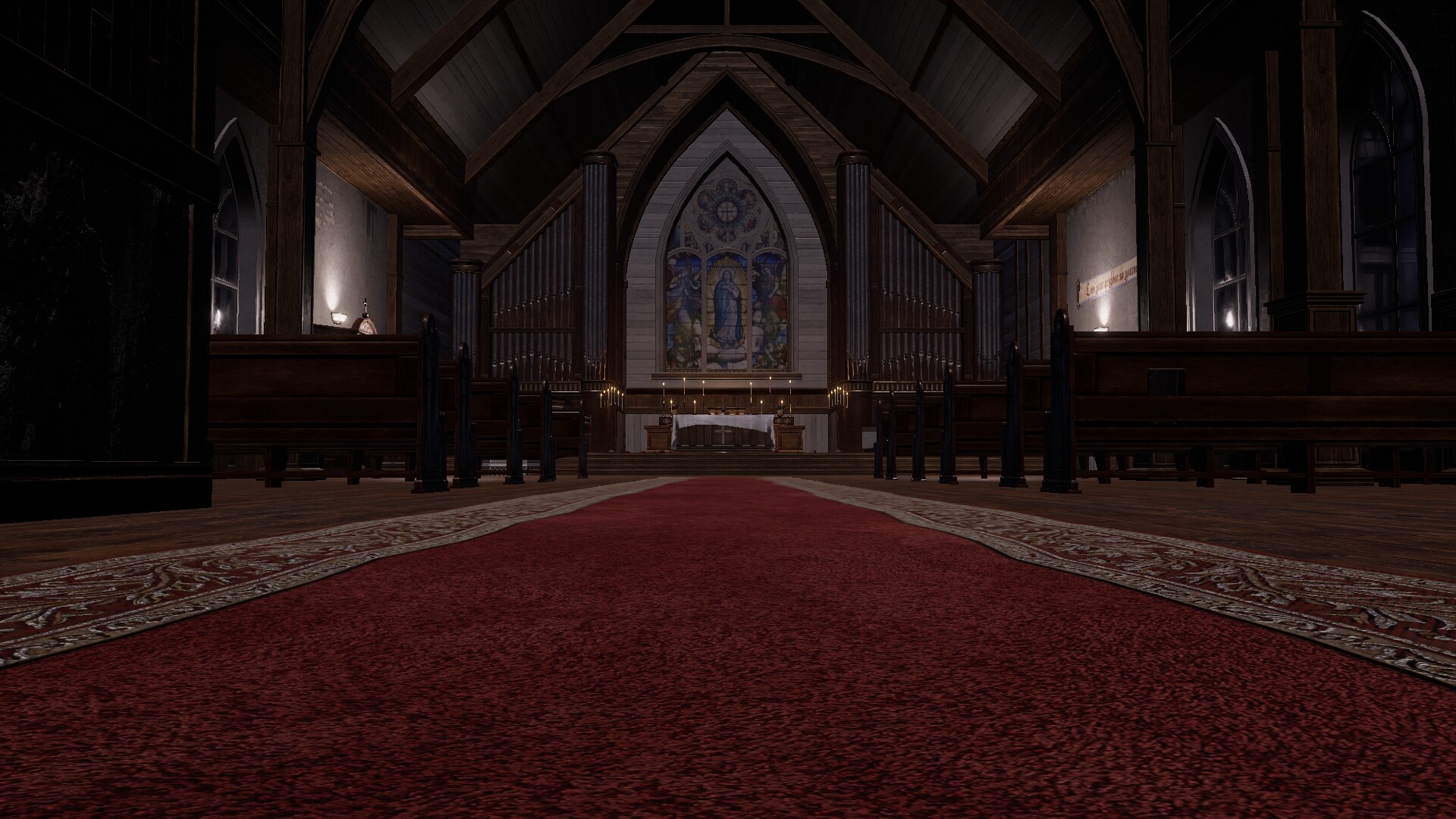
Visual tone and atmosphere

Who should wishlist this
- Investigative players who prefer clue-driven exploration and story puzzles that reveal context as much as mechanics.
- Fans of atmospheric mystery adventure and slow-burn suspense who value environmental storytelling and implied history.
- Players who appreciate accessibility options like subtitles, color alternatives and no timed-input requirements.
- Those who want puzzles that function as narrative evidence — piecing together manifests, encrypted documents and transaction traces into a timeline — rather than standalone brainteasers.
Player scenarios — how the game will feel in play
- The meticulous reader: You take notes, cross-reference manifests and treat each unlocked safe as testimony. The reward is a growing, sometimes disturbing, narrative ledger.
- The environmental detective: You interpret staged rooms and missing personal markers (no photos, no names) to reconstruct identities. The mansion’s “erased” quality becomes the primary clue.
- The cautious explorer: You restore power gradually, watching secured systems come back online. Puzzles feel like flipping circuits in a case file; progression is driven by access more than action reflexes.
- The completionist technical solver: If you enjoy decrypting documents, opening safes and tracing transaction anomalies as formal puzzle types, the game’s focus on manifests and encrypted fragments will appeal.
How Trace of the Villa compares to nearby titles
Below is a compact editorial comparison focusing on genre, atmosphere, puzzle emphasis, exploration style, story tone and pacing — not on quality or sales.
| Title | Genre & Tone | Puzzle emphasis | Exploration style | Story / pacing | Who it suits |
|---|---|---|---|---|---|
| Trace of the Villa | Action / Adventure / Indie — atmospheric mansion mystery | Evidence-led: manifests, safes, secured systems, encrypted fragments | Slow, investigative; restoring systems opens new areas | Slow-burn, procedural unpeeling of a hidden operation | Players who read objects as testimony and like narrative-first puzzles |
| The Room | Adventure / Indie — tactile, intimate mystery | Mechanical object-puzzles and nested safes | Small, focused rooms; tightly gated progression | Concise, puzzle-centric with a mysterious framing | Players who prefer hands-on, tightly-crafted puzzle boxes |
| The Room Two | Adventure / Indie — similar tactile tone, broader locales | Layered mechanical puzzles, increased scale | More varied locales than the original; guided exploration | Still puzzle-first but with larger, episodic set-pieces | Fans of complex mechanical puzzles in atmospheric settings |
| Escape Simulator | Adventure / Casual / Indie — interactive escape-room play | Highly interactive object puzzles; physics-based manipulation | Room-by-room, often community-made scenarios | Paced by room design; can be brisk or cooperative | Players who want tactile manipulation and optional co-op |
| Unpacking | Casual / Indie — zen, domestic puzzle | Spatial and contextual (object placement) rather than mystery | Linear, room-to-room; quieter, domestic spaces | Reflective, slice-of-life pacing focused on inference from possessions | Players who like quiet narrative inferred from objects rather than explicit mystery |
YouTube discovery
To find trailers or gameplay clips, search YouTube (official videos are not verified here): Trace of the Villa trailer & gameplay on YouTube.
If you want to visit the Steam store page directly before deciding, use this link:
Leave a Reply