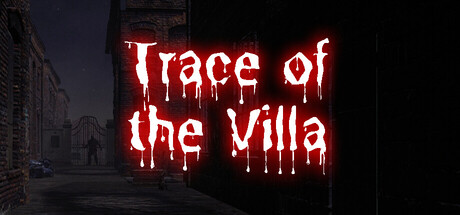
Trace of the Villa — puzzles as evidence and narrative logic
Trace of the Villa is an atmospheric mystery adventure on Steam about Jin’s search for his missing sister inside a remote, decaying mansion. The game uses manifests, encrypted fragments and the mansion’s restored systems as puzzle-led evidence to stitch a hidden timeline together.

Quick facts
| Title | Trace of the Villa |
|---|---|
| Steam AppID | 3483660 |
| Release date | 28 May, 2026 |
| Developer | Steadyturtle Co., Ltd. |
| Publisher | Steadyturtle Co., Ltd. |
| Genres | Action, Adventure, Indie |
| Categories | Single-player; Color Alternatives; Custom Volume Controls; Playable without Timed Input; Subtitle Options; Family Sharing |
Who should wishlist this
- Players who prefer story-rich adventure with slow-burn suspense over twitch reflex gameplay.
- Fans of environmental storytelling and puzzle design where clues double as literal evidence.
- PC players who want accessibility options (color alternatives, subtitles, no timed inputs) and a single-player narrative investigation.
What the game is
Trace of the Villa places you in the role of Jin, a character who has spent years searching for his missing sister. According to the Steam page, his leads bring him to a remote, deliberately forgotten mansion where manifests, encrypted documents and suspicious transfer records hint that people passed through the property under strict control. The game combines exploration, restored house systems and inventory/object puzzles to reveal layers of a concealed operation rather than presenting straightforward combat or action setpieces.

When and where
Trace of the Villa released on Steam on 28 May, 2026. It’s listed for PC on its Steam store page and carries standard single-player and accessibility categories noted on that page.
Why the theme matters: puzzles as evidence
Unlike puzzle games that treat puzzles as isolated challenges, Trace of the Villa frames puzzles as pieces of a forensic narrative. The mansion’s power systems, locked safes and encrypted fragments act as sources of evidence: when Jin restores power or opens a compartment, he uncovers manifests and records that change how you interpret earlier scenes. That design choice turns object logic into a method of building — and sometimes refuting — hypotheses about who lived here, what they did, and where Jin’s sister might be. For players who enjoy reading clues and letting a story cohere from found items, this approach emphasizes deduction over exposition.

How you read clues and progress
Steam’s official description states that Jin finds manifests, encrypted documents and suspicious transfer records, and that restoring power to the estate causes systems and hidden compartments to reveal further material. Expect a loop where you: examine objects, unlock a system or compartment, recover documents or fragments, then reinterpret the environment and open new paths. Puzzle solutions are therefore evidence — they don’t just gate progress mechanically, they rewrite the narrative context of the mansion and Jin’s investigation.
Player scenarios — four specific ways this will play out
- Methodical investigator: You’ll spend time cataloguing documents and replaying assumptions as new records arrive. If reconstructing timelines from fragments appeals to you, the game’s evidence-first puzzles are built for that pace.
- Atmosphere-first explorer: If mood and slowly peeling back a setting are your priority, the mansion’s “erased” identity and returning systems provide long, quiet stretches of environmental storytelling punctuated by puzzle moments.
- Puzzle-centric solver: Players who enjoy object logic and spatial puzzles will find the interplay between restored systems and tangible evidence rewarding — each solved puzzle often yields a document or system state that reframes the next challenge.
- Accessibility-conscious player: The Steam categories list options like color alternatives, subtitle options and no timed inputs, making it feasible to approach the game at your own speed.
How it compares to nearby puzzle-adventure titles
Below is a compact editorial comparison focused on genre, atmosphere, puzzle focus, exploration style and player fit. These comparisons are editorial discovery, not endorsements.
| Title | Genre / Focus | Puzzle style | Exploration & atmosphere | Player fit |
|---|---|---|---|---|
| Trace of the Villa | Action • Adventure • Indie | Evidence-led object puzzles; restores systems to unlock new info | Remote mansion; slow-burn, investigative, environmental storytelling | Players who want narrative puzzles that change the interpretation of prior scenes |
| The Room | Adventure • Indie | Mechanical, tactile puzzle boxes and devices | Mysterious, focused single-room/series of rooms atmosphere | Players who like tightly designed physical puzzles and tactile interactions |
| Escape Simulator | Adventure • Casual • Indie • Simulation | Highly interactive room puzzles; object manipulation and community rooms | Varied rooms and playful physics-driven interaction | Players who prefer interactive, often cooperative escape-room style puzzling |
| Unpacking | Casual • Indie • Simulation | Block-fitting, contextual object puzzles tied to life details | Zen, domestic atmosphere; story told through possessions | Players who like quiet, life-story driven puzzles with a relaxed pace |
Steam / YouTube discovery
To see trailers or gameplay clips via search, use this YouTube discovery link (search results may include trailers and user videos): YouTube search: Trace of the Villa trailer & gameplay.
Deciding if it’s for you
If you prize atmospheric mystery, puzzle mechanics that double as forensic evidence, and the slow accumulation of narrative meaning from found records, Trace of the Villa aligns with that taste. It’s less about reflex and more about reading objects, restoring systems, and letting clues remap the story. If you prefer bite-sized, social puzzling or primarily mechanical puzzle boxes, look to titles like Escape Simulator or The Room respectively for a different emphasis.
View Trace of the Villa on Steam
Referenced titles and trademarks belong to their respective owners. Comparisons above are editorial discovery only.
Leave a Reply