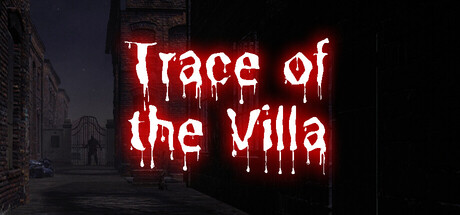
Trace of the Villa — when puzzles become evidence
Trace of the Villa (Steadyturtle Co., Ltd., releasing on 28 May, 2026) frames its puzzle design as an investigative practice: reading manifests, restoring systems and turning found objects into corroborating evidence that push Jin closer to the truth. Expect slow-burn mansion mystery built around environmental storytelling, object logic and encrypted documents that slowly stitch a timeline together.

Who this is for
If you prefer puzzle adventure games that feel like assembling a case rather than solving isolated riddles, Trace of the Villa is aimed at you. The game suits players who enjoy atmospheric mystery adventure and narrative puzzle design: people who read item descriptions closely, reconstruct timelines from scraps, and treat objects as corroborating evidence rather than abstract keys.
What the game is
Trace of the Villa casts you as Jin, who has spent years searching for his missing sister. A lead brings him to a remote, decaying mansion where manifests and hints indicate that his sister may still be alive. According to the official Steam text, restoring power, unlocking compartments and deciphering transfer records and encrypted documents are core beats — each puzzle solved uncovers another layer of a concealed operation and an erasure of identity.


When and where
Trace of the Villa released on Steam on 28 May, 2026. It is a PC-focused indie listed under Action, Adventure and Indie on Steam and is presented as a single-player experience with features such as Color Alternatives, Custom Volume Controls, Playable without Timed Input, Subtitle Options and Family Sharing.
Why the theme matters — puzzles as evidence
Many puzzle-adventure games treat puzzles as obstacles; Trace of the Villa positions them as sources of proof. The official description emphasizes manifests, encrypted documents and falsified identities — elements that make each solved puzzle function like a piece of evidence in a case file. That design choice shifts player incentives: you’re not solving a cipher for the fun of it, you’re validating a hypothesis about who was here, what happened, and where the trail leads.
How you read clues and progress
Progression is driven by close reading and object logic. Restoring power brings systems back online, which in turn unlocks new lines of inquiry. Hidden compartments, safes and encrypted fragments are presented as modular evidence — find a manifest, cross-reference a transfer record, then use a decrypted fragment to authenticate a new lead. The official materials describe the mansion as “less abandoned than erased,” which suggests an investigative loop: recover, corroborate, follow the trail.
Practical player scenarios
- The methodical investigator: You savor piecing together timelines from documents and manifests. Trace of the Villa’s emphasis on encrypted records and system restoration rewards patient, analytical play.
- The environmental reader: You want storytelling that lives in the scene — a room’s arrangement, a missing photograph, a powered terminal. The mansion’s furnished-but-erased spaces put clues in the world rather than in separate puzzle screens.
- The accessibility-minded player: Steam categories list Color Alternatives, Custom Volume Controls, Playable without Timed Input and Subtitle Options — useful signals if you prefer a slower, read-and-think approach without pressure-based mechanics.
Compact facts — Trace of the Villa
| Title | Trace of the Villa |
|---|---|
| Steam appid | 3483660 |
| Release date | 28 May, 2026 |
| Developer / Publisher | Steadyturtle Co., Ltd. |
| Genres | Action, Adventure, Indie |
| Key categories / features | Single-player; Color Alternatives; Custom Volume Controls; Playable without Timed Input; Subtitle Options; Family Sharing |
| Premise (official short description) | “Jin has spent years searching for his missing sister… a remote, decaying mansion where he recovered manifests and hints that indicate his sister may still be alive.” |
How it compares — editorial discovery
Below is a focused comparison with nearby puzzle/adventure references to help readers decide whether Trace of the Villa fits their tastes. These comparisons use public descriptions and genre information, not promotional claims.
| Title | Core puzzle approach | Atmosphere / story tone | Exploration style | Player fit |
|---|---|---|---|---|
| Trace of the Villa | Clue-driven evidence gathering, manifests, encrypted documents, system restoration | Slow-burn mansion mystery; erased identities and a concealed operation | Environmental, room-based investigation inside a decaying estate | Players who treat puzzles as pieces of a case and like narrative puzzle design |
| The Room | Mechanical safes, tactile object puzzles focused on a single room | Mysterious, intimate and focused on a specific chamber | Contained, focused exploration (single-room/series of linked rooms) | Players who enjoy physical-feeling puzzle boxes and claustrophobic mystery |
| The Room Two | Expanded tactile puzzles and layered mechanisms | Cryptic, otherworldly tone suggested by its description | Sequential locked-area exploration with puzzle-driven progression | Those who enjoyed The Room and want broader, cryptic set-pieces |
| Escape Simulator | Highly interactive escape-room mechanics (move objects, break locks) | Playful, puzzle-first escape-room tone | Open object interaction across crafted rooms; often physics-driven | Players who prefer tactile interactivity and community-made rooms |
| Unpacking | Domestic, object-placement puzzles that read a life from belongings | Zen, domestic and reflective | Spatial, item-management exploration of rooms and life moments | Players who enjoy quiet, narrative-suggestion gameplay through objects |
YouTube and trailer discovery
If you want to see trailer or gameplay footage, search for Trace of the Villa on YouTube: Search Trace of the Villa trailers and gameplay on YouTube. This link points to public search results; we are not claiming a specific official video here.
View Trace of the Villa on Steam
Disclaimer: referenced titles and trademarks are the property of their respective owners. Comparisons are editorial discovery only and not endorsements.
Leave a Reply