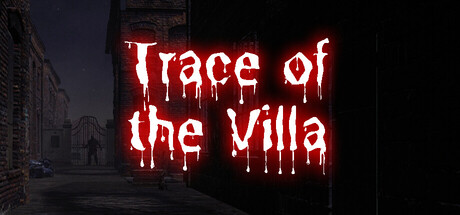
Trace of the Villa — puzzle-as-evidence in a mansion mystery
Trace of the Villa is an atmospheric mystery adventure built around reading clues, reconstructing object logic, and treating each solved puzzle as a piece of admissible evidence. Released on 28 May, 2026, the Steam page frames a slow-burn investigation: Jin follows manifests and encrypted fragments through a decaying mansion to see if his missing sister might still be alive.

Who: who made this and who it’s for
Trace of the Villa is developed and published by Steadyturtle Co., Ltd. The protagonist named on the Steam page is Jin, a private investigator of sorts whose search for a missing sister drives the narrative. This is a PC/Steam release aimed at players who favour story-rich adventure and puzzle-driven exploration rather than arcade action.
What: the game in one precise paragraph
Officially described on Steam as an Action / Adventure / Indie title, Trace of the Villa places Jin inside a remote, deliberately forgotten mansion. Rooms look as if their occupants vanished mid-routine; power restoration unlocks secured systems and hidden compartments that yield manifests, encrypted documents, and suspicious transfer records. The gameplay emphasis in the description is clear: solve puzzles to reveal a concealed operation and piece together a timeline of arrivals and departures.
When & where: availability and Steam context
Trace of the Villa was released on 28 May, 2026 and is available on Steam for PC. The Steam page lists standard single-player and accessibility-oriented categories such as Color Alternatives, Custom Volume Controls, Playable without Timed Input, Subtitle Options, and Family Sharing — useful signposts for players who care about comfort features.
Why the theme matters: puzzles as evidence and narrative logic
The house in Trace of the Villa isn’t just a backdrop; it’s an evidence repository. The official description repeatedly frames discoveries — manifests, transfer records, falsified identities — as clues one by one exposing an orchestrated concealment. That shifts puzzle design towards a forensic mode where solving an object or cipher yields narrative weight. For players who prefer their puzzle solutions to carry story consequences, this is a deliberate design stance: puzzles act as admissible evidence that reshapes your understanding of events rather than arbitrary obstacles.
How you progress: clue reading, object logic, story puzzles
Steam copy highlights concrete systems you can expect to interact with: restoring power to the estate, reactivating secured systems, unlocking hidden compartments and safes, and extracting fragments of encrypted documents. That list implies three overlapping puzzle languages:
- Clue reading — manifests and hints function as paper evidence that must be cross-referenced to build timelines.
- Object logic — physical objects and locked containers respond to environmental changes (power, switches, mechanical solves), so the “how” of a solution often depends on reconstructing a practical sequence of steps.
- Story puzzles — decrypting fragments and following suspicious transfers is not only mechanical; it advances Jin’s timeline and alters the narrative framing of the mansion.
If you value environmental storytelling where a solved puzzle feels like filing a new item into a case folder, Trace of the Villa’s stated design direction will be appealing.


Compact facts — Trace of the Villa
| Title | Trace of the Villa |
|---|---|
| Steam AppID | 3483660 |
| Release date | 28 May, 2026 |
| Developer | Steadyturtle Co., Ltd. |
| Publisher | Steadyturtle Co., Ltd. |
| Genres | Action, Adventure, Indie |
| Key categories | Single-player; Color Alternatives; Custom Volume Controls; Playable without Timed Input; Subtitle Options; Family Sharing |
| Short premise (official) | Jin follows leads to a remote, decaying mansion where manifests and hints indicate his missing sister may still be alive. |
Comparison: how Trace of the Villa sits next to other puzzle-led adventures
Below is a focused editorial comparison on lawful criteria: genre, atmosphere, puzzle focus, exploration style, story tone, pacing, and suggested player fit.
| Title | Genre / Atmosphere | Puzzle focus | Exploration style | Story tone & pacing | Player fit |
|---|---|---|---|---|---|
| Trace of the Villa | Action / Adventure / Indie — mansion mystery, slow-burn suspense | Clue-as-evidence: manifests, encrypted docs, safes; power restoration mechanics noted on Steam | Investigative, room-to-room reconstruction of events | Forensic, gradually reveals a concealed operation; methodical pacing | Players who want narrative weight attached to each solved puzzle |
| The Room | Adventure / Indie — tactile, cabinet-focused mystery | Tactile mechanical puzzles and safes (padlocks, mechanisms) | Isolated vignette rooms with a single central object to interrogate | Mysterious and focused; puzzle-driven discovery across individual set-pieces | Players seeking focused, tactile object puzzles and single-room mysteries |
| Escape Simulator | Adventure / Simulation / Indie — playful escape-room vibes | Highly interactive object puzzles; community-made rooms expand variety | Room-based, physics-interactive; supports co-op | Faster-paced, puzzle variety over sustained narrative | Players who like hands-on interaction and co-op or many short rooms |
| Unpacking | Casual / Indie — zen, domestic storytelling | Non-traditional puzzle: item placement and narrative inference | Sequential rooms that reveal life moments through objects | Quiet, reflective, slow; narrative revealed through possessions | Players who enjoy subtle story cues from environment and object logic |
Player scenarios — who should wishlist this
- You’re a methodical player who treats notes, manifests, and encrypted fragments like courtroom evidence rather than collectables.
- You prefer environmental storytelling where restoring systems or powering up areas directly unlocks new narrative facts.
- You value accessibility and comfort options — the Steam categories include Playable without Timed Input, Subtitle Options, Color Alternatives, and Custom Volume Controls.
- You’re less interested in twitch mechanics and more in slow pacing and puzzle solutions that change what you believe about the story.
YouTube discovery
If you want trailer or gameplay footage, search for Trace of the Villa on YouTube: YouTube search: Trace of the Villa trailer / gameplay.
Final take
Steam page
Leave a Reply