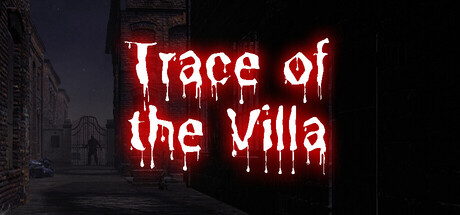
Trace of the Villa — when puzzles act as evidence in a mansion mystery
Trace of the Villa drops players into a decaying estate where Jin follows manifests and furtive hints that suggest his missing sister might still be alive. The game foregrounds clue-reading, object logic, and layered story puzzles to turn each solved riddle into a piece of evidence in a larger psychological investigation.

What Trace of the Villa is
Trace of the Villa is an atmospheric mystery adventure on Steam (PC) developed and published by Steadyturtle Co., Ltd. Official materials position the game as a slow-burn, clue-driven investigation: Jin has spent years searching for his missing sister and follows a lead to a mansion where recovered manifests and hints indicate she may still be alive. The release date on Steam is 28 May, 2026.
The game’s Steam metadata lists genres as Action, Adventure, Indie and includes single-player and accessibility categories like Color Alternatives, Custom Volume Controls, Playable without Timed Input, Subtitle Options, and Family Sharing.
How clue reading, object logic, and story puzzles shape the experience
Trace of the Villa frames puzzles as fragments of an investigation rather than isolated obstacles. Environmental details (furniture left mid-routine, locked doors, encrypted documents and transfer records recovered after restoring power) act as primary clues; solving an object puzzle often unlocks a document or system that changes what the player understands about the house. In effect, each solved puzzle becomes accumulated evidence that refines the timeline and the player’s theory of what happened.
This design emphasis shifts player attention from pure mechanical challenge to narrative inference: you read objects for provenance, cross-check manifests against falsified identities, and use recovered system data to map movements through the estate. Puzzles serve both as gating mechanics and as pieces of a case file — they are evidence that must be interpreted to reconstruct events.


Who should wishlist this on Steam
Consider Trace of the Villa if you prefer slow-burn suspense and narrative puzzles where discovery feeds a case rather than a score. Players who enjoy environmental storytelling, reconstructing timelines from documents and objects, and puzzle systems that change the story’s context after each reveal will likely find the game’s investigative rhythm satisfying.
If you expect constant action set-pieces or competitive online features, note that Trace of the Villa is presented as a single-player experience with an emphasis on exploration and mystery rather than multiplayer or fast-paced combat.
When and where — Steam details at a glance
| Title | Trace of the Villa |
|---|---|
| Release date | 28 May, 2026 |
| Developer / Publisher | Steadyturtle Co., Ltd. |
| Genres / Categories | Action, Adventure, Indie — Single-player; Color Alternatives; Custom Volume Controls; Playable without Timed Input; Subtitle Options; Family Sharing |
| Steam page | Open Trace of the Villa on Steam |
How progression works — reading evidence, not just solving puzzles
Puzzles in Trace of the Villa are layered: the immediate solution typically yields access to a new area, power to a locked system, or fragments of documents and manifests. Because the official description highlights restored power bringing systems back online and safes yielding encrypted documents, expect a loop where mechanical problem solving (object puzzles, safes, electrical restoration) and interpretive work (reading manifests, tracing transfers, recognizing falsified identities) alternate.
That alternation is important to grasp: succeeding at a lock or cipher doesn’t just let you move forward — it supplies evidence that changes the player’s interpretive map of the estate. For players who enjoy building conjectures from traces, this structure rewards careful note-taking and re-evaluating earlier assumptions as new facts come to light.
How Trace of the Villa compares to nearby puzzle-adventure experiences
Below is a focused editorial comparison on lawful criteria: genre, atmosphere, puzzle focus, exploration style, story tone, and pacing. These are intended to help readers decide which game best fits their tastes.
| Title | Genre | Atmosphere | Puzzle focus | Exploration style | Pacing / Story tone |
|---|---|---|---|---|---|
| Trace of the Villa | Action / Adventure / Indie | Mansion mystery, atmospheric, psychological investigation | Clue-reading, object logic, story puzzles tied to documents and restored systems | Environmental, evidence-driven exploration of a single estate | Slow-burn, investigative |
| The Room | Adventure / Indie | Intimate, cabinet-of-curiosities mystery | Tactile mechanical puzzles and safes | Focused, single-room sequences that foreground object interaction | Tight, puzzle-first with escalating reveals |
| Escape Simulator | Adventure / Casual / Indie | Playful, cooperative escape rooms | Highly interactive physics and item manipulation | Room-to-room, designer-crafted scenarios; supports co-op and community levels | Varied tempo, often puzzle-heavy and social |
| Unpacking | Casual / Indie / Simulation | Zen, domestic, observational | Item placement and contextual storytelling through belongings | Slow, room-by-room life-history reconstruction through objects | Gentle pacing, reflective tone |
Editorially: if you want object puzzles that build a case file and change the story’s meaning, Trace of the Villa leans more toward investigative ambiguity than the tightly wound lockboxes of The Room or the zen domesticity of Unpacking. If you prefer co-op or community levels, Escape Simulator follows a different design philosophy focused on interaction and sharing.
Player scenarios — who will enjoy Trace of the Villa
- The evidence reader: You take notes, revisit earlier rooms when new
YouTube discovery
For trailer and gameplay discovery, use YouTube search rather than relying on unverified embeds: Find Trace of the Villa trailer and gameplay searches on YouTube.
Leave a Reply