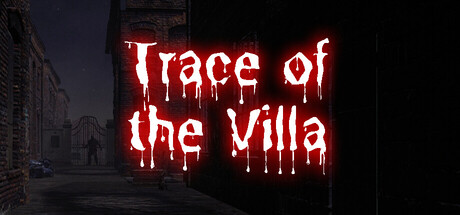
Trace of the Villa: when puzzle clues double as forensic storytelling
Steadyturtle’s Trace of the Villa frames puzzle design as evidence-gathering: you don’t just solve locks and riddles — you read objects and documents to reconstruct what the mansion erased. Released on 28 May, 2026, the game marries slow-burn investigation with environmental storytelling to push a personal search for a missing sister into a wider, deliberately obfuscated operation.

Quick facts
| Title | Trace of the Villa |
|---|---|
| Release date | 28 May, 2026 |
| Developer / Publisher | Steadyturtle Co., Ltd. |
| Genres | Action, Adventure, Indie |
| Steam categories | Single-player; Color Alternatives; Custom Volume Controls; Playable without Timed Input; Subtitle Options; Family Sharing |
| Steam appid | 3483660 |
Who this is for
If you favor atmospheric mystery adventure and story-rich investigation over twitch reflexes, Trace of the Villa targets you. Players who appreciate psychological investigation and slow-burn suspense — those who read every note, study household objects, and let a location’s omissions shape their conclusions — will get the most from the game. Its single-player focus and subtitle options also make it accessible for readers and methodical solvers.
What the game is
Trace of the Villa casts you as Jin, a searcher following a lead to a remote, decaying mansion. The estate appears erased: furnished rooms with no photographs or names, locked doors, and encrypted fragments that suggest organized concealment. As Jin restores power and opens safes and compartments, the mansion yields manifests, transfer records, and falsified identities — puzzle rewards that also function as narrative evidence.
When and where
The game launched on Steam on 28 May, 2026. It’s presented as a PC title under the genres Action, Adventure, and Indie and carries Steam categories geared to accessibility and single-player exploration.
Why the theme matters: puzzles as evidence
Trace of the Villa treats puzzles as pieces of an investigation, not just mechanical obstacles. Objects, encrypted documents, and hidden systems are both gameplay mechanics and narrative signposts: solving a safe doesn’t only open a new room, it supplies another fragment of the operation that explains why people went missing or assumed new identities. That framing makes every solved riddle feel like corroborating evidence in a larger mystery, which changes how you interpret future clues and the mansion itself.
How you read clues and progress
Progress hinges on three interlocking puzzle logics:
- Clue reading — documents, manifests, and environmental hints are treated as primary data. Players must assemble timelines and infer motives from partial records.
- Object logic — household items and locked systems often require lateral thinking or sequencing: restore power, then access terminals; find tools to open compartments; pair isolated fragments into coherent strings of fact.
- Story puzzles — some solutions are narrative-first: a seemingly decorative object gains meaning only when placed against a discovered document, turning a cosmetic detail into proof.
The result is investigative pacing: the mansion yields hostages to your attention, and progression is as much about interpretation as dexterity or inventory juggling.


Player scenarios — who should wishlist it
- Investigation-first players: you enjoy reconstructing timelines from partial records and letting the environment supply motive and pattern.
- Slow-pacing fans: if you prefer tension that accumulates through small discoveries rather than jump scares, this fits.
- Object-and-document readers: you like games where a found paper or ledger reframes what you already know.
- Accessibility-minded players: Steam categories indicate options like subtitles, color alternatives, and play without timed input.
How it compares (editorial discovery)
| Title | Core puzzle focus | Atmosphere / tone | Player fit |
|---|---|---|---|
| Trace of the Villa | Clue-driven object puzzles and document-based evidence; restoring systems uncovers narrative layers. | Decaying mansion, slow-burn suspense, investigative and personal. | Players who want narrative puzzles that act as forensic proof and who prefer reflective pacing. |
| The Room | Mechanical puzzle boxes and tactile, physical puzzles. | Mysterious, focused on a single locked object with an uncanny tone. | Players who love tactile puzzle design and tight, object-based challenges. |
| Escape Simulator | Interactive escape-room-style puzzles with high physical interactivity and community rooms. | Varied tone depending on room; often playful or mechanical rather than psychological. | Players who prefer physical interaction, quick puzzle feedback, and co-op/community content. |
| Unpacking | Domestic object placement with clues about a life told through possessions. | Quiet, intimate, reflective rather than suspenseful. | Players who enjoy grounded, narrative-through-objects and low-stress puzzle composition. |
Deciding checklist
- Do you want puzzle outcomes to change your reading of the story? — Yes: wishlist; No: consider other puzzle-focused titles.
- Do you enjoy reconstructing events from partial records and manifests? — Yes: this is aligned with that player type.
- Do you need fast action and multiplayer content? — No: Trace of the Villa is single-player and investigation-led.
YouTube discovery
Looking for trailers or gameplay clips? Search YouTube with this query: Trace of the Villa trailer & gameplay. This link is a search path; verify any specific video before assuming it’s an official release.
View Trace of the Villa on Steam
Referenced titles and trademarks belong to their respective owners. Comparisons above are editorial discovery only and not endorsements.
Leave a Reply