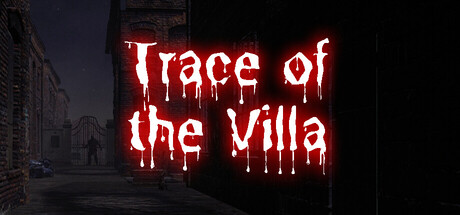
Trace of the Villa — when puzzles act as evidence in a mansion mystery
Trace of the Villa puts you in Jin’s shoes: a lone investigator following cold leads into a remote, decaying mansion where restored power and secured systems begin to expose erased lives. The game foregrounds puzzles as pieces of proof—manifests, safes, locked systems—that build a logical case rather than mere obstacle rooms.

Quick facts
| Title | Trace of the Villa |
|---|---|
| Steam App ID | 3483660 |
| Release date | 28 May, 2026 |
| Developer | Steadyturtle Co., Ltd. |
| Publisher | Steadyturtle Co., Ltd. |
| Genres | Action, Adventure, Indie |
| Categories | Single-player; Color Alternatives; Custom Volume Controls; Playable without Timed Input; Subtitle Options; Family Sharing |
Who should consider wishlisting Trace of the Villa?
- Players who prefer clue-driven exploration and story puzzles that function as evidence, not abstract riddles.
- Fans of atmospheric mystery adventure and slow-burn suspense who like piecing together a timeline from objects, manifests, and encrypted fragments.
- Those who value environmental storytelling and investigative pacing over fast-action multiplayer or spectacle.
What the game is (and what it actually puts on the table)
Officially described on Steam, Trace of the Villa centers on Jin, who has spent years searching for his missing sister. A lead points him to a property “cut off from the grid and deliberately forgotten.” Inside the mansion, rooms appear frozen mid-routine, identities scrubbed, and secured systems hide records that only return when Jin restores power. Solving puzzles yields fragments of encrypted documents, manifests, and suspicious transfer records that together form a narrative trail.
When and where
Trace of the Villa released on Steam on 28 May, 2026. It’s presented on Steam as a PC-focused indie with single-player options and accessibility-focused categories like subtitle options and color alternatives.
Why the theme matters: puzzles as evidence and narrative logic
Many puzzle adventures treat puzzles as isolated tests of logic. Trace of the Villa frames them as pieces of a case. Each safe, encrypted fragment, or restored system is evidence that changes the investigator’s hypothesis about who lived here and what happened. That editorial angle—puzzles as evidence—shifts player behavior: you don’t just solve to progress, you read and weigh findings, cross-reference manifests, and let the accumulation of small revelations change your understanding of the mansion’s timeline.


How you progress: reading clues, object logic, and story puzzles
The official Steam description highlights several concrete mechanics that shape progression: restoring power, reactivating secured systems, and unlocking safes that yield encrypted documents and transfer records. Those elements underline two complementary puzzle modes:
- Object logic: using found items, power switches, and visible mechanisms to access new areas or reveal hidden compartments.
- Clue reading and synthesis: treating manifests, fragments, and transaction records as corroborating evidence that inform where to look next and how to interpret missing names or falsified identities.
Played together, these modes create a detective rhythm: inspect, hypothesize, test, and update the narrative model as new evidence arrives.
Player scenarios — which playstyles will get the most out of it?
Scenario A: The forensic puzzler
You enjoy treating every clue like a piece of a case file. You’ll value the mansion’s encrypted fragments and transfer records because they reward careful note-taking and cross-referencing.
Scenario B: The atmospheric explorer
Slow-paced investigation and environmental details—rooms left mid-routine, the absence of photographs and names—are the draw. You want mood and implication as much as explicit answers.
Scenario C: The puzzle-first player who also wants story
You want puzzles that feel meaningful. If a combination of object logic (power, safes, compartments) and documents that change the story appeals, this is a natural fit.
How Trace of the Villa differs from nearby puzzle-adventure games
Below is a compact editorial comparison against a few reference titles. This is not a ranking; it’s a side-by-side look at tone, puzzle focus, and exploration style so you can decide whether the game fits your taste.
| Title | Genre / Tone | Puzzle focus | Exploration style | Pacing |
|---|---|---|---|---|
| Trace of the Villa | Action / Adventure / Indie — atmospheric mansion mystery | Clue-driven safes, encrypted documents, systems restored as evidence | Single-player, environmental investigation in a decaying estate | Slow-burn, investigative |
| The Room | Adventure / Indie — tactile mechanical mystery | Mechanical puzzles and safes centered on single-room devices | Focused, device-by-device examination | Measured, puzzle-centric |
| The Room Two | Adventure / Indie — expanded tactile mystery | Chained mechanical puzzles across interconnected locales | Broader spaces but still object-focused | Measured, escalating complexity |
| Escape Simulator | Adventure / Casual / Indie — room-based escape design | Highly interactive escape-room mechanics, physics and object interaction | Discrete rooms designed as puzzles; community content | Variable—often faster puzzle tempo |
| Unpacking | Casual / Indie — domestic storytelling through objects | Object-placement puzzles that reveal life details | Non-linear room arrangement; vignette-style scenes | Calm, reflective |
| hack_me | Indie / Simulation — hacker-simulator tone | Command-line and simulated hacking mechanics | System-focused, less environmental exploration | Puzzle/skill-focused with simulated hacking scenarios |
YouTube discovery
Want to see trailers or gameplay clips? Search for Trace of the Villa trailers and gameplay here: YouTube: Trace of the Villa trailer & gameplay. Note: use this as a discovery search; the Steam metadata does not verify any specific official video link.
View Trace of the Villa on Steam
Disclaimer: Referenced titles and trademarks belong to their respective owners. Comparisons above are editorial discovery only and not endorsements or official affiliations.
Leave a Reply