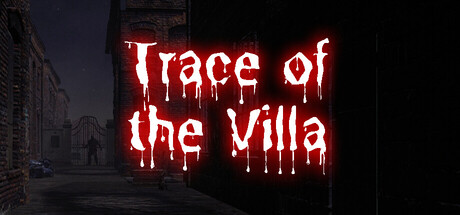
Trace of the Villa: When Puzzles Read Like Evidence
Trace of the Villa places you in a decaying mansion where every object, manifest and locked system functions as a piece of evidence—puzzles are the method of reading a crime scene. From developer-publisher Steadyturtle Co., Ltd., the game leans on clue-driven exploration and narrative puzzle logic to turn discovery into argument.

Who
This is for players who prefer mystery that behaves like a small investigation: people who enjoy atmospheric mystery adventure, environmental storytelling, and puzzles that act as forensic steps rather than isolated riddles. If you like slow-burn suspense, careful reading of documents, and object logic that changes how you interpret rooms, Trace of the Villa is aimed at you.
What
Trace of the Villa (Steam appid 3483660) tells a focused story: Jin has spent years searching for his missing sister, following a lead to a remote, deliberately forgotten mansion. Inside, signs of past occupancy are “unmistakable… and deeply unsettling.” Restoring power and solving secured systems reveals encrypted fragments and suspicious records that build a timeline—puzzles are presented as evidence pieces that shape the narrative.
| Title | Trace of the Villa |
|---|---|
| Release date | 28 May, 2026 |
| Developer | Steadyturtle Co., Ltd. |
| Publisher | Steadyturtle Co., Ltd. |
| Steam appid | 3483660 |
| Genres | Action, Adventure, Indie |
| Categories | Single-player; Color Alternatives; Custom Volume Controls; Playable without Timed Input; Subtitle Options; Family Sharing |
| Short premise | Jin tracks clues in a remote mansion where manifests and hints suggest his sister may still be alive. |
When & Where
Trace of the Villa launched on Steam on 28 May, 2026. It appears on the Steam store as a single-player PC title with accessibility options (subtitles, color alternatives, custom volume controls) and non-timed input, making it suitable for patient, careful puzzle readers.
Why the theme matters: puzzles as evidence
Unlike puzzle rooms that exist for spectacle, Trace of the Villa frames puzzles as documentary artifacts: manifests, safes, encrypted documents and restored systems are not just obstacles but primary narrative sources. That design decision shifts emphasis from “solve to proceed” to “interpret to make a case.” Each solved lock or recovered file doesn’t merely unlock a corridor — it shifts the player’s working hypothesis about what happened in the mansion.
How you read clues and progress
The official description makes the mechanics clear in tone: Jin restores power, secured systems come back online, hidden compartments unlock, and safes yield fragments. Players progress by assembling those fragments into a timeline and interpreting suspicious transfer records and falsified identities. Expect object logic—how an item functions in a scene—to be as important as direct puzzle solutions, and story puzzles that require reading documents and connecting them to physical evidence in rooms.


Comparison table — how Trace of the Villa sits among puzzle-adventure peers
| Game | Puzzle focus | Atmosphere / tone | Exploration style | Pacing |
|---|---|---|---|---|
| Trace of the Villa | Clue reading, object logic, story puzzles presented as evidence | Atmospheric mystery; unsettling, investigation-driven | Mansion-scale environmental storytelling and system restoration | Slow-burn, methodical |
| The Room | Mechanical, tactile puzzle boxes and contraptions | Cryptic, solitary curiosity | Room-focused, set-piece puzzles | Measured, puzzle-centric |
| The Room Two | Extended mechanical puzzles across connected spaces | Mystical, investigative | Chained rooms with layered mechanisms | Steady, puzzle-driven progression |
| Escape Simulator | Highly interactive object puzzles with physical affordances | Varied; often playful or tense depending on room | Discrete escape rooms; emphasis on interaction | Faster tempo; focused sessions |
| Unpacking | Domestic, spatial puzzle (placement & inference) | Zen, intimate, character-driven | Home spaces reveal life through objects | Relaxed, vignette-style |
| hack_me | Simulation-style hacking puzzles and commands | Technical, system-oriented | Interface-driven, abstracted systems | Varies; simulation pacing |
Notes: comparisons use observable design and tone—genre and puzzle focus—so you can match Trace of the Villa to your preferences rather than assuming superiority.
Player scenarios — who should wishlist this
- If you enjoy documentary puzzles: You like to assemble timelines from documents and item fragments rather than rely on isolated brainteasers.
- If you prefer methodical exploration: You value environmental storytelling and puzzle solutions that change your reading of rooms.
- If you want accessibility options: The Steam listing includes subtitles, color alternatives and non-timed input categories.
- If you favor faster, physical interaction: Titles like Escape Simulator offer a different, more tactile tempo; Trace of the Villa is more investigative than kinetic.
YouTube discovery
Looking for trailers or gameplay? Search YouTube for Trace of the Villa trailers and gameplay footage: Trace of the Villa — YouTube searchSteam page
Leave a Reply