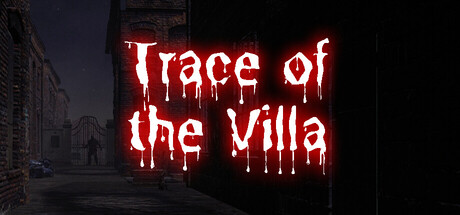
Trace of the Villa — When puzzles function as evidence
Trace of the Villa places you in Jin’s shoes as he follows a cold lead into a cut-off, decaying mansion where recovered manifests and hints suggest his missing sister may yet be alive. Its puzzles are less ornament and more courtroom: each solved lock and decrypted document is evidence that advances a fragile narrative chain.

Quick facts
| Title | Trace of the Villa |
|---|---|
| Steam appid | 3483660 |
| Developer | Steadyturtle Co., Ltd. |
| Publisher | Steadyturtle Co., Ltd. |
| Release date | 28 May, 2026 |
| Genres | Action, Adventure, Indie |
| Categories / Features | Single-player; Color Alternatives; Custom Volume Controls; Playable without Timed Input; Subtitle Options; Family Sharing |
| Short description | Jin has spent years searching for his missing sister, pursuing leads that took him to a remote, decaying mansion where he recovered manifests and hints that indicate his sister may still be alive, somewhere at the end of the trail he is about to follow. |
Who should wishlist Trace of the Villa?
This is a fit for players who prefer slow-burn suspense and investigative pacing over twitch action: people who enjoy environmental storytelling where items, documents, and locked systems serve as pieces of a forensic puzzle. If you like methodical clue reading—reconstructing timelines from receipts, manifests, and encrypted fragments—this one is aimed at you. It’s less for players seeking fast, reflex-oriented challenges and more for those who treat puzzles as narrative evidence.
What the game is (and how its puzzles work as evidence)
Officially: “Jin has been searching for his missing sister for years… A lead that pointed him to a decaying mansion, a property cut off from the grid and deliberately forgotten.” The Steam description makes it clear that progress comes from restoring systems and uncovering secured compartments: “When Jin restores power to the estate, the house begins to reveal what it was hiding. Secured systems come back online. Hidden compartments unlock. Safes yield fragments of encrypted documents and suspicious transfer records.”
That phrasing matters. Puzzles are not isolated brainteasers; they are mechanisms that reveal documents, transaction fragments, and system logs — the primary evidence you use to assemble motive, timeline, and the larger operation implied by the house. In other words, a solved puzzle equals a discovered fact, and your mental model of the mansion evolves as new records appear.
When and where: Steam / PC context
Trace of the Villa launched on 28 May, 2026 and is available on Steam. The store lists Steadyturtle Co., Ltd. as both developer and publisher. The Steam page highlights single-player play and accessibility options such as Color Alternatives, Subtitle Options, and Playable without Timed Input — signals that the experience leans toward thoughtful examination rather than forced speed.
Why the “puzzles as evidence” approach matters
Treating puzzles as evidence changes how a mystery plays out. Instead of abstract riddles that exist for the sake of pattern-solving, every solved mechanism in Trace of the Villa produces a concrete narrative artifact: a manifest entry, a falsified identity, or a broken log. That grounds your deductions and makes failures of logic meaningful — a missed clue can obscure a timeline, and a misread document can send you down a false trail. For players who appreciate detective logic, this design gives weight to attention and careful note-taking.
How you read clues and progress
According to the official description, progression revolves around two linked systems: environmental reactivation (restore power, unlock systems) and forensic collection (safes, encrypted documents, transfer records). Read items carefully; the game frames objects and paper trails as primary narrative currency. Expect to assemble a timeline from fragments and to use progressively revealed data to unlock new areas or decrypt additional files. In practice, that means observation, cross-referencing details, and treating puzzles as corroborating or contradicting pieces of evidence rather than isolated puzzles to be “completed.”
Player scenarios — who will enjoy Trace of the Villa
- The methodical investigator: You keep notes, cross-reference receipts and names, and prefer piecing timelines together. You’ll get satisfaction from each unlocked file that changes the narrative picture.
- The atmospheric explorer: You value oppressive, decaying settings and environmental storytelling. Restoring power and watching a house reveal its secrets is a central emotional beat.
- The narrative puzzle fan: You enjoy puzzles that tie to story consequences — safes and systems that reveal documents that then unlock new puzzles.
- The impatient seeker: If you want continuous action or quick reward loops, this may feel slow; Trace of the Villa emphasizes evidence accumulation and pacing over constant gameplay peaks.
How it compares to nearby titles
| Title | Primary focus | Puzzle style | Atmosphere / tone | Exploration / pacing | Best for |
|---|---|---|---|---|---|
| The Room | Mechanical puzzle box mysteries | Object-based, tactile puzzle boxes | Claustrophobic, mysterious | Room-by-room, focused puzzle sessions | Players who like tight, tactile object puzzles |
| The Room Two | Expanded mechanical puzzle environments | Complex object puzzles with layered mechanisms | Cryptic, atmospheric | Chapter-based, deliberate pacing | Fans of intricate mechanical puzzles and atmosphere |
| Escape Simulator | Highly interactive escape-room style environments | Hands-on, physically interactive object puzzles | Varied — from playful to tense | Room-contained, puzzle-dense, sometimes co-op | Players who enjoy interactive item manipulation and sandbox puzzles |
| Unpacking | Zen, domestic life through objects | Spatial/fit puzzles and environmental clue reading | Quiet, reflective, slice-of-life | Relaxed, vignette-style progression | Players who like story told through objects and scene composition |
Editorial note: Trace of the Villa sits closer to The Room series in its focus on object-led puzzles, but it leans more heavily into evidence and documentary trails as the engine of narrative progression; compared with Unpacking it is darker and less domestic, and compared with Escape Simulator it is less about physics interaction and more about documents, systems, and timeline reconstruction.


Where to find gameplay and trailers
For trailer and gameplay clips, search YouTube
Steam page
View Trace of the Villa on Steam
YouTube discovery
For trailer and gameplay discovery, use YouTube search rather than relying on unverified embeds: Find Trace of the Villa trailer and gameplay searches on YouTube.
Leave a Reply