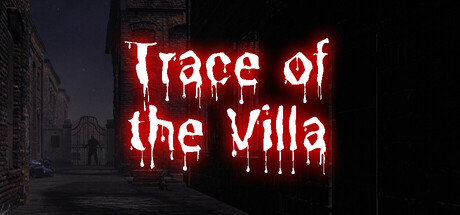
Trace of the Villa — puzzles as evidence and narrative logic
Trace of the Villa frames its investigation around physical traces: manifests, safes and encrypted fragments that behave like courtroom evidence for a vanished history. Released on 28 May, 2026 by Steadyturtle Co., Ltd., the game asks players to read objects as clues and to let object logic shape the story they reconstruct.

| Title | Trace of the Villa |
|---|---|
| Steam App ID | 3483660 |
| Release date | 28 May, 2026 |
| Developer / Publisher | Steadyturtle Co., Ltd. |
| Genres | Action, Adventure, Indie |
| Categories / Accessibility | Single-player; Color Alternatives; Custom Volume Controls; Playable without Timed Input; Subtitle Options; Family Sharing |
| Official premise | Jin searches a remote, decaying mansion and recovers manifests and hints that indicate his missing sister may still be alive, somewhere at the end of the trail he is about to follow. |
Who is this for?
Players who prefer story-rich mystery and environmental storytelling over twitch reflexes: people who want to parse documents, unlock safes and treat inventory items like pieces of testimony. The presence of subtitle options and “playable without timed input” suggests a deliberate, contemplative pace suited to solo PC players who value clue-driven exploration.
What the game is
Trace of the Villa is presented as an atmospheric, investigative adventure set in a deliberately forgotten mansion. According to the official description, Jin restores power, finds hidden compartments and safes, and recovers fragments of encrypted documents and suspicious transfer records. Rather than a pure action romp, the structure described centers on uncovering layers of a concealed operation through puzzles that yield documentary evidence.

When and where
Trace of the Villa launched on Steam on 28 May, 2026. It’s listed on Steam with the genres Action / Adventure / Indie and typical PC storefront metadata; the Steam App ID is 3483660.
Why the theme matters: puzzles as evidence
The game’s premise turns puzzles into corroborating items. Official text highlights that restoring power unlocks systems, safes yield encrypted fragments, and manifests point down dead-end financial trails. That design choice treats each solved puzzle not merely as mechanical progress but as documentary evidence that changes your reading of the house and its occupants. For players interested in narrative logic, this is important: puzzles serve as plot tokens that must be interpreted, not just obstacles to beat.
How you read clues and progress
- Investigative pacing: The mansion is described as “less abandoned than erased”—rooms staged as if occupants vanished mid-routine—so attention to placed objects and absence (what’s deliberately missing) is part of the reading process.
- Systems restoration: Restoring power is a narrative beat that activates locked systems, hidden compartments and safes; those mechanical actions are explicitly tied to revealing further documents and records.
- Puzzle-as-document: Safes and encrypted fragments are the kind of puzzles that act like evidence: their resolution yields manifests, suspicious transfer records and fragments of a timeline that players must assemble.
- Story logic over spectacle: The available categories (e.g., Playable without Timed Input, Subtitle Options) and the description imply a focus on deliberate clue-work rather than reflex-based segments.
Player scenarios — who should wishlist it
- If you enjoy slow-burn mansion mysteries where the environment supplies testimony rather than exposition, this is worth tracking.
- If you like reading documents, piecing together timelines from manifests and encrypted fragments, and treating inventory items as narrative evidence, this fits your playstyle.
- If you need accessible pacing (no timed input) and common PC accessibility features like subtitles and color alternatives, the Steam listing indicates those options are present.
- If you prefer multiplayer or community-created rooms (Escape Simulator–style), this single-player, story-focused title will differ in emphasis.
How it compares — quick editorial table
| Title | Genre | Atmosphere / Setting | Puzzle focus | Exploration style | Story tone / Pacing |
|---|---|---|---|---|---|
| Trace of the Villa | Action, Adventure, Indie | Remote, decaying mansion; erased occupants | Safes, encrypted fragments, manifests; puzzles as documentary evidence | System restoration, hidden compartments, environmental investigation | Investigative, slow-burn, personal |
| The Room | Adventure, Indie | Locked, mysterious attic and safe chambers | Mechanical safes and tactile puzzle boxes | Single-room puzzle progression | Focused, atmospheric puzzle sequences |
| The Room Two | Adventure, Indie | Cryptic halls and chambers | Complex, layered puzzle boxes | Series of interconnected puzzle locations | Expansive, atmospheric mystery with measured pacing |
| Escape Simulator | Adventure, Casual, Indie, Simulation | Varied escape-room environments | Highly interactive object-based puzzles, physics interactions | Room-by-room escape mechanics; solo or co-op | Often faster-paced, puzzle-forward |
| Unpacking | Casual, Indie, Simulation | Domestic spaces across life stages | Organizational, context-driven object placement | Nonlinear, vignette-style exploration of a life | Zen, reflective, narrative through possessions |
YouTube discovery
Search for trailer and gameplay clips here (use as a discovery path): Trace of the Villa trailer & gameplay on YouTube. This is a search link for public videos; it is provided for discovery and not as a verified official trailer link.
View Trace of the Villa on Steam
Disclaimer:
Leave a Reply