
Trace of the Villa: where locked-room thinking and clue chains do the heavy lifting
Trace of the Villa is an atmospheric mystery adventure about Jin, a man following leads to a remote, decaying mansion after years searching for his missing sister. Released on 28 May, 2026 by Steadyturtle Co., Ltd., it frames investigation as a sequence of environmental reads and interlocking puzzles rather than fast action.

Quick facts
| Title | Trace of the Villa |
|---|---|
| Steam AppID | 3483660 |
| Release date | 28 May, 2026 |
| Developer / Publisher | Steadyturtle Co., Ltd. |
| Genres | Action, Adventure, Indie |
| Categories (Steam) | Single-player; Color Alternatives; Custom Volume Controls; Playable without Timed Input; Subtitle Options; Family Sharing |
| Steam reviews (public) | No user reviews |
Who this is for
Players who prefer slow-burn suspense, environmental storytelling, and puzzle chains that reward careful observation will find the premise appealing. If you enjoy methodical, clue-driven exploration — reading object placement, power states and secured systems for narrative and mechanical signals — Trace of the Villa is aimed at that temperament.
What the game is
Officially described on Steam, Trace of the Villa puts you in Jin’s shoes as he investigates a mansion cut off from the grid. The estate reads like a locked-room scenario: rooms furnished as if occupants vanished, locked doors and safes, secured systems that reveal more when power is restored, and fragments of encrypted documents and suspicious transfer records. The investigation gradually exposes a pattern of falsified identities and unexplained movements — a puzzle chain that ties object clues to a larger operation.
When and where
Trace of the Villa launched on Steam on 28 May, 2026. It’s available on the Steam PC storefront; the Steam page lists developer and publisher as Steadyturtle Co., Ltd. Use the official store link to wishlist or buy: Trace of the Villa on Steam.
Why the theme matters: locked-room thinking and narrative weight
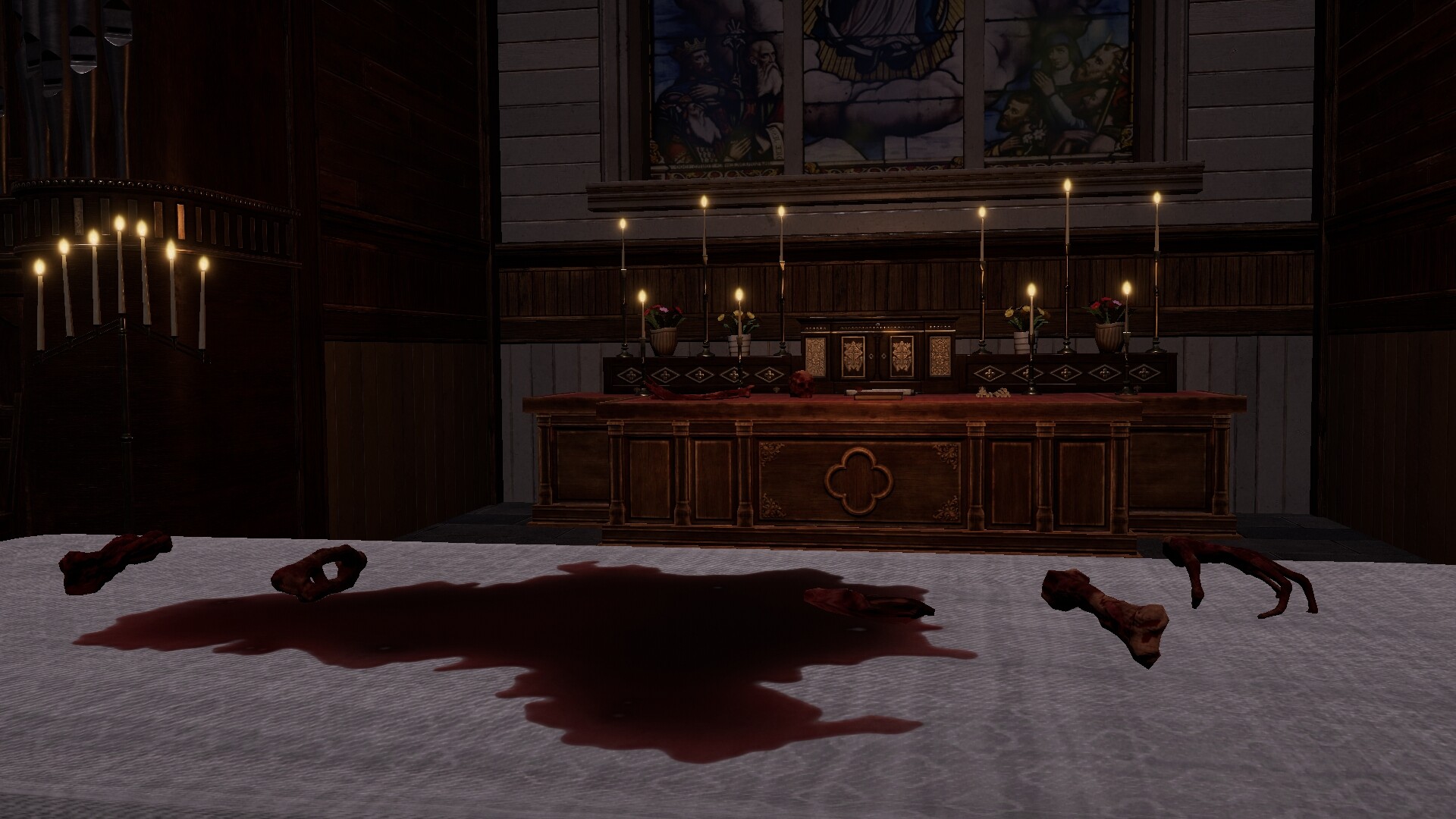
The mansion mystery is an ideal scaffold for locked-room thinking because it limits variables: closed spaces, curated objects, and deliberate omissions (no photos, no names) force players to treat each item as intentional authorial language. That constraint converts exploration into interpretation — every drawer, circuit breaker, or manifest fragment is both a puzzle and a storytelling device. When puzzles are designed as a chain rather than isolated riddles, momentum builds: solving one mechanical lock commonly supplies a new clue that reframes earlier observations.
How you read clues and progress
Trace of the Villa foregrounds environmental reading and systems restoration. According to the official Steam description, restoring power reactivates secured systems and unlocks hidden compartments; safes and encrypted documents yield new leads. That implies a progression loop where:
– Observation of arranged rooms suggests missing context,
– Tactical actions (power restoration, safe-cracking) reveal new evidence,
– Evidence creates new puzzles or points to other rooms, and
– Puzzle solutions alter the estate’s state, opening further layers.
In practice, this is locked-room logic applied to a broader investigative arc: each solved device or recovered manifest becomes a link in a chain that moves Jin closer to the truth.

Player scenarios — who will enjoy the pacing and what to expect
Scenario A — The methodical investigator
You enjoy mapping a space and cataloguing inconsistencies. You’ll appreciate the mansion’s curated emptiness and the deliberate absence of identifiers; this player treats every object as a potential key. Expect slow-burn rewards: solving multi-step puzzles that recontextualize earlier discoveries.
Scenario B — The systems player
You prefer interacting with game systems (power, safes, encrypted files) and following procedural breadcrumbs. Trace of the Villa explicitly ties progression to restoring systems and uncovering secured partitions, which suits players who like mechanical unlocking with narrative payoffs.
Scenario C — The atmosphere-first player
You’re drawn more to mood and setting than complex logic puzzles. The estate’s sense of erasure and the thriller-adjacent tone provide an immersive backdrop; however, expect investigation to be central, not just ambience.
How it compares — short editorial table
| Title | Release | Genre / Focus | Atmosphere & Pacing | Puzzle style & player fit |
|---|---|---|---|---|
| Trace of the Villa | 28 May, 2026 | Action / Adventure / Indie — mansion mystery, environmental puzzles | Slow-burn, decaying mansion, investigative tension | Locked-room thinking, clue chains, systems restoration — for methodical investigators |
| The Room | 28 Jul, 2014 | Adventure / Indie — tactile safe-and-box puzzles | Isolated, tactile, intimate pacing | Mechanical, single-room focus; great if you like tactile puzzle boxes |
| The Room Two | 5 Jul, 2016 | Adventure / Indie — expanded tactile puzzle halls | Broader exploration than the first, still methodical | Serial puzzle boxes across connected spaces; for players who like successive mechanical reveals |
| Escape Simulator | 19 Oct, 2021 | Adventure / Simulation / Indie — interactive escape rooms, co-op | Variable: can be fast or slow depending on room design and co-op | Highly interactive, physics-driven puzzles with level editor; good if you want sandbox interactivity and multiplayer options |
Editorial note: these comparisons use genre, described atmosphere, and puzzle emphasis from public store descriptions and known release dates to help match player tastes rather than to rate or rank.
Leave a Reply