
Trace of the Villa — where locked‑room thinking, clue chains, and environmental reading live in a decaying mansion
Trace of the Villa puts you in the shoes of Jin, a man following faint manifests and hints through a remote, intentionally forgotten mansion to find his missing sister. The game leans on atmospheric mystery, household-scale investigation, and layered puzzle progression that will appeal to players who favour environmental storytelling and slow‑burn puzzle work.

Quick facts
| Title | Trace of the Villa |
|---|---|
| Developer / Publisher | Steadyturtle Co., Ltd. |
| Release date | 28 May, 2026 |
| Steam AppID | 3483660 |
| Genres | Action, Adventure, Indie |
| Key categories | Single‑player; Color Alternatives; Custom Volume Controls; Playable without Timed Input; Subtitle Options; Family Sharing |
| Official short description | Jin has spent years searching for his missing sister, pursuing leads that took him to a remote, decaying mansion where he recovered manifests and hints that indicate his sister may still be alive, somewhere at the end of the trail he is about to follow. |
| Steam reviews | No user reviews yet |
Who this is for
If you prefer solitary, story‑rich PC mystery games that reward careful observation, Trace of the Villa is aimed at you. It suits players who like:
- environmental storytelling and slow‑burn suspense rather than constant action;
- investigative puzzle chains where one solved lock or recovered document opens the next logical lead;
- a single‑player experience without pressure from timed inputs (the Steam data lists the game as playable without timed input).
What the game is
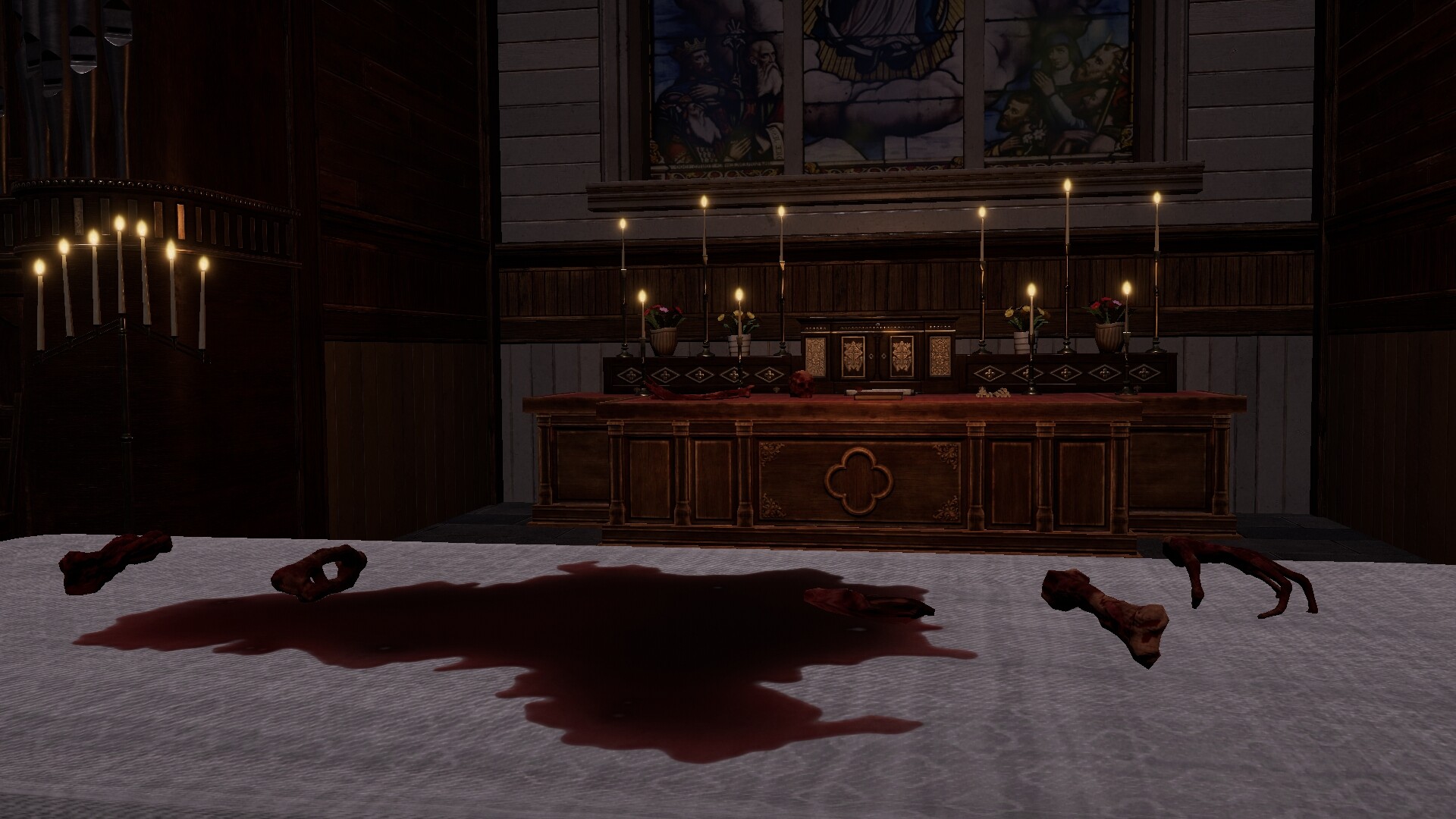
Official Steam text frames Trace of the Villa as a psychological investigation and mansion mystery: Jin explores a property “cut off from the grid,” restoring power and uncovering secured systems, hidden compartments, and safes that yield fragments of encrypted documents and suspect transfer records. The tone is investigative and atmospheric — rooms “remain furnished as if their occupants vanished mid‑routine,” and clues are distributed across furnished environments rather than served up as HUD prompts.

When and where
Trace of the Villa launched on Steam on 28 May, 2026. It is a PC release listed under Action, Adventure, Indie on Steam and ships with accessibility options noted in the store metadata (color alternatives, custom volume controls, subtitles).
Why the mansion setting matters
Mansion mysteries reward a specific cognitive style: locked‑room thinking. The compact geography keeps clues local and interdependent — solving a safe might reveal a ledger that points to a locked study, which in turn requires power or a code sourced from another room. The official description frames the estate as deliberately isolated and partially erased, which supports a design where environmental reading (furniture placement, missing photographs, interrupted chores) is as meaningful as mechanical puzzles.
How you read clues and progress
According to the Steam description, progression is driven by restoring systems and opening secured containers. That implies a chain‑based puzzle loop: investigate → restore/activate → access → interpret → follow the new lead. Expect to piece together timelines from fragments (encrypted documents, transfer records, manifests) and to rely on observation — light, object placement, and the state of rooms — to reconstruct events.
Player scenarios (specific)
- Scenario A — You love methodical puzzle chains: Play if you enjoy slowly unlocking interconnected systems and reading documents to move the narrative forward.
- Scenario B — You prioritise atmosphere and story over reflexes: Play if you want measured exploration without timed inputs or twitch gameplay.
- Scenario C — You want tactile, physics‑first puzzles: This looks more document‑and‑system driven than smash‑and‑grab interactivity — check screenshots and the Steam page to confirm the level of object interaction you prefer.
How it compares to nearby mystery/puzzle games
Below is a compact editorial comparison on lawful criteria — genre, atmosphere, puzzle focus, exploration style, story tone, and pacing. This is editorial discovery, not endorsement or superiority claims.
| Title | Genre/Focus | Atmosphere & Tone | Puzzle / Exploration Style | Player fit |
|---|---|---|---|---|
| The Room | Adventure, Indie — tactile puzzle box | Claustrophobic, ornate mystery | Single‑object, mechanical puzzles; strong emphasis on tactile manipulation | Players who enjoy intimate puzzle boxes and mechanical solutions |
| The Room Two | Adventure, Indie | Expands to larger, eerie locales while retaining zen mechanical puzzles | Sequential mechanical puzzles across interconnected scenes | Those who liked the original but want broader environments and discovery |
| Escape Simulator | Adventure, Casual, Indie — escape room sandbox | Bright, interactive, variable by community rooms | Highly interactive; physics and object manipulation; supports co‑op | Players looking for hands‑on interaction and community content |
| Hi‑Fi RUSH | Action | High‑energy, music‑synced combat and charmSteam page
View Trace of the Villa on Steam YouTube discoveryFor trailer and gameplay discovery, use YouTube search rather than relying on unverified embeds: Find Trace of the Villa trailer and gameplay searches on YouTube. CommentsMore posts |
Leave a Reply