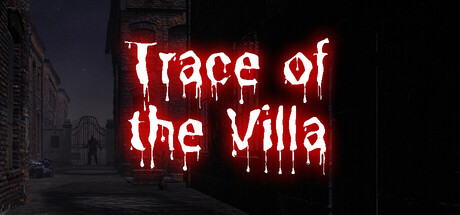
Trace of the Villa — a clue-driven mansion mystery for players who read the room
Trace of the Villa positions itself as an atmospheric mystery adventure about Jin’s search for his missing sister inside a decaying, deliberately forgotten mansion. The game leans on environmental storytelling, recovered manifests, and layered puzzles that unlock systems, documents, and the timeline behind a carefully concealed operation.

What Trace of the Villa is (and what it shows on Steam)
Developed and published by Steadyturtle Co., Ltd., Trace of the Villa is listed on Steam as an Action / Adventure / Indie title with single-player and accessibility options such as Color Alternatives, Custom Volume Controls, Playable without Timed Input, and Subtitle Options. The official short description frames the premise: Jin follows leads to a remote mansion where manifests and hints suggest his sister may still be alive. The longer Steam copy explains how restoring power and solving secured systems reveals encrypted documents, suspicious transfers, falsified identities and other fragments of a broader, controlled operation.
When and where
Trace of the Villa released on 28 May, 2026 on Steam. You can view the store page here: Trace of the Villa on Steam.
How the game uses clues, object logic, and narrative puzzles
The Steam description makes the puzzle flow explicit: environmental clues arrive as recovered manifests, hints left in rooms, locked doors and safes, and secured systems you restore by bringing power back to the estate. Puzzles act as both mechanical barriers and storytelling devices — safes and hidden compartments yield fragments of encrypted documents and suspicious transfer records, and each reveal reshapes the timeline Jin reconstructs. That combination foregrounds three design priorities:
- Clue reading: players must interpret manifests, transfer records and contextual details rather than rely purely on trial-and-error solutions.
- Object logic: physical containers, safes and secured systems are tied to progression, so manipulating the estate’s systems is how the plot opens up.
- Story puzzles: each solved puzzle not only unlocks a new route but also supplies narrative fragments — identities removed, people who passed through without records — that change how you read the mansion.
Because Trace of the Villa is explicitly playable without timed input and offers subtitle options and color alternatives, it favors deliberate, investigative play over twitch reflexes. Expect a gradual reveal structure: restore power, access new systems, read documents, and follow the next physical clue.


Who this fits — concrete player scenarios
Deciding whether to wishlist Trace of the Villa comes down to a few concrete preferences:
- If you enjoy slow-burn mansion mysteries and reading environmental clues to assemble a timeline, Trace of the Villa aligns with that pace and tone.
- If you prefer puzzles that serve the story — safes, encrypted fragments, and systems that, when reactivated, reveal more narrative — you’ll find the progression satisfying.
- If you avoid time pressure and favor accessibility options (subtitles, color alternatives, no timed input), the Steam page lists features that support that playstyle.
- If you want fast-action or competitive multiplayer, the game’s single-player, exploratory design and narrative-first focus suggests it’s not tailored to those preferences.
Quick facts
| Title | Trace of the Villa |
|---|---|
| Steam AppID | 3483660 |
| Release date | 28 May, 2026 |
| Developer / Publisher | Steadyturtle Co., Ltd. |
| Genres | Action, Adventure, Indie |
| Categories / accessibility | Single-player; Color Alternatives; Custom Volume Controls; Playable without Timed Input; Subtitle Options; Family Sharing |
| Short premise | Jin searches a decaying mansion where recovered manifests and hints suggest his missing sister may still be alive. |
How Trace of the Villa compares to nearby puzzle-adventure titles
Below is an editorial comparison focused on genre, puzzle focus, atmosphere, exploration style, pacing, and notable features. This is meant to help you judge fit, not to declare superiority.
| Title | Release Year | Genre / Puzzle focus | Atmosphere & Pacing | Exploration style | Notable features |
|---|---|---|---|---|---|
| The Room | 2014 | Adventure / Indie — object-based safe puzzles | Mysterious, intimate; puzzle-by-puzzle revelation | Single-room/series puzzle boxes | Focused object puzzles; single-player experience |
| The Room Two | 2016 | Adventure / Indie — pedestal and lock puzzles | Cryptic and atmospheric; chapter-based pacing | Linked multi-scene puzzle locales | Strong emphasis on tactile puzzle design |
| Escape Simulator | 2021 | Adventure / Casual / Indie — interactive escape rooms | Playful to tense depending on room; variable pacing | Room-scale, highly interactive environments | Co-op and community-made rooms; VR supported |
| Unpacking | 2021 | Casual / Indie / Simulation — block-fitting & environmental narrative | Zen, reflective; gentle pacing | Room-by-room domestic scenes revealing life stories | Environmental storytelling through object placement; accessibility options |
| Trace of the Villa | 2026 |
YouTube discoveryFor trailer and gameplay discovery, use YouTube search rather than relying on unverified embeds: Find Trace of the Villa trailer and gameplay searches on YouTube. Comments |
Leave a Reply