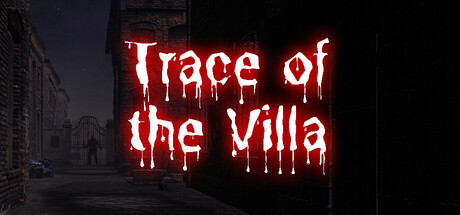
Trace of the Villa — an atmospheric, clue-driven mansion mystery for narrative puzzle players
Jin has spent years searching for his missing sister, and Trace of the Villa places you inside a decaying, deliberately forgotten mansion where recovered manifests and hints suggest she may still be alive. The game marries environmental storytelling with object logic and layered story puzzles: reading clues, restoring systems, and piecing together falsified identities and financial trails drive the investigation forward.

Who this is for
Trace of the Villa is aimed at players who prefer atmospheric mystery adventure and slow-burn suspense over twitch action: people who enjoy reading clues, reconstructing timelines from objects, and solving narrative puzzles that reveal personal and institutional secrets. The Steam categories — Single-player, Color Alternatives, Custom Volume Controls, Playable without Timed Input, Subtitle Options, Family Sharing — indicate it’s tailored for a solo, contemplative experience rather than competitive or co-op play.
What the game is
Trace of the Villa is an Action / Adventure / Indie title from Steadyturtle Co., Ltd., released on 28 May, 2026 for PC via Steam. You play as Jin, investigating a remote mansion cut off from the grid where rooms feel “less abandoned than erased.” Restoring power and accessing secured systems is a central gameplay loop: hidden compartments, safes, encrypted documents, and manifests provide the raw material for the story puzzles that unfold.
When and where to find it
Trace of the Villa launched on Steam on 28 May, 2026. You can view its Steam store page directly here: Trace of the Villa on Steam.
Why the theme matters
The mansion setting and Jin’s personal stake turn what could be a generic puzzle romp into a psychological investigation of identity and erasure. Environmental storytelling — rooms arranged as if occupants vanished mid-routine, missing photographs and names, falsified identities — makes clue reading itself a form of narrative discovery. For players interested in puzzles that are also storytelling devices, this framing prioritizes interpretation over brute-force solutions.
How you progress: clue reading, object logic, story puzzles
Progress in Trace of the Villa revolves around interpreting found materials and using restored infrastructure to reveal more. Official description notes that when Jin restores power, “secured systems come back online. Hidden compartments unlock. Safes yield fragments of encrypted documents and suspicious transfer records.” That sequence—find evidence, restore systems, access deeper layers—signals a puzzle architecture where object logic and clue-reading are paramount. Expect to scan manifests and snippets of administrative records and use them to infer passwords, timelines, or the next place to search.
Design cues from the Steam categories (for example, “Playable without Timed Input” and “Subtitle Options”) imply a measured pace where players can read and think without pressure, useful for decoding layered narrative puzzles.


Quick facts
| Title | Trace of the Villa |
|---|---|
| Developer / Publisher | Steadyturtle Co., Ltd. |
| Release date | 28 May, 2026 |
| Genres | Action · Adventure · Indie |
| Steam categories | Single-player; Color Alternatives; Custom Volume Controls; Playable without Timed Input; Subtitle Options; Family Sharing |
| Store page | Official Steam store page |
| Steam user reviews | No user reviews on Steam (as listed on the store page) |
Which players should wishlist it — specific scenarios
- You enjoy slow, investigative pacing: you prefer reading documents and letting a mystery unfold rather than fast action or reflex tests.
- You value object-centered storytelling: if clues embedded in furniture, manifests, and encrypted documents are your preferred route to plot revelations, this fits.
- You want a single-player, accessible experience: tags like “Playable without Timed Input” and subtitle options help players who need a calmer, more readable puzzle flow.
- You’re curious about narrative puzzles that lean on conspiratorial or institutional secrets—falsified identities and suspicious transfer records are core motifs.
How it compares to similar puzzle-adventure titles
Below is a focused editorial comparison on lawful criteria: genre, atmosphere, puzzle focus, exploration style, and player fit.
| Title | Primary genre | Puzzle focus | Atmosphere & pacing | Best for players who… |
|---|---|---|---|---|
| Trace of the Villa | Action / Adventure / Indie | Clue reading, object logic, encrypted documents, environmental systems | Moody mansion mystery, slow-burning investigation | Prefer narrative-driven, interpretive puzzles and restoration-based progression |
| The Room | Adventure / Indie | Mechanical puzzle boxes, tactile object puzzles | Isolated, tactile, puzzle-centric | Like focused, intricate object puzzles with a tangible feel |
| The Room Two | Adventure / Indie | Complex object puzzles across varied locales | Expands the tactile, mysterious tone of the first title | Enjoy multi-stage object puzzles and atmospheric, non-linear puzzle spaces |
| Escape Simulator | Adventure / Casual / Indie | Highly interactive escape-room puzzles; physics and object interaction | Varied room themes, designed for replay and community content | Prefer hands-on interactivity, multiplayer/co-op options and user-created rooms |
| Unpacking | Casual / Indie / Simulation | Placement and context puzzles that reveal a life story | Calm, domestic, reflective | Enjoy gentle, story-through-objects experiences and zen pacing |
Editorial note: these comparisons are based on genre labels and descriptions available publicly; they are intended to help you decide whether Trace of the Villa’s clue-driven, narrative puzzle design suits your tastes
YouTube discovery
For trailer and gameplay discovery, use YouTube search rather than relying on unverified embeds: Find Trace of the Villa trailer and gameplay searches on YouTube.
Leave a Reply