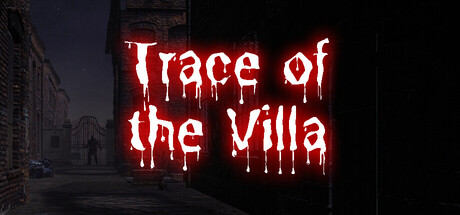
Trace of the Villa — rooms as mystery, puzzles as testimony
Trace of the Villa places you in Jin’s search for a missing sister inside a remote, decaying mansion where furnished rooms and sealed systems keep their own silence. The game frames each chamber as both a puzzle space and a story container: manifests, locked safes and recovered systems gradually convert objects into clues about what—or who—was erased.

What Trace of the Villa is, in plain terms
Trace of the Villa is an atmospheric mystery adventure on Steam about Jin’s investigation into a decaying, off‑grid mansion where recovered manifests and hints suggest his missing sister may still be alive. The title appears on Steam with a 28 May, 2026 release date and lists Steadyturtle Co., Ltd. as both developer and publisher. Steam tags place it in Action, Adventure, and Indie; available categories include Single‑player, Color Alternatives, Custom Volume Controls, Playable without Timed Input, Subtitle Options, and Family Sharing.
| Title | Trace of the Villa |
|---|---|
| Release date | 28 May, 2026 |
| Developer | Steadyturtle Co., Ltd. |
| Publisher | Steadyturtle Co., Ltd. |
| Genres | Action, Adventure, Indie |
| Key Steam categories | Single‑player; Color Alternatives; Custom Volume Controls; Playable without Timed Input; Subtitle Options; Family Sharing |
| Steam appid | 3483660 |

Where the rooms do the storytelling
The official description frames rooms as preserved moments: “Rooms remain furnished as if their occupants vanished mid‑routine.” That phrasing matters because it makes object placement itself a narrative device. Instead of scattering voice notes or long cutscenes across the map, Trace of the Villa places its evidence in cabinets, safes and systems. Restoring power is an explicit gameplay beat: once systems come back online, secured systems reveal hidden compartments, safes yield fragments of encrypted documents, and manifests provide breadcrumbs that point to a larger concealed operation.
That design turns every room into two things at once: a logical puzzle to be solved and a historical snapshot to be read. Players decode financial trails, falsified identities and movement records not as abstract collectibles but as connective tissue between rooms—what you open in one chamber informs how you interpret objects in the next.
How clue reading, object logic and story puzzles shape progress
Trace of the Villa emphasizes close inspection and inference. The official material highlights recovered manifests and encrypted fragments that require assembly into a timeline; in practice that means players alternate between physical puzzles (safes, locked doors, hidden compartments) and documentary puzzles (manifests, transfer records, encrypted text). The act of restoring power is itself a mechanical gateway: secured systems returning online unlock new avenues of discovery rather than merely granting a new map area.
Because identities and photographs are reportedly missing—“no photographs, no names, no history—as if identities themselves were removed”—players are pushed toward pattern recognition. Object logic ties together mundane items with institutional evidence: a missing log entry plus a ledger page, a locked filing cabinet plus suspicious transfer records. The pacing is therefore investigative and layered; each solved puzzle tends to reveal another sealed circuit rather than a single final answer.
Who should wishlist Trace of the Villa?
- Players who prefer slow‑burn suspense and environmental storytelling over action setpieces: the mansion’s furnishings and sealed systems deliver mood through detail.
- Fans of clue-driven investigation and document‑based puzzles: manifests, encrypted fragments and financial trails are core elements of discovery.
- People who appreciate rooms that function as self‑contained narratives—each chamber yields both a mechanical puzzle and a story fragment.
- Those who want accessibility options like subtitle options and adjustable volume controls on PC—these are listed Steam categories.
Comparison: where Trace of the Villa sits among room-focused puzzle games
Below is an editorial comparison by genre, atmosphere and puzzle emphasis to help you judge fit. These comparisons are editorial discovery — not endorsements.
| Title | Release | Genre(s) | Puzzle focus | Atmosphere / exploration | Pacing |
|---|---|---|---|---|---|
| Trace of the Villa | 28 May, 2026 | Action, Adventure, Indie | Object safes, secured systems, manifests and encrypted documents | Mansion mystery with erased identities and institutional coverups | Layered, investigative — clues unlock further sealed content |
| The Room | 28 Jul, 2014 | Adventure, Indie | Tactile single‑room safes and mechanical contraptions | Solitary, intimate curiosity focused on a single puzzle object | Focused, puzzle‑centric within contained spaces |
| Escape Simulator | 19 Oct, 2021 | Adventure, Casual, Indie, Simulation | Highly interactive escape rooms; move furniture, examine everything | Playful, physics‑driven interactions in modular rooms | Variable; can be brisk in coop or meticulous solo |
| Unpacking | 1 Nov, 2021 | Casual, Indie, Simulation | Block‑fitting and contextual object placement as narrative | Zen, domestic; story revealed through possessions and placement | Calm, reflective, narrative through routine actions |
Player scenarios — whether this is the right fit
- Scenario A — You like document work: You’ll enjoy piecing together manifests and encrypted fragments into a timeline that reframes rooms you’ve already seen.
- Scenario B — You prefer object
Steam page
View Trace of the Villa on Steam
YouTube discovery
For trailer and gameplay discovery, use YouTube search rather than relying on unverified embeds: Find Trace of the Villa trailer and gameplay searches on YouTube.
Leave a Reply