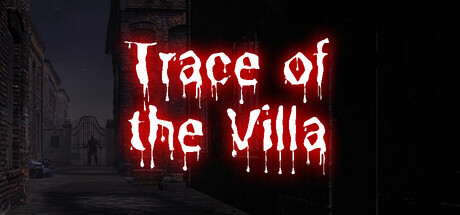
Trace of the Villa: When rooms become puzzles and stories
Trace of the Villa is a slow-burn, atmospheric mystery adventure that stages its investigation inside a remote, decaying mansion — a house where furnished rooms, locked safes, and reclaimed systems hide the clues you need to follow a missing-person trail. Released 28 May, 2026 from Steadyturtle Co., Ltd., it positions environmental storytelling and object-based puzzles at the center of an investigative, story-rich experience.

What Trace of the Villa is — and what it asks of you
Officially described on Steam, the protagonist Jin has spent years searching for his missing sister; a new lead takes him to a deliberately forgotten mansion where manifests and hints suggest she may still be alive. Inside, the house feels “less abandoned than erased”: rooms frozen mid-routine, locked doors with hastily secured secrets, personal items preserved but names and photographs removed. When Jin restores power, secured systems reboot, hidden compartments open, and safes yield fragments of encrypted documents and transfer records.
Who should wishlist it
Trace of the Villa will land best for players who enjoy narrative puzzle design over twitch reflexes: people who savor reading clues, parsing object logic, and letting a house reveal itself over time. If you prefer puzzle solutions that hinge on environmental detail, cross-referencing found documents, and piecing together a timeline from objects and systems, this is likely to fit your tastes.
Where and when
Trace of the Villa is available on Steam; the listed release date is 28 May, 2026. The developer and publisher credited on the Steam page are Steadyturtle Co., Ltd.
Why the mansion matters: rooms as puzzle spaces and story containers
Rooms in Trace of the Villa do double duty. Practically, each space is a capsule of object logic — furniture, locked cabinets, safes, and powered devices that respond when systems are restored. Narratively, those same objects are fragments of erased lives: absence becomes a clue. The absence of photographs or names turns negative space into a puzzle: what has been removed, and why? That design choice turns exploration into forensic reading: you don’t just open drawers, you infer histories from what the builders left and what someone else tried to hide.
How you progress — clue reading, object logic, story puzzles
Progress in Trace of the Villa is described as system-driven: restoring power reactivates secured systems, opens hidden compartments, and lets safes yield encrypted fragments and transfer records. That sequence highlights three linked puzzle rhythms:
- Clue reading: Documents and manifests are treated as connective tissue — a line of notes, receipts, or manifests that point to the next room or device.
- Object logic: Furniture, locks, and mechanical devices are designed as spatially consistent puzzles; the solution relies on understanding a room’s functional logic rather than arbitrary mini-games.
- Story puzzles: Solving systems reveals narrative fragments — falsified identities, financial trails, and curated erasures — so puzzles and plot advance in tandem.

Facts: Trace of the Villa
| Title | Trace of the Villa |
|---|---|
| Developer | Steadyturtle Co., Ltd. |
| Publisher | Steadyturtle Co., Ltd. |
| Release date | 28 May, 2026 |
| Genres | Action, Adventure, Indie |
| Steam categories / accessibility | Single-player; Color Alternatives; Custom Volume Controls; Playable without Timed Input; Subtitle Options; Family Sharing |
| Steam page | Trace of the Villa on Steam |
How it compares — nearby puzzle-adventure touchpoints
For readers choosing between story-focused mystery adventures, here are lawful editorial comparisons on genre, atmosphere, puzzle focus, exploration style, and pacing using similar titles.
| Title | Genre / Release | Atmosphere & Tone | Puzzle focus | Exploration style / Pacing | Player fit |
|---|---|---|---|---|---|
| The Room | Adventure, Indie — 28 Jul, 2014 | Mysterious, tactile | Object- and mechanism-driven safes and puzzles | Room-by-room, concentrated puzzle chambers | Players who like dense mechanical puzzles with a tactile, self-contained feel |
| The Room Two | Adventure, Indie — 5 Jul, 2016 | Cryptic, atmospheric | Progressive, interconnected puzzle devices | Measured, unfolding mystery through staged rooms | Fans of escalating mechanical puzzles and layered reveal |
| Escape Simulator | Adventure, Casual, Indie — 19 Oct, 2021 | Playful to tense depending on room | Highly interactive object puzzles; physics-enabled manipulation | Modular rooms with both solo and cooperative pacing | Players who want high interactivity and community-made rooms |
| Unpacking | Casual, Indie, Simulation — 1 Nov, 2021 | Zen, domestic, intimate | Item-placement puzzles that tell a life story | Slow, contemplative, scene-building exploration | Players who prefer narrative through objects and domestic detail |
Player scenarios — which room puzzles will click for you
- You like forensic reading: If you enjoy scanning documents, connecting receipts or manifests to objects, and using found records to unlock the next area, Trace of the Villa’s manifest- and system-based reveals will reward patience.
- You prefer environmental logic: If your favored puzzles are grounded in how a space functions — rather than abstract minigames — the mansion’s rooms that “feel less abandoned than erased” give meaningful spatial context to solutions.
- You want story and mechanics intertwined: If you want puzzle outcomes to advance narrative fragments (encrypted documents, falsified identities, transfer records), the game’s approach to safes and secured systems ties plot to progression.
YouTube discovery
For trailers and gameplay clips, search YouTube: Trace of the Villa trailer & gameplay (YouTube search). This link is a discovery path; it does not assert a specific official video.
If Trace of the Villa sounds like your kind of investigation, add it to your Steam wishlist or follow the store page to catch updates and community posts.
View Trace of the Villa on Steam
Disclaimer: Referenced titles and trademarks belong to their respective owners. Comparisons above are editorial discovery only and not endorsements.
Leave a Reply