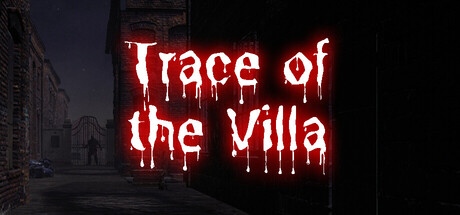
Trace of the Villa — Rooms as Puzzle Spaces and Story Containers
Trace of the Villa places a private investigation into the heart of a decaying mansion, where Jin follows manifests and hints that his missing sister may still be alive. The game frames its mystery through furnished, locked rooms that reveal identities erased and systems restored as you solve puzzles and unearth encrypted fragments.

The essentials: who, what, when, where
Who: Developed and published by Steadyturtle Co., Ltd., Trace of the Villa centers on Jin, a protagonist searching for his missing sister.
What: An action-adventure indie on Steam that uses environmental storytelling, locked rooms, restored systems, and recovered manifests to unspool a larger operation hidden inside a mansion.
When / Where: Released on 28 May, 2026 and available on Steam for PC. See the Steam page for store details and system requirements.
How rooms shape the experience
The mansion in Trace of the Villa is described not as an empty shell but as a place “less abandoned than erased”: rooms furnished as if occupants vanished mid-routine, locked doors, hidden compartments and safes. That language signals an approach to level design where each room is both a discrete puzzle space and a container of story evidence.
Practically, the game asks you to read clues across multiple object types: manifests and hints recovered from the estate, encrypted documents found in safes, and secured systems that come back online when power is restored. Those artifacts work together: an object’s logic (what it is for, where it would be stored) points to a mechanical or narrative solution; solving one container opens another, and the house gradually exposes a financial and identity-based trail.


Why the theme matters
Trace of the Villa ties personal stakes (a missing sister) to institutional erasure: falsified identities, transfer records, and arrivals with no registration. That combination makes rooms more than backdrops; they are evidence vaults. Thematically, solving puzzles becomes an act of reading people’s absence as much as it is solving mechanical locks—an approach that leans on atmospheric mystery, psychological investigation, and narrative puzzle design.
Who should wishlist this
- Players who prefer story-rich adventure focused on clue-driven exploration and slow-burn suspense.
- Fans of environmental storytelling where objects, power systems, and documents interlock to reveal a larger conspiracy.
- Those who enjoy single-player PC mystery games that reward careful observation and logical inference over reflex-based encounters.
How you progress: clue reading, object logic, and story puzzles
Progress in Trace of the Villa is shaped by three overlapping behaviors:
- Clue reading: Manifests and hints recovered across the estate hint at timelines and connections—you assemble fragments to build narrative hypotheses.
- Object logic: Personal belongings, safes and secured systems follow workplace and household logic; understanding where items belong and why they were locked helps you deduce solutions.
- Story puzzles: Solving a locked system or decrypting a fragment doesn’t just open a door—it advances a chain of evidence that reframes what rooms once meant and who passed through them.
Those dynamics make rooms function simultaneously as puzzle arenas and as narrative chapters; each solved container reveals another layer of obfuscated operations, suggesting the mansion’s use for movements masked behind falsified identities and transfers.
Compact facts: Trace of the Villa
| Title | Trace of the Villa |
|---|---|
| Steam AppID | 3483660 |
| Release date | 28 May, 2026 |
| Developer | Steadyturtle Co., Ltd. |
| Publisher | Steadyturtle Co., Ltd. |
| Genres | Action, Adventure, Indie |
| Categories | Single-player; Color Alternatives; Custom Volume Controls; Playable without Timed Input; Subtitle Options; Family Sharing |
| Short premise | Jin searches a remote, decaying mansion and recovers manifests and hints that indicate his sister may still be alive. |
How Trace of the Villa compares
Below is a focused editorial comparison to nearby puzzle-adventure titles. This is intended to help readers decide whether Trace of the Villa matches their preferences for atmosphere, puzzle focus, and pacing.
| Title | Primary genre(s) | Atmosphere / Story tone | Puzzle focus | Exploration style | Player fit |
|---|---|---|---|---|---|
| Trace of the Villa | Action, Adventure, Indie | Mansion mystery with personal/psychological stakes and slow-burn suspense | Clue-driven puzzles, safes, secured systems, encrypted documents | Room-by-room environmental storytelling; items and systems reveal narrative layers | Players who like narrative puzzles and forensic reading of objects |
| The Room | Adventure, Indie | Cryptic, solitary puzzle atmosphere (mysterious invitation to an attic) | Mechanical safes and tactile, object-based puzzles | Contained, focused puzzle rooms with layered mechanisms | Players who favor intricate mechanical puzzles and tactile problem solving |
| The Room Two | Adventure, Indie | Mysterious, transportive; crypt-like settings | Pedestal- and mechanism-centered puzzles with escalating complexity | Sequential puzzle spaces that reveal new mechanics as you progress | Those who enjoyed the original and want extended mechanical puzzle narratives |
| Escape Simulator | Adventure, Casual, Indie, Simulation | Playful to tense depending on room; highly interactive | Hands-on escape-room puzzles—move furniture, manipulate items, break locks | Highly interactive, object-centric rooms; strong focus on tactile interactivity | Players who want physically interactive
Steam pageView Trace of the Villa on Steam YouTube discoveryFor trailer and gameplay discovery, use YouTube search rather than relying on unverified embeds: Find Trace of the Villa trailer and gameplay searches on YouTube. CommentsMore posts |
Leave a Reply