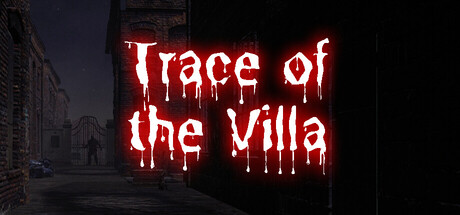
Trace of the Villa: rooms as puzzle spaces and story containers
Trace of the Villa is an atmospheric mystery adventure from Steadyturtle Co., Ltd. that puts a slow-burn investigation inside a decaying mansion, where rooms function as both puzzle arenas and narrative crates of memory. Released on 28 May, 2026 for PC on Steam, it centers on Jin’s search for a missing sister and uses object logic, clue-reading, and interlocking story puzzles to reveal a wider, unsettling operation.

Who: the player fit
This is for players who prefer narrative puzzle design over twitch reflexes: those who enjoy atmospheric mystery adventure, environmental storytelling, and methodical clue reading. If you like slow-burn suspense, searching furnished rooms for traces of life, and following financial or identity-based clues rather than combat-heavy action, Trace of the Villa is aimed at that crowd.
What: the game in concrete terms
Trace of the Villa is listed on Steam as an Action / Adventure / Indie title developed and published by Steadyturtle Co., Ltd. The official short description states: “Jin has spent years searching for his missing sister, pursuing leads that took him to a remote, decaying mansion where he recovered manifests and hints that indicate his sister may still be alive, somewhere at the end of the trail he is about to follow.” The mansion’s furnished-but-erased rooms and locked systems become the core puzzle set.
When & where: release and Steam context
Release date: 28 May, 2026. The game is available on Steam (PC). At the time of this article the Steam page shows no user reviews.
Why rooms matter here
Rooms in Trace of the Villa act as both mechanical containers for puzzles and narrative containers for absence. Furnishings left in mid-routine, locked doors, safes and restored systems are not just obstacles — they’re signposts. Each solved object or decrypted manifest uncovers a document or log that reframes previous clues. Because identities appear to have been removed or falsified in the mansion’s history, the player’s logic work (matching items, reconstructing timelines, interpreting transfer records) becomes the primary means of restoring narrative context.
How progression works: clue reading and object logic
Progression is driven by three overlapping puzzle modes:
- Clue reading — interpreting manifests, transfer records and fragments recovered from safes or systems to form leads.
- Object logic — using inventory items, environmental affordances, and mechanical interactions to unlock cabinets, panels, and safes.
- Story puzzles — layered sequences where solving one puzzle reveals more of the mansion’s operation, often through snippets of encrypted or falsified documentation.
Players who enjoy assembling evidence into a timeline will find the experience rewarding; the mansion’s rooms are intentionally paced so that the narrative unspools through accumulation of small discoveries rather than one big beat.


Compact facts
| Title | Trace of the Villa |
|---|---|
| Steam appid | 3483660 |
| Release date | 28 May, 2026 |
| Developer / Publisher | Steadyturtle Co., Ltd. |
| Genres | Action, Adventure, Indie |
| Categories | Single-player; Color Alternatives; Custom Volume Controls; Playable without Timed Input; Subtitle Options; Family Sharing |
| Short premise | Jin searches a decaying mansion for his missing sister, recovering manifests and hints that she may still be alive. |
How it compares — quick editorial table
Nearby puzzle and room-based experiences differ by focus: some emphasize tactile object puzzles, others environmental narrative or open-ended room construction. Below is an editorial comparison that highlights where Trace of the Villa sits in that landscape.
| Game | Genre / Focus | Puzzle style | Atmosphere & pacing | Player fit |
|---|---|---|---|---|
| The Room (2014) | Adventure / Indie | Mechanical, tactile safe-and-box puzzles | Secluded, focused, puzzle-dense; deliberate pacing | Players who like intricate, tactile object puzzles with isolated scenes |
| The Room Two (2016) | Adventure / Indie | Expanded mechanical puzzles with more variety in environments | Mysterious and methodical; exploration across distinct chambers | Fans of serial puzzle rooms and escalating puzzle complexity |
| Escape Simulator (2021) | Adventure / Simulation / Casual | Highly interactive escape-room mechanics, physics interactions | Varied tempo; can be fast or slow depending on room design | Players who want interactive object manipulation and co-op/editor options |
| Unpacking (2021) | Casual / Indie / Simulation | Spatial, non-verbal placement puzzles tied to storytelling | Zen, reflective, gentle pacing | Players who prefer domestic, clue-by-environment storytelling and low-pressure puzzles |
| Trace of the Villa (2026) | Action / Adventure / Indie | Clue reading, object logic, layered story puzzles in rooms | Slow-burn suspense: rooms reveal narrative through documents and systems | Players seeking environmental storytelling combined with investigative puzzle work |
Player scenarios — who will enjoy Trace of the Villa?
- The evidence assembler: You like gathering fragments — manifests, transfer records, and safes — to reconstruct what happened and why.
- The atmospheric investigator: You prefer exploring staged rooms and reading mood and absence as story clues rather than relying on jump scares or combat.
- The methodical puzzler: You value puzzles that require logical inference and inventory/room interactions over reflex-based challenges; categories like “Playable without Timed Input” support that style.
YouTube discovery
If you want to watch trailers or gameplay footage, use this YouTube search path (search results may include trailers and player captures): Search Trace of the Villa on YouTube.
Deciding checklist
Before wishlisting: confirm you enjoy slow-burn, room-based mystery; want a puzzle progression driven by documents and restored systems; and prefer exploration and
Leave a Reply