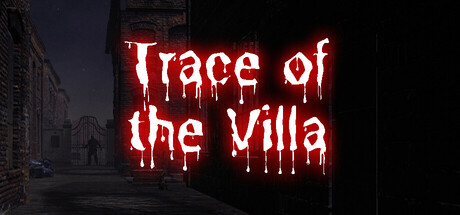
Trace of the Villa: rooms as puzzle spaces and story containers
Trace of the Villa places you in a decaying, off-grid mansion where each furnished room stores both mechanical puzzles and fragments of a nameless operation—an environment designed so that solving a lock or restoring power also unwraps story. Released 28 May, 2026 by Steadyturtle Co., Ltd., the game blends action-adventure pacing with clue-driven exploration and environmental storytelling to steer players through a slow-burning mansion mystery.

Quick facts
| Title | Trace of the Villa |
|---|---|
| Developer / Publisher | Steadyturtle Co., Ltd. |
| Release date | 28 May, 2026 |
| Genres | Action, Adventure, Indie |
| Steam categories | Single-player, Color Alternatives, Custom Volume Controls, Playable without Timed Input, Subtitle Options, Family Sharing |
| Steam page | Trace of the Villa on Steam |
Who should wishlist this
Players who favour atmospheric mystery adventure and psychological investigation over twitch reflexes will find the premise appealing. If you like narrative puzzle design where reading clues, examining objects and unlocking systems are the primary rewards—rather than combat or speedrun objectives—this is a fit. The Steam listing emphasizes single-player exploration with accessibility options (playable without timed input, subtitle options) that suit thoughtful, deliberate puzzle work.
What the game is
Official materials describe Jin, the protagonist, as following leads to a remote, decaying mansion where manifests and hints suggest his missing sister may still be alive. The house is described as “less abandoned than erased”: furnished rooms frozen mid-routine, locked doors, hidden compartments, safes, and secured systems that reveal encrypted documents and transfer records as power is restored. That framing positions rooms as storytelling modules—each space holds objects and systems that both block and reveal narrative threads.
When and where
Trace of the Villa launched on Steam 28 May, 2026. The developer and publisher listed on the Steam page are both Steadyturtle Co., Ltd. The Steam product page and store visuals are the authoritative source for the release and presentation.
Why the theme matters
The mansion-as-container approach makes rooms do double duty: they are puzzle spaces with object logic (safes, power systems, locked cabinets) and puzzle-laden story containers (personal items, encrypted manifests, transfer records). That architecture encourages players to treat each room like an evidence board—solving mechanical puzzles isn’t detached from the plot; it progressively reconstructs who passed through the house and why identities were erased. For players who value environmental storytelling and a slow-burn investigative tone, that coupling amplifies suspense.
How clue reading, object logic, and story puzzles shape the experience
Trace of the Villa’s design, as presented on Steam, suggests three interlocking puzzle modes: visual and textual clues in a room’s decor; object-based puzzles that use logical affordances (keys, safes, switches); and story puzzles where recovered documents or restored systems recontextualize earlier discoveries. In practice, that means progression often loops: a discovered document points to a locked room, opening that room yields a device that, once powered, deciphers another clue. The house’s systems becoming active is a gameplay beat that links mechanics (restore power) to narrative reveals (hidden compartments unlock).


Player scenarios: who gets the most out of Trace of the Villa
- The slow-burn investigator: You enjoy methodically cataloguing clues and tracing connections between documents and objects. You’ll appreciate how rooms function as dossiers.
- The environmental storyteller: You prefer learning backstory through furnishings and recovered records rather than cutscenes; each solved safe or powered console reveals narrative texture.
- The accessibility-minded puzzler: You want a puzzle-forward adventure without timed inputs; the Steam categories include “Playable without Timed Input” and subtitle options.
- The crossover action-adventure player: The game lists Action and Adventure among its genres, so players expecting some kinetic beats will find moments of urgency woven into a probe-and-reveal structure.
How it compares to nearby titles
Below is a compact editorial comparison focused on genre, atmosphere, puzzle emphasis, exploration style, story tone, and pacing. These are meant to help readers decide which puzzle-adventure fits their taste; comparisons are observational and not claims of endorsement.
| Title | Release Date | Puzzle focus | Atmosphere / Story tone | Exploration / Room use |
|---|---|---|---|---|
| Trace of the Villa | 28 May, 2026 | Clue reading, object logic, safes and systems | Decaying mansion, investigatory, slow-burn suspense | Rooms as narrative containers; power restoration unlocks content |
| The Room | 28 Jul, 2014 | Mechanical, tactile puzzle boxes and ornate contraptions | Mystical, intimate, focused on a single mysterious object | Single-room focus that turns a space into a layered puzzle chamber |
| The Room Two | 5 Jul, 2016 | Expanded mechanical puzzles with interconnected devices | Cryptic, atmospheric, slightly broader scope than the original | Multiple spaces tied by puzzle objects and narrative thread |
| Escape Simulator | 19 Oct, 2021 | Highly interactive escape-room mechanics, physics-driven items | Varied tones depending on room; puzzle-focused rather than narrative-driven | Rooms as discrete challenges; user-made rooms extend variety |
| Unpacking | 1 Nov, 2021 | Spatial, object-placement puzzles with implicit storytelling | Zen, domestic, intimate life-history revealed through possessions | Rooms map personal history; pacing is reflective and non-urgent |
| hack_me | 5 Jan, 2017 | Hacker-simulator mechanics, command-line and tool use | Simulation-focused, less oriented to environmental mystery | Less room-centric; emphasis on system puzzles rather than spatial exploration |
Deciding: will it fit your shelf?
Choose Trace of the Villa if you want a story-first mansion mystery where each room is both a set of interlocking puzzles and a piece of the narrative puzzle map. If you prefer tightly focused mechanical puzzles in a single chamber, The Room series is a stronger match. If you want user-created, variety-driven room challenges or co-op options, Escape Simulator targets that play pattern. If you want quietly evocative, non-confrontational object puzzles that tell a life story, Unpacking is the slower, gentler alternative. For system/hacker simulation rather than environmental mystery, hack_me sits in a different niche.
YouTube discovery
If you want to see footage and trailers, search for Trace of the Villa on YouTube: YouTube search: Trace of the Villa trailer & gameplay. This link is provided as a discovery path; verify individual uploads if you require official trailers.
View Trace of the Villa on Steam
Referenced titles and trademarks belong to their respective owners. Comparisons above are editorial observations meant to clarify differences in genre, atmosphere, puzzle focus, exploration style, story tone, and pacing.
Leave a Reply