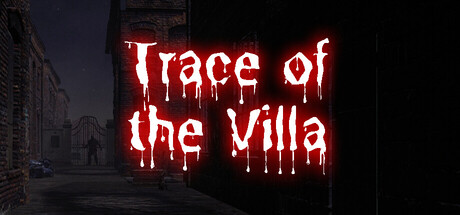
Trace of the Villa: rooms as puzzle spaces and story containers
Trace of the Villa places you inside a decaying mansion where every closed door, dusty drawer and powered-up system becomes both a mechanical challenge and a narrative beat. The game frames rooms as self-contained puzzles that, when read correctly, stitch together Jin’s search for his missing sister into a slow-burn, atmospheric mystery adventure.

What Trace of the Villa is
Trace of the Villa is an action-adventure indie from Steadyturtle Co., Ltd. that leans on atmospheric mystery and puzzle-driven exploration. Its official premise centers on Jin, who has followed leads to a remote, deliberately forgotten mansion and recovered manifests and hints suggesting his missing sister may still be alive at the end of the trail he’s about to follow.

When and where
Trace of the Villa released on Steam on 28 May, 2026 and is listed on the Steam store page for PC. It appears in Steam discovery metrics with notable visit activity from the United States among other countries, reflecting an audience footprint across multiple regions.
Why the mansion setting matters
The mansion in Trace of the Villa is more than backdrop: rooms act as discrete puzzle spaces and containers of story. The official description describes furnished rooms where occupants seem to have vanished mid-routine, secured systems that reveal encrypted fragments when power is restored, and falsified identities and transfer records uncovered through puzzles. That pairing—object-level puzzles that reveal document fragments and system logs—makes the act of clue reading central to both narrative progress and atmosphere.
How you play: clue reading, object logic, and story puzzles
Players advance by interpreting manifests, unlocking safes and restoring systems; each solved puzzle yields a narrative fragment that reframes previous spaces. The design emphasis is on environmental storytelling: objects and room layouts hold logical connections (object logic) that reward careful observation and pattern recognition. Story puzzles bridge mechanical solutions and narrative payoff—find a key, decode a manifest, restore power, read an encrypted transfer record—so progress is simultaneously spatial (opening new rooms) and informational (assembling a timeline). For players who enjoy slow-burn suspense and narrative puzzle design, this structure privileges patient reading and piecing together clues rather than fast reflexes.
Who this is for
- Players who prefer atmospheric mystery adventure and psychological investigation over action-heavy arcade sequences.
- Fans of clue-driven exploration and environmental storytelling who enjoy puzzles that reveal story fragments as rewards.
- Those who appreciate a steady pacing and rooms designed to be read as narrative nodes—each space is both a mechanical problem and a story container.
Compact facts: Trace of the Villa
| Title | Trace of the Villa |
|---|---|
| Steam App ID | 3483660 |
| Release date | 28 May, 2026 |
| Developer / Publisher | Steadyturtle Co., Ltd. |
| Genres | Action, Adventure, Indie |
| Categories | Single-player; Color Alternatives; Custom Volume Controls; Playable without Timed Input; Subtitle Options; Family Sharing |
How it compares (editorial overview)
Below is a short, practical comparison to help readers map Trace of the Villa onto nearby puzzle-adventure tastes. Comparisons focus strictly on genre, atmosphere, puzzle focus, exploration style, story tone, pacing, and player fit.
| Title | Core puzzle style | Atmosphere / Story tone | Exploration & pacing | Best for players who… |
|---|---|---|---|---|
| Trace of the Villa | Document and environment-based puzzles; system restores, safes, manifests | Slow-burn mansion mystery; psychological investigation | Room-by-room, methodical; clues unlock narrative fragments | Prefer atmospheric mystery and clue-reading tied to story |
| The Room | Mechanical, tactile object puzzles (safe/box puzzles) | Mysterious, focused on a singular apparatus and isolation | Linear, puzzle-box progression | Enjoy intricate, tactile object puzzles and tight mechanical design |
| The Room Two | Expanded mechanical puzzles across connected settings | Cryptic, evocative, with a broader physical scope | Sequential chapters with an unfolding scope | Like narrative mystery built around complex physical puzzles |
| Escape Simulator | Highly interactive escape-room puzzles; physics and object interaction | Playful to tense depending on room; community-made content | Room-focused but often faster-paced with cooperative options | Want interactive, tactile puzzle rooms and player-created content |
| Unpacking | Home-organization and block-fitting as narrative clues | Zen, slice-of-life storytelling via objects | Relaxed, methodical, non-threatening | Prefer quiet, empathic story discovery through object placement |
Player scenarios: when Trace of the Villa fits your evening
- Late-night solo sessions: you want a slow, atmospheric puzzle loop where reading logs and scanning rooms yields the primary satisfaction.
- Focused investigation session: you have 60–90 minutes and want a contained set of rooms to methodically work through clue threads.
- Story-first puzzling: you enjoy mechanics that exist to reveal narrative evidence—documents, transfer records, and restored systems—not just abstract ciphers.
Steam and discovery notes
Trace of the Villa is presented on Steam with the standard store assets and the Steam page reflects international discovery activity with especially notable visits from the United States. If you want to check the store listing directly, use the link below.
View Trace of the Villa on Steam
YouTube discovery
If you want to see trailers or footage, search YouTube for Trace of the Villa trailers and gameplay using this discovery path (search results may include official and community videos): Trace of the Villa — YouTube search.
Final notes and disclaimer
This article uses the official Steam store description and visual assets to explain how rooms, clues and object logic shape Trace of the Villa’s puzzle-adventure experience. Referenced comparison titles are discussed on editorial grounds only—genre, atmosphere, puzzle focus and pacing—not as endorsements.
Referenced titles and trademarks belong to their respective owners; comparisons are editorial discovery only.
Leave a Reply