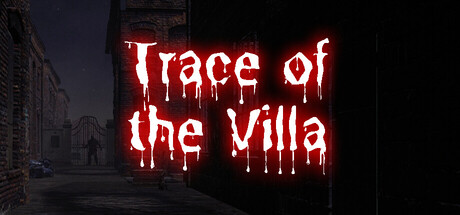
Trace of the Villa: How Rooms Shape Puzzle and Story
Trace of the Villa frames its mystery inside the slow, creaking architecture of a decaying mansion, where each room acts as both a puzzle chamber and a chapter of a larger investigation. The way you read clues, apply object logic, and follow story puzzles determines whether the house yields a timeline—or keeps its secrets buried.

Quick facts
| Title | Trace of the Villa |
|---|---|
| Developer / Publisher | Steadyturtle Co., Ltd. |
| Release date | 28 May, 2026 |
| Steam appid | 3483660 |
| Genres | Action, Adventure, Indie |
| Categories | Single-player; Color Alternatives; Custom Volume Controls; Playable without Timed Input; Subtitle Options; Family Sharing |
| Premise (official) | Jin has spent years searching for his missing sister, pursuing leads that took him to a remote, decaying mansion where he recovered manifests and hints that indicate his sister may still be alive, somewhere at the end of the trail he is about to follow. |
Who is this for?
If you prioritize atmospheric mystery adventure and environmental storytelling, Trace of the Villa is pitched at players who enjoy slow-burn suspense and clue-driven exploration. The Steam page emphasizes a personal investigation—Jin searching for his missing sister—which will appeal to players who want narrative stakes tied to inventory puzzles and unlocked documents rather than constant action set-pieces.
What the game actually is
Official Steam text positions the mansion as a deliberately forgotten property whose rooms feel “less abandoned than erased.” Gameplay, as described on Steam, mixes restoration of estate systems, unlocking of hidden compartments and safes, and discovery of encrypted documents and manifests. Those elements frame rooms as discrete puzzle spaces that also reveal the estate’s concealed operation and timeline.
When and where
Trace of the Villa released on Steam on 28 May, 2026. It’s listed on Steam with appid 3483660 and shows standard PC-focused categories such as Single-player and Subtitle Options that help accessibility-conscious players.
Why the setting matters
Rooms that still look lived-in—furnished, but missing names and photographs—create a strong sense of absence. That curated emptiness is not just decorative: according to the official description, restoring power and accessing secured systems is how the mansion reveals its secrets. Thematically, each room becomes a container for both mechanical puzzles (safes, encrypted fragments) and story fragments (transfer records, falsified identities) that together map an unsettling social operation. For players who value narrative puzzle design, that coupling of object logic with forensic discovery is the core appeal.
How you progress: clues, objects, and story puzzles
Progression, per the official description, depends on reading physical evidence and restored systems. You’ll find manifests and encrypted documents in safes and compartments; restoring power and unlocking those systems is presented as the mechanical through-line that turns isolated puzzles into narrative evidence. That structure privileges careful examination—collecting fragments, linking them to falsified identities or suspicious transfers—and rewards players who treat rooms as forensic scenes rather than decorative backdrops.


Player scenarios — who will enjoy it most
- The methodical investigator: You enjoy scanning rooms for small inconsistencies, restoring functions (power, systems) and reading documents to assemble a timeline.
- The narrative-first puzzler: You like puzzles that unlock story beats—safes and encrypted files that reveal motivations and operations rather than abstract mechanical challenges.
- The atmospheric explorer: You want slow, suspenseful exploration where each room’s design and absence of personal artifacts contribute to tone and reveal.
- Not for you if: you prefer rapid-fire action, multiplayer interplay, or puzzle games that foreground dexterity or physics over documentary-style clue reading.
How it compares
Below is a concise editorial comparison with nearby puzzle and mystery titles. This is a genre-level, descriptive comparison—intended to help readers decide whether Trace of the Villa fits their tastes.
| Title | Genre | Puzzle emphasis | Atmosphere / Story tone | Exploration style | Best for |
|---|---|---|---|---|---|
| Trace of the Villa | Action, Adventure, Indie | Document- and system-based puzzles (safes, encrypted files) | Slow-burn mansion mystery, personal investigation (Jin searching for his sister) | Room-by-room forensic reading; restore systems to reveal evidence | Players who want narrative stakes tied to puzzle progress |
| The Room | Adventure, Indie | Mechanical, object-focused puzzle boxes and safes | Mystery and tactile, single-room puzzles with escalating curiosity | Focused, puzzle-chamber experience | Those who like intricate mechanical puzzles and tactile interfaces |
| The Room Two | Adventure, Indie | Multi-stage mechanical puzzles across chained environments | Cryptic, atmospheric exploration with a sense of discovery | Connected rooms and environments with layered puzzles | Players who want evolving mechanical challenges with mood |
| Escape Simulator | Adventure, Casual, Indie | Highly interactive escape-room mechanics, physics and item use | Varied tone (depends on room design); more playful and tactile | Interactive rooms with physics; strong community room variety | Fans of sandboxy, object-manipulation escape rooms, solo or co-op |
| Unpacking | Casual, Indie, Simulation | Puzzle as domestic placement and visual storytelling | Zen, intimate, life-history revealed through objects | Progression through spaces by arranging possessions | Players who prefer low-pressure, story-driven environmental puzzles |
YouTube discovery
If you want to see trailers or gameplay clips, use this YouTube search path (search results may include official trailers and community videos): Trace of the Villa trailer & gameplay — YouTube search.
Deciding—quick guide
Wishlist Trace of the Villa if you like: atmospheric mystery adventure, slow reveals anchored to puzzles that also read as evidence, and story
Leave a Reply