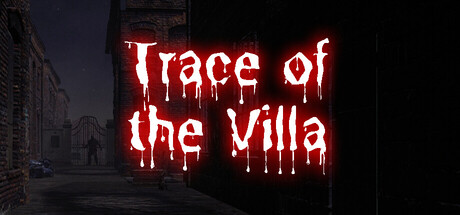
Trace of the Villa: Rooms as Puzzle Spaces and Story Containers
Trace of the Villa places you inside a decaying mansion where rooms act as both mechanical puzzles and narrative capsules — each furnished space preserves a fragment of lives that were deliberately erased. Developer-publisher Steadyturtle Co., Ltd. leans on clue reading, object logic, and layered story puzzles to make exploration itself feel like detective work.

Quick facts
| Title | Trace of the Villa |
|---|---|
| Developer / Publisher | Steadyturtle Co., Ltd. |
| Release date | 28 May, 2026 |
| Genres | Action, Adventure, Indie |
| Steam categories | Single-player; Color Alternatives; Custom Volume Controls; Playable without Timed Input; Subtitle Options; Family Sharing |
| Premise (official) | Jin has spent years searching for his missing sister, pursuing leads that took him to a remote, decaying mansion where he recovered manifests and hints that indicate his sister may still be alive, somewhere at the end of the trail he is about to follow. |
Who, what, when, where, why, and how
Who it’s for
This is a fit for players who prefer story-rich adventure and mystery on PC: those who enjoy atmospheric mystery adventure and psychological investigation rather than twitch-heavy combat. If you appreciate slow-burn suspense, environmental storytelling that rewards patient observation, and puzzles that unfold from reading context, Trace of the Villa is aligned with that taste.
What the game is
Trace of the Villa is an adventure framed around investigation inside a remote, deliberately forgotten mansion. The official premise centers on Jin, a protagonist searching for his missing sister; he follows leads to a house where rooms feel “erased” and evidence — manifests, encrypted documents, transfer records — is recovered while systems are restored and secrets unlock.
When and where
Trace of the Villa launched on Steam on 28 May, 2026. It’s available on PC via its Steam store page and includes single-player-focused accessibility options listed on its Steam page such as subtitle options, custom volume controls, and color alternatives.
Why the theme matters
The mansion setting turns rooms into concentrated units of story. Furnishings left mid-routine, locked doors, and missing identifiers are not just wallpaper: they’re deliberate promptings for players to assemble context. This is narrative puzzle design that uses objects and layouts to imply backstory, so the emotional work of the mystery comes from interpreting physical traces rather than from explicit exposition.
How you progress — clue reading, object logic, story puzzles
The official description makes the progression clear in its beats: restoring power to the estate reactivates secured systems, hidden compartments reveal themselves, and safes yield fragments of encrypted documents and suspicious transfer records. Progress is anchored in three complementary practices:
- Clue reading — catalogue and cross-reference manifests, notes, and in-world records to form hypotheses about movements and identities.
- Object logic — treat furniture, locked containers, and visible wiring as functional puzzles: manipulating one device often changes the mansion’s state and yields new narrative evidence.
- Story puzzles — solve logical locks and pieced-together sequences to reveal story fragments that refract the overarching mystery; each solved puzzle is also an act of archival recovery.
Rooms as puzzle spaces and story containers
Rooms in Trace of the Villa act like micro-narratives: a nursery’s arrangement implies a life interrupted; a study’s false bottom suggests deliberate concealment. Because identities appear to be erased — no photographs, no names — the player must read combinations of objects to reconstruct who occupied a room and what purpose it served. That dynamic elevates environmental puzzles into moral and investigative choices: what to trust, what to assemble, and how much of the house’s orchestration you accept as fact.


Player scenarios — who should wishlist it
- If you want archival investigation: You enjoy collecting fragments — manifests, encrypted records, transfer logs — then assembling them into a plausible timeline. The game’s premise emphasizes recovering documents and decrypting clues as primary motivators.
- If you prefer atmospheric, slow-burn mystery: You like tension built through atmosphere, preserved domestic detail, and inference rather than jump scares. The mansion’s “erased” identities and carefully staged rooms suit a patient, observational playstyle.
- If you want accessibility and paced exploration: Steam categories list options like subtitles, color alternatives, and no timed input, so players who benefit from a slower, readable experience should find the settings supportive.
- If you want more overt mechanical puzzle chaining: While there are safes and secured systems that react when power is restored, players seeking constant mechanical complexity or heavy action may find some sections quieter; the blend leans to investigation-led progression.
How it compares (editorial discovery)
| Title | Core puzzle focus | Atmosphere / Story tone | Best for players who… |
|---|---|---|---|
| The Room (2014) | Object-centric mechanical puzzles, tactile safe-and-chamber puzzles. | Claustrophobic, mysterious single-room puzzle design with an arcane bent. | Like precise, tactile object puzzles and mechanical interlocks. |
| The Room Two (2016) | Expanded object puzzles across connected spaces with layered mechanisms. | Broader scope than the original, still strongly puzzle-first and atmospheric. | Enjoy multi-stage object puzzles and a sustained puzzle narrative. |
| Unpacking (2021) | Household-object, placement-based puzzles that reveal a life story. | Zen, domestic, and quietly narrative-focused rather than overt mystery. | Prefer gentle, story-by-environment play and puzzle-as-decoration. |
| Escape Simulator (2021) | Highly interactive room-based escape puzzles; physics and item manipulation. | Playful, workshop-friendly; community rooms vary widely in tone. | Want modular room design, co-op potential, and heavy interactivity. |
| Trace of the Villa (2026) | Clue reading, environmental investigation, safes and secured systems that unlock narrative fragments. | Slow-burn mansion mystery; psychological investigation and erased identities. | Prefer story-driven detective work inside rooms that feel like narrative artifacts. |
Trailer and video discovery
For trailers and gameplay clips, search YouTube using this discovery link (useful for finding trailers, let’s-plays, and impressions): YouTube: Trace of the Villa trailer & gameplay. This is a search path; verify any individual video’s origin before assuming it’s an official trailer.
Ready to see the Steam page? Visit the Trace of the Villa store entry:
Leave a Reply