
Trace of the Villa — an escape-room style mystery built around power, doors, and evidence
Trace of the Villa places you in the shoes of Jin, a man who has followed cold leads to a remote, decaying mansion where recovered manifests and hints suggest his missing sister may still be alive. The core loop asks you to restore systems, open sealed spaces, and assemble fragments of a deliberately erased past to build a timeline of what happened inside.

Quick facts
| Title | Trace of the Villa |
|---|---|
| Release date | 28 May, 2026 |
| Developer | Steadyturtle Co., Ltd. |
| Publisher | Steadyturtle Co., Ltd. |
| Genres | Action, Adventure, Indie |
| Key Steam categories | Single-player; Color Alternatives; Custom Volume Controls; Playable without Timed Input; Subtitle Options; Family Sharing |
| Steam page | View on Steam |
Who should wishlist Trace of the Villa?
If you value slow-burn suspense, atmospheric mystery adventure, and puzzle loops that reward careful environmental reading, this is aimed at you. Players who prefer narrative puzzle design that ties discovery to tangible systems — power networks, safes, secured systems — will likely appreciate how the game uses restored infrastructure as a storytelling device. It’s less for twitch-action players and more for those who enjoy constructing chains of clues and letting a mansion reveal itself room by room.
What the game actually is
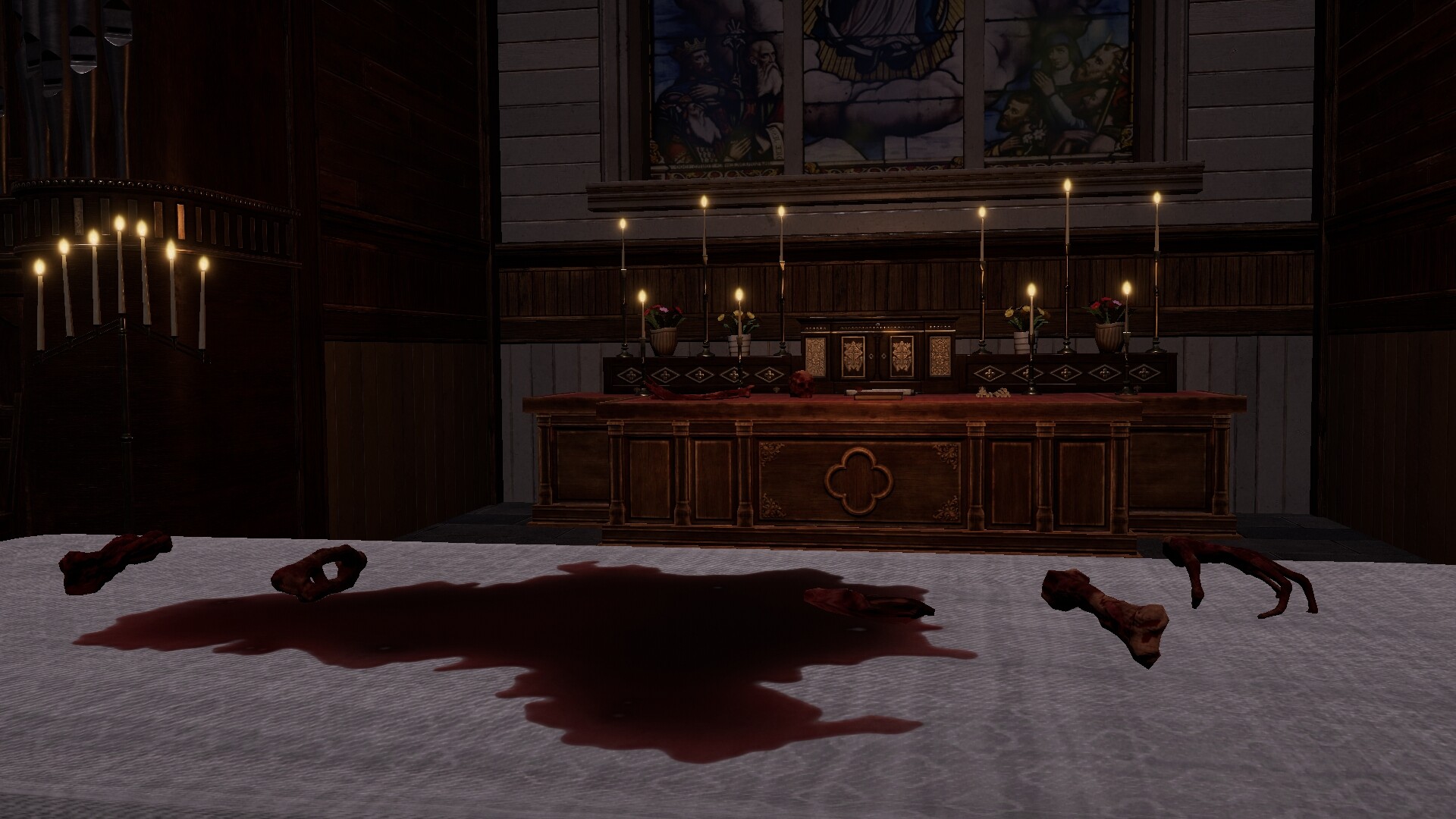
According to the official Steam description, Trace of the Villa casts Jin into a property “cut off from the grid and deliberately forgotten.” The mansion’s occupants appear erased: rooms left mid-routine, locked doors hiding secured secrets, and personal effects with no names or photographs. When Jin restores power, “secured systems come back online,” hidden compartments unlock, safes yield fragments of encrypted documents and suspicious transfer records, and evidence begins to form a disturbing pattern of arrivals and departures without records. The game’s narrative puzzle design centers on recovering manifests and piecing together a timeline from physical and digital fragments.
When and where you can play
Trace of the Villa is available on Steam; its release date is listed as 28 May, 2026. The Steam store lists Steadyturtle Co., Ltd. as both developer and publisher and tags the project as Action, Adventure, and Indie. The PC/Steam context is important here: the game’s categories include accessibility and presentation options such as custom volume controls, subtitles, and a “playable without timed input” note that signals puzzle pacing across varied player skill levels.
Why the power-and-doors loop matters
Locked-room thinking in Trace of the Villa is literal: a literal cut grid, physical locks, and secured systems stand between you and narrative fragments. Restoring power is a gameplay pivot that changes the mansion from static tableau to active environment. This design aligns environmental storytelling with mechanical progression — every breaker flipped or terminal reactivated is an interpretive act. It converts exploration into a chain of causality: power → systems → evidence → inference. That chain rewards players who can hold multiple clues at once and test hypotheses about who used the estate and why names and records were stripped away.
How progression and clue chains work
Progression hinges on reconstructing evidence across linked systems. Official details describe recovering manifests, encrypted documents, transfer records, and hidden compartments that gradually reveal a “carefully concealed operation.” Practically, expect a loop of:
- Restore electricity or a system to re-enable an area or device;
- Explore newly active devices/rooms for physical traces and locked containers;
- Decrypt or cross-reference fragments (manifests, transfer logs) to point to another locked space;
- Use environmental cues and assembled documents to build a timeline and test theories about the occupants and the sister Jin searches for.
This is fundamentally a read-the-room, assemble-the-chain approach: environmental storytelling and secured systems are the core puzzle materials.

Player scenarios — who’ll enjoy it and how to approach it
Modern Sherlock (environmental reader)
You savor slow discovery and log everything. You’ll enjoy tracing transfer records and comparing manifest fragments to reconstruct movements. Take notes and treat reactivated systems as leads rather than endpoints.
Escape-room strategist
You like locked puzzles that chain into one another. Expect to toggle between rooms and devices frequently; each restored circuit or opened safe is a clue that points to the next locked-door problem.
Atmosphere-first explorer
You’re drawn to mood and implied narrative. The mansion’s “erased” aesthetic — rooms frozen mid-routine, personal items without names — works as psychological evidence; reading details will deliver the story beats.
How it compares to other puzzle-mystery games
Below is a compact editorial comparison focusing on genre, atmosphere, puzzle focus, exploration style, story tone, and pacing — not on sales, endorsements, or ratings.
| Title | Genre / Tone | Puzzle focus | Exploration style | Player fit |
|---|---|---|---|---|
| Trace of the Villa | Action / Adventure, atmospheric mansion mystery | Locked systems, document fragments, environmental evidence | Slow, systemic — restore power to unlock new areas | Players who like clue chains and narrative puzzle assembly |
| The Room | Adventure / Indie, intimate mysterious chamber | Mechanical puzzles, tactile safe-and-box problem design | Focused, single-room sequences with escalating devices | Players who enjoy tactile object puzzles and cryptic mechanisms |
| The Room Two | Adventure / Indie, cryptic, atmospheric | Complex object puzzles with layered mechanical logic | Series of unique rooms/locations linked by narrative | Those who liked The Room and want broader, episodic puzzles |
| Escape Simulator | Adventure / Simulation, playful escape-rooms | Highly interactive escape-room scenarios, physics interactions | Modular rooms; community-made content expands variety | Players who want sandboxy puzzle interaction and co-op options |
| Hi-Fi RUSH | Action, rhythm-driven, upbeat tone | Combat and rhythm mechanics rather than investigative puzzles | Fast-paced, stage-based action | Players who prefer music-synced action over slow mystery |
YouTube discovery
For trailers and gameplay footage, search on YouTube: Trace of the Villa trailer & gameplay. Use that search path to find official trailers or community clips; the Steam store’s visual assets are the authoritative art and screenshot set for the release.
Final verdict — who should care
Trace of the Villa fits players who want narrative puzzle design layered over a procedural mechanic (restore power, open spaces, reconstruct evidence). If you enjoy read-the-room mysteries that reward patience, note-taking, and inference, add it to your wishlist. If you prefer instant feedback loops, fast combat, or physics-focused sandbox puzzles, it may diverge from your core tastes.
Leave a Reply