
Trace of the Villa — an escape-room style mystery built around restoring power and reconstructing evidence
Trace of the Villa puts you in the shoes of Jin as he follows a lead to a remote, decaying mansion and slowly pieces together what happened there. The gameplay loop centers on restoring power to the estate, unlocking sealed spaces, and linking environmental clues into a chain of evidence that advances the investigation.

Quick facts
| Title | Trace of the Villa |
|---|---|
| Steam AppID | 3483660 |
| Release date | 28 May, 2026 |
| Developer | Steadyturtle Co., Ltd. |
| Publisher | Steadyturtle Co., Ltd. |
| Genres | Action, Adventure, Indie |
| Key Steam categories | Single-player; Color Alternatives; Custom Volume Controls; Playable without Timed Input; Subtitle Options; Family Sharing |
Who is this for?
Players who enjoy atmospheric mystery adventure and story-rich investigation will find the premise appealing: Jin has been searching for his missing sister and arrives at a mansion cut off from the grid. If you favor environmental storytelling, slow-burn suspense, and puzzle loops built around systems rather than reflex tests, Trace of the Villa is aimed at that audience. The presence of accessibility options (color alternatives, subtitle options, custom volume controls) and a single-player focus also signals a deliberate, solitary investigation rather than a timed or multiplayer experience.
What the game is (mechanics & tone)
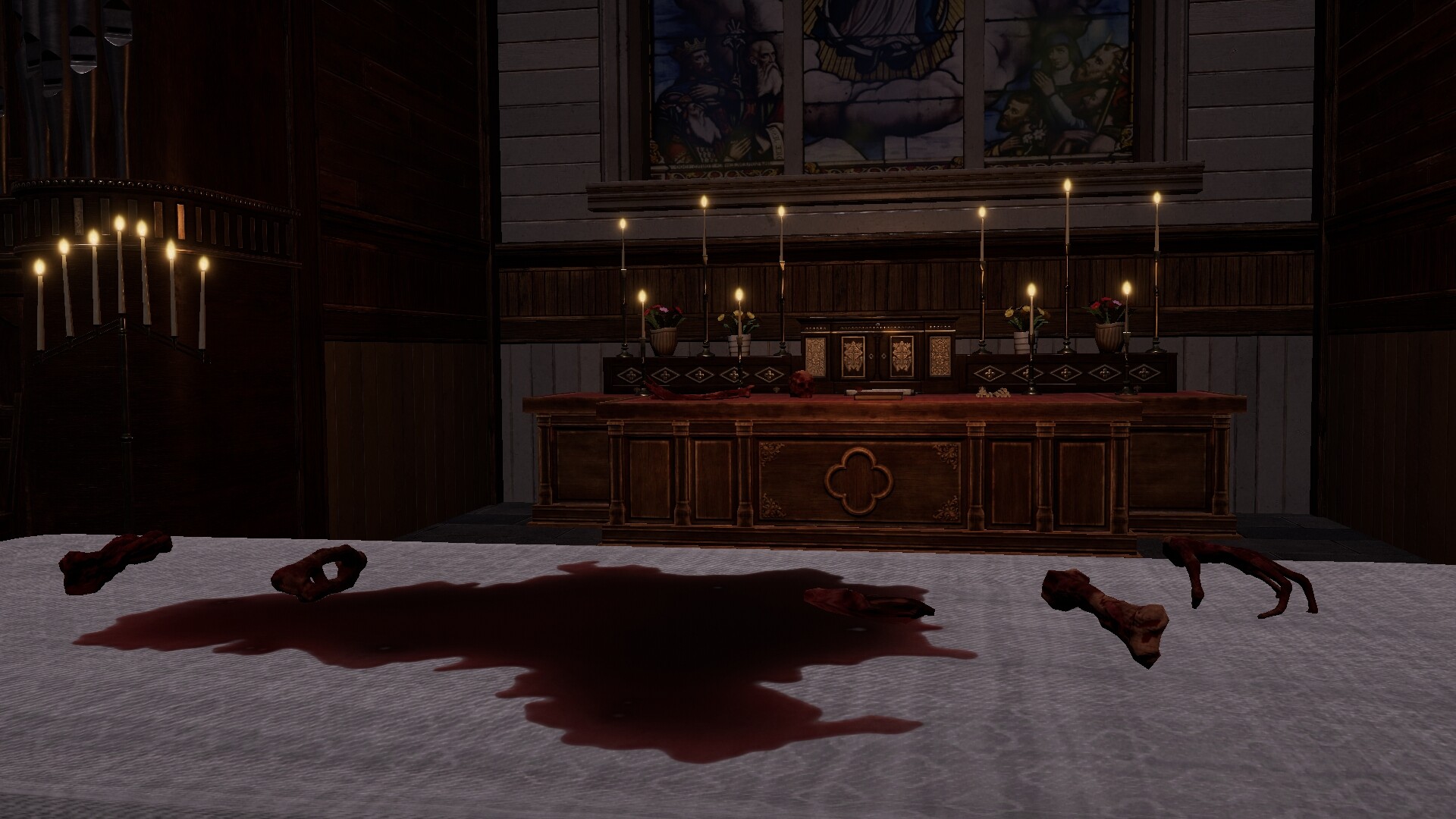
Trace of the Villa is presented as a narrative puzzle adventure where the central progression loop is literal and mechanical: restore power, bring systems back online, and watch the mansion reveal itself. The official description emphasizes that when Jin restores power “secured systems come back online. Hidden compartments unlock. Safes yield fragments of encrypted documents and suspicious transfer records.” That chain—power > systems > new spaces > documents—drives both puzzle design and narrative discovery. The tone is psychological and unsettling: rooms are furnished as if occupants vanished mid-routine, and identities appear to have been removed.

When and where
Trace of the Villa launched on Steam on 28 May, 2026. It is listed for PC on Steam with the stated genres Action, Adventure, Indie and the Steam categories noted above. The store page materials focus on atmosphere, evidence reconstruction, and Jin’s personal quest to find his missing sister.
Why the theme matters
Thematically, the game ties locked-room thinking to an institutional erasure: identities removed, arrivals without records, and departures without witnesses. That makes the mechanics—power restoration and reading environmental detail—more than puzzle scaffolding; they’re investigative tools that expose a pattern of obfuscation. For players who prefer mysteries where the environment is the witness and documents are incremental revelations, Trace of the Villa’s design promises a satisfying interplay between physical exploration and detective work.
How you progress: reading clues, chaining evidence, restoring systems
Progression is described as largely emergent from the environment. Typical flows you should expect from the official description:
- Locate systems and circuitry or controls that allow you to restore power to parts of the mansion.
- When power returns, previously secured systems (locks, safes, electronic devices) become interactable and unlock new spaces or fragments of information.
- Gather manifests, encrypted document fragments, and transfer records; these pieces must be chained together to build timelines and identify anomalies in movements and ownership.
- Each solved puzzle or unlocked archive reveals another layer of the operation that used the estate—financial trails, falsified identities, and controlled movements.
The game thus asks the player to treat each recovered object as evidence: contextualize it, connect it to other items, and let those connections open the next physical and narrative gate.
Player scenarios — who should wishlist this
- Scenario A — You like locked-room puzzles and methodical exploration: If you enjoy puzzle loops where solving one environmental problem unlocks another, this will suit you.
- Scenario B — You prefer story-driven investigations over action set pieces: The description stresses atmosphere and reconstructed timelines rather than combat or fast reflex challenges.
- Scenario C — You value accessibility and single-player pacing: The Steam listing includes color alternatives, subtitle options, and “playable without timed input,” so if accessibility matters, take note.
- Scenario D — You want gradual reveals and forensic-style clue chaining: If you relish collecting fragments and making logical links to reconstruct an operation, this fits well.
How it compares to nearby mystery/puzzle games
Below is an editorial comparison on lawful criteria—genre, atmosphere, puzzle focus, exploration style, story tone, and pacing—so you can decide how Trace of the Villa aligns with your tastes.
| Title | Genre & primary feel | Puzzle focus | Exploration style | Story tone & pacing | Good for |
|---|---|---|---|---|---|
| Trace of the Villa | Action / Adventure / Indie — atmospheric mystery adventure | Environment-driven, systems unlock via power restoration; evidence reconstruction | Single-player mansion exploration; rooms open as systems restore | Slow-burn psychological; methodical discovery and forensic linking | Players who want narrative puzzle loops and environmental storytelling |
| The Room | Adventure / Indie — tactile puzzle box mystery | Mechanical puzzles centered on single-device interactions and riddles | Focused, contained spaces (a room/box) with layered mechanisms | Quiet, intimate, puzzle-focused; deliberate pacing | Players who love intricate mechanical puzzles and close observation |
| The Room Two | Adventure / Indie — expanded tactile exploration | Multi-location devices and interlinked puzzle objects | Broader set-piece environments while keeping puzzle-box sensibility | Atmospheric and steady; puzzle-first storytelling | Fans of The Room who want larger environments with the same puzzle DNA |
| Escape Simulator | Adventure / Casual / Indie — interactive escape-room experience | Highly interactive object manipulation, physics play, lots of community rooms | Room-by-room escape scenarios, often compact and object-heavy | Varied pacing depending on room; player creativity encouraged | Players who enjoy object interaction and user-made rooms (solo or co-op) |
| Hi-Fi RUSH | Action — rhythm-forward action-adventure | Puzzle elements are minimal; emphasis is on combat and rhythm | Linear action levels rather than investigative exploration | Upbeat, fast; high-energy pacing | Players seeking action and musical timing over forensic investigation |
Deciding: does Trace of the Villa fit your taste?
Choose Trace of the Villa if you like mystery that rewards patient observation, enjoy environmental storytelling where the house itself is a witness
Steam page
View Trace of the Villa on Steam
YouTube discovery
For trailer and gameplay discovery, use YouTube search rather than relying on unverified embeds: Find Trace of the Villa trailer and gameplay searches on YouTube.
Leave a Reply