
Trace of the Villa: an escape-room style mystery driven by power, doors, and evidence
Trace of the Villa positions itself as a slow-burn, atmospheric mystery adventure: you play Jin, an investigator who follows leads to a remote, decaying mansion that may hold the key to his missing sister. Released on 28 May, 2026 and developed and published by Steadyturtle Co., Ltd., the game builds its primary loop around restoring systems, opening locked spaces, and piecing together fragments of a hidden operation.

Who this is for
If you prefer methodical, clue-driven exploration over twitch reflexes, this is pitched to you. The Steam categories list Trace of the Villa as Single-player and note accessibility features such as Color Alternatives, Custom Volume Controls, Playable without Timed Input, and Subtitle Options — signals that the experience favors deliberate puzzle reading and narrative attention rather than speed or competitive multiplayer.
What the game is
Officially described on Steam, Jin has spent years searching for his missing sister. A lead brings him to a property “cut off from the grid and deliberately forgotten,” where rooms feel “less abandoned than erased.” The mansion holds locked doors, secured systems and safes that, once power is restored, yield encrypted fragments and suspicious transfer records. The core design emphasis is environmental storytelling and the reconstruction of a concealed timeline: hardware and house systems returning online unlock new areas, and each recovered document or manifest forms a link in a growing clue chain.
When and where
Trace of the Villa launched on Steam on 28 May, 2026. It is a PC/Steam release listed under Action, Adventure, and Indie — available from the game’s Steam store page.
Why the theme matters: locked-room thinking and environmental reading
The mansion-as-locked-room works on two levels here: physical gates and appliances are literal barriers, and the environment itself has been altered to erase identities and records. That setup rewards players who practice “locked-room thinking” — treating each closed area as a self-contained problem that, once its supports (power, logs, safes) are restored, reveals how it connects outward. Environmental reading—cataloguing objects, timing when systems come back online, and cross-referencing manifests and transfer records—becomes the player’s primary detective tool.
How you progress: restoring power, unlocking spaces, reconstructing evidence
The official description makes the loop explicit: when Jin restores power to the estate, secured systems come back online, hidden compartments unlock, and safes yield fragments of encrypted documents and suspicious transfer records. That creates a layered progression loop:
- Bring systems online — a gate to new information and mechanics.
- Use newly available appliances and terminals to decrypt or cross-check records.
- Open locked rooms and safes to recover manifests, IDs, and other fragments.
- Chain evidence together to map arrivals, departures, and falsified identities — which then points you to the next node to power or unlock.
The result is a puzzle cadence grounded in discovery and reconstruction rather than timed puzzles or combat-heavy escalation.
Specific player scenarios
Three concrete plays that explain who should wishlist or buy:
- Deductive explorer: You enjoy cataloguing items and forming chains of evidence across rooms. The payoff is assembling a timeline from scattered manifests and encrypted fragments.
- Environmental storyteller: You value atmosphere and small, revealing props. The mansion’s “erased” identities and staged rooms reward careful observation and reading between objects.
- Slow-burn mystery fan: You prefer narrative momentum that grows from incremental discoveries (power restored → new logs → new rooms), not jump scares or fast action.
Note: Steam metadata lists useful accessibility and quality-of-life categories (Subtitle Options, Playable without Timed Input) that support those slower, reading-heavy playstyles.
Compact facts
| Title | Trace of the Villa |
|---|---|
| Developer / Publisher | Steadyturtle Co., Ltd. |
| Release date | 28 May, 2026 |
| Steam appid | 3483660 |
| Genres | Action, Adventure, Indie |
| Categories / Features | Single-player; Color Alternatives; Custom Volume Controls; Playable without Timed Input; Subtitle Options; Family Sharing |
| Short premise (official) | Jin has spent years searching for his missing sister, pursuing leads that took him to a remote, decaying mansion where he recovered manifests and hints that indicate his sister may still be alive. |
How it compares (brief editorial table)
Comparisons below focus strictly on genre, atmosphere, puzzle focus, exploration style, story tone, and pacing.
| Title | Genre / Tone | Puzzle focus | Exploration style | Pacing | Player fit |
|---|---|---|---|---|---|
| Trace of the Villa | Action / Adventure / Indie — mansion mystery, slow-burn | Clue chains, system restoration, document reconstruction | Single-player, environmental reading, locked spaces unlocked via power/systems | Deliberate, investigative | Players who like methodical, story-driven mystery |
| The Room | Adventure / Indie — focused, tactile mystery box | Mechanical puzzles, object manipulation | Single-room to multi-room progression focused on puzzle devices | Measured, puzzle-centric | Those who enjoy intricate object puzzles and tactile solutions |
| The Room Two | Adventure / Indie — expanded atmospheric puzzle | Complex mechanical and environmental puzzles | Broader locales with a continued focus on artifact puzzles | Slow, cerebral | Players seeking successive, handcrafted puzzle arenas |
| Escape Simulator | Adventure / Simulation / Indie — sandbox escape rooms | Highly interactive, object-based puzzles; community rooms | Room-by-room, physics-enabled interaction; supports co-op | Variable — can be fast or slow depending on room | Players who like physics interaction and user-created content |
| Hi-Fi RUSH | Action — music-synced combat-adventure | Combat-mechanics and rhythm timing rather than environmental puzzles | Linear, combat-forward levels | High-energy, fast | Players seeking action and rhythmic gameplay, not slow investigation |
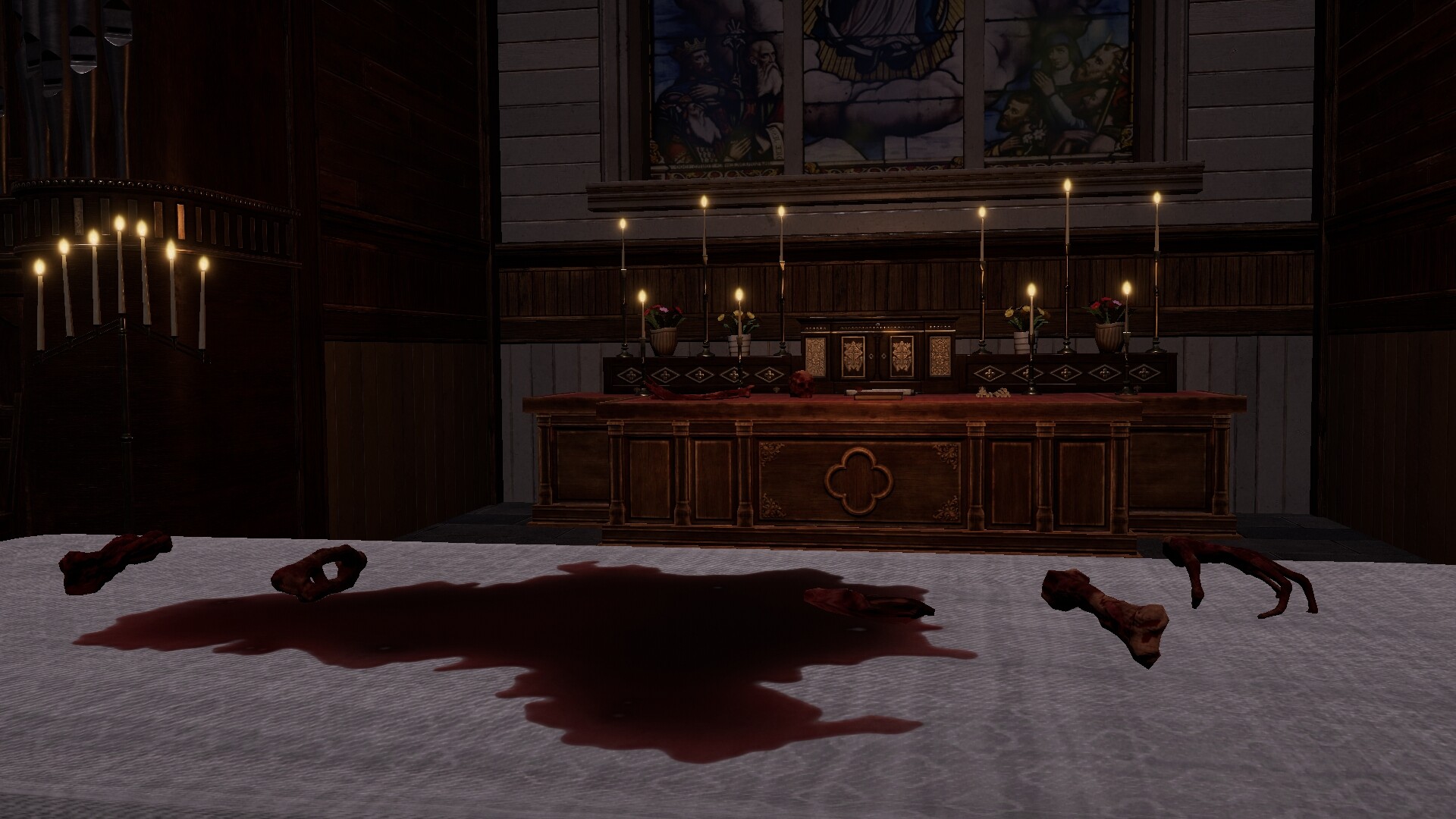
Official screenshots

YouTube discovery
Looking for trailers or gameplay clips? Use this YouTube search path to find videos related to Trace of the Villa (search results may include trailers, streams, and community captures): Search for Trace of the Villa on YouTube.
Decision checklist: should you wishlist?
- Wishlist if you like slow, narrative-led mystery and environmental puzzle chains.
- Wishlist if you prioritize accessibility options like subtitles and non-timed puzzles.
- Skip or wait if you prefer fast-paced combat or multiplayer/coop systems; Trace of the Villa is single-player and emphasizes investigation.
Leave a Reply