Trace of the Villa — an escape-room style, clue-driven mansion mystery
Trace of the Villa tasks you with piecing a fragmented story together inside a deliberately erased estate: restore power, reopen locked spaces, and follow evidence chains to learn what happened. Developer-publisher Steadyturtle Co., Ltd. frames this as an atmospheric mystery adventure where environmental reading and locked-room thinking steer progression.

Quick facts
| Title | Trace of the Villa |
|---|---|
| Developer / Publisher | Steadyturtle Co., Ltd. |
| Release date | 28 May, 2026 |
| Platform / Store | PC (Steam) |
| Genres | Action, Adventure, Indie |
| Categories | Single-player; Color Alternatives; Custom Volume Controls; Playable without Timed Input; Subtitle Options; Family Sharing |
| Steam AppID | 3483660 |
| Premise (official) | Jin searches a remote, decaying mansion where recovered manifests and hints indicate his missing sister may still be alive at the end of the trail. |
What the game is
On its Steam page Trace of the Villa presents a story-rich adventure built around restoring the estate’s systems to reveal concealed evidence. The mansion is described as “cut off from the grid and deliberately forgotten”: when power is returned, secured systems reactivate, compartments open, and safes yield fragments of encrypted documents and suspicious transfer records. That sequence—bring power back, unlock spaces, recover fragments of a timeline—forms the primary gameplay loop.
Who it’s for
This is for players who enjoy slow-burn suspense and reading the environment for narrative payoff. If you prefer atmospheric mystery adventure with a detective’s patience—tracking manifests, cross-referencing records, and reconstructing movements from partial evidence—Trace of the Villa is aimed squarely at that audience. The presence of accessibility options (subtitles, color alternatives, custom volume) and a “playable without timed input” tag also makes it approachable to players who favor thoughtful exploration over twitch mechanics.
When and where
Trace of the Villa launched on 28 May, 2026 and is available on Steam. The Steam store page includes genre and category details, the official visuals, and the developer/publisher listing for Steadyturtle Co., Ltd.

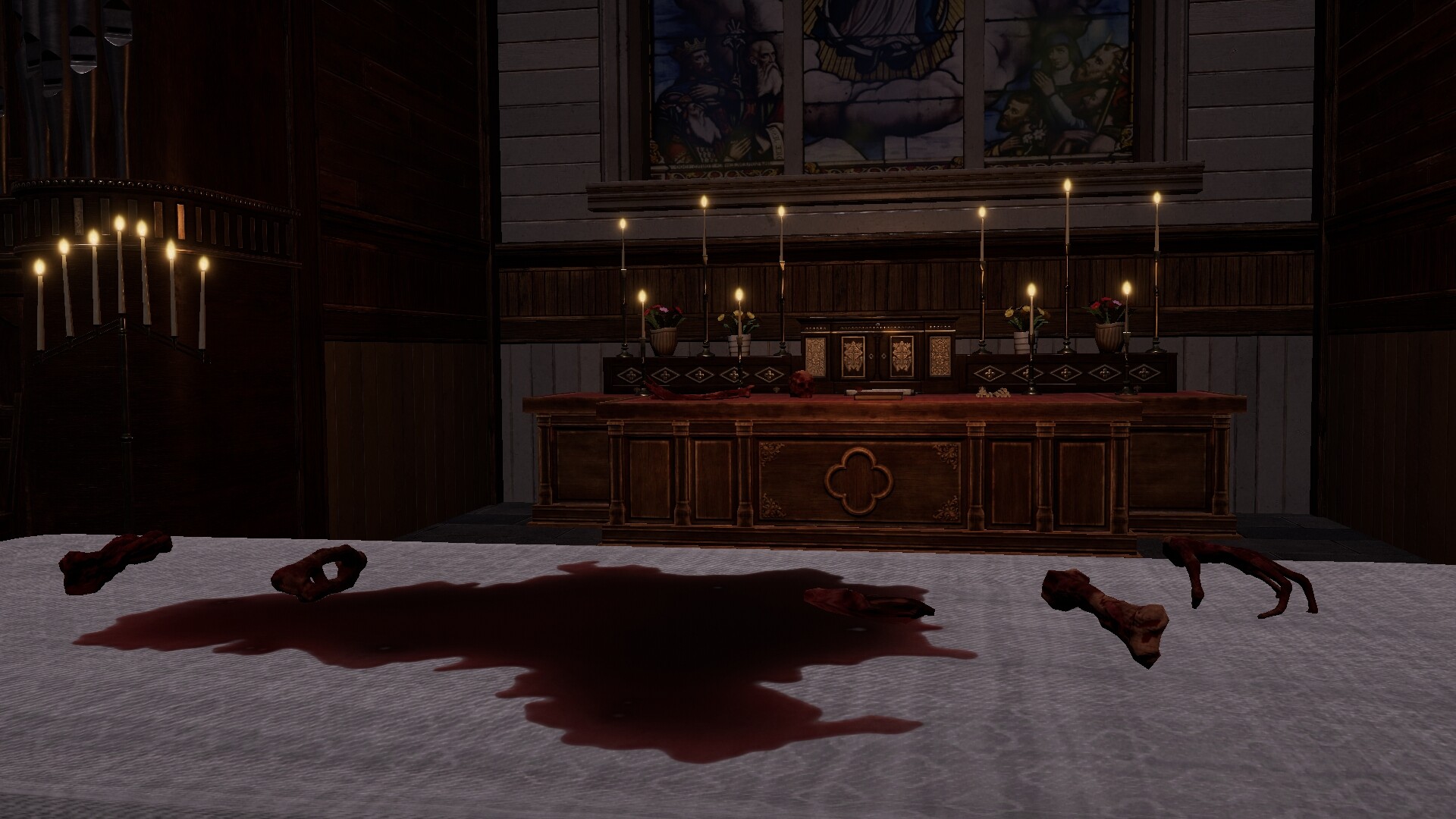
Why the theme matters — restoring power as game design
Restoring power is more than a set-piece: it’s a structural device that stages discovery. When systems come online, previously inert objects become interactive and new information unspools in stages. That pacing creates chain reactions in clue design—one unlocked terminal or cupboard yields a ledger that points to a safe, the safe holds a keycode fragment, and so on. It forces players into locked-room thinking: treat every closed door or dead circuit as a promise of further narrative payoff rather than an obstacle to bypass.
How you progress: clue chains and environmental reading
- Start small: power the house to activate the first layer of interactables (terminals, lights, locks).
- Collect fragments: manifests, encrypted documents, and transfer records appear as partial evidence that must be read together.
- Chain puzzles logically: one discovery typically points to another area or system—follow the financial trail, cross-check dates, and reconstruct arrivals/departures.
- Read the scene: the mansion’s set dressing—furnished rooms with missing names or photos—serves as negative evidence that needs contextual interpretation.
- Piece the timeline: the gameplay loop emphasizes reconstruction over confrontations—understand who passed through and what was covered up.
Player scenarios — who should wishlist this
- The methodical investigator: You like cataloguing clues, cross-referencing documents, and building a timeline from fragments.
- The atmospheric explorer: You prefer slow-building dread and environmental storytelling over jump scares and combat.
- The puzzle integrator: You enjoy puzzles that unlock new spaces or narrative threads rather than isolated logic tests.
- The accessibility-conscious player: You value subtitles, color alternatives, and no-timed-input options so you can take your time.
How it compares — editorial discovery
Below is a compact comparison with a few nearby mystery and puzzle-oriented titles. This is an editorial view based on genre, atmosphere, puzzle focus, exploration style, and pacing—not a ranking.
| Game | Focus | Puzzle style | Exploration | Tone / Pacing | Player fit |
|---|---|---|---|---|---|
| The Room | Mystery box puzzles | Mechanical, tactile puzzle boxes | Single-room / chained devices | Slow, tactile, uncanny | Players who enjoy focused mechanical puzzles and atmosphere |
| The Room Two | Expanded box-driven mystery | Layered mechanical puzzles with narrative threads | Multi-location vignette exploration | Slow, atmospheric, more varied locales | Fans of puzzle-driven narrative with vignette structure |
| Escape Simulator | Interactive escape rooms | Physical interactivity (move, combine, break) | Room-by-room puzzle modules; community levels | Varied—can be fast or methodical depending on room | Players who like tactile manipulation and co-op or community content |
| Hi‑Fi RUSH | Action-rhythm adventure | Combat puzzles, rhythm-driven systems | Linear action-exploration | Fast-paced, stylized, energetic | Players who prefer action and rhythm over contemplative mystery |
YouTube discovery
If you want to see trailers or gameplay footage, try a focused search on YouTube: Trace of the Villa trailer & gameplay (YouTube search). This is a discovery path rather than an assertion of any specific official video.
Who should wishlist? Wishlist Trace of the Villa if you prioritize environmental storytelling, locked-room reasoning, and a progression loop built on restoring power and reconstructing evidence. If you favor fast action or multiplayer puzzles, consider the comparison table above to decide fit.
Referenced titles and trademarks belong to their respective owners; comparisons above are editorial discovery only.
Leave a Reply