
Trace of the Villa — an atmospheric mystery built around power, locks, and evidence
Jin arrives at a remote, decaying mansion after years of searching for his missing sister; when he restores power to the estate the house begins to reveal secured systems, hidden compartments and fragments of encrypted documents that piece together a larger, concealed operation. Trace of the Villa (Steadyturtle Co., Ltd.) channels locked-room thinking into a clue-driven exploration where restoring light and systems is the core gameplay loop.

Quick facts
| Title | Trace of the Villa |
|---|---|
| Developer | Steadyturtle Co., Ltd. |
| Publisher | Steadyturtle Co., Ltd. |
| Release date | 28 May, 2026 |
| Genres | Action · Adventure · Indie |
| Categories | Single-player; Color Alternatives; Custom Volume Controls; Playable without Timed Input; Subtitle Options; Family Sharing |
| Steam page | View Trace of the Villa on Steam |
What it is — gameplay loop and investigative structure
Trace of the Villa positions restoration of power and systems as the central mechanical and narrative beat. Official description text emphasizes that when Jin restores power, “secured systems come back online” and “hidden compartments unlock”—puzzles and locked doors are not just barriers but signals: powering up rooms reveals safes, encrypted fragments and suspicious transfer records that feed into another layer of investigation. The game weaves environmental storytelling and evidence reconstruction: each unlocked device or recovered manifest becomes a link in a clue chain that reconstitutes timeline and identity.
Who should wishlist it
- Players who prefer slow-burn mystery and environmental storytelling over action-heavy sequences.
- Fans of locked‑room thinking and chain‑dependent puzzles where one discovery directly enables the next.
- Single‑player PC players who enjoy narrative puzzle design focused on reading spaces and reconstructing evidence.
When and where — Steam context
Trace of the Villa released on 28 May, 2026 and is available on Steam. The Steam listing positions it as a single‑player, indie adventure with accessibility options such as color alternatives, subtitles, and custom volume controls—small but useful signals for players who value comfort settings when tackling atmospheric mystery.
Why the power-restoration loop matters
Using power as a gating device does more than open doors. In Trace of the Villa it converts exploration into investigation: restoring an electricity feed turns a silent room into a forensic scene where logs, safes and systems produce new lines of inquiry. That structure supports a clue chain model—one recovered manifest suggests another avenue; a decrypted fragment points to a locked cabinet; the cabinet yields transfer records that change how you interpret earlier evidence. The result is a sense of discovery that feels procedural and cumulative rather than a scattershot string of puzzles.
How you read the environment
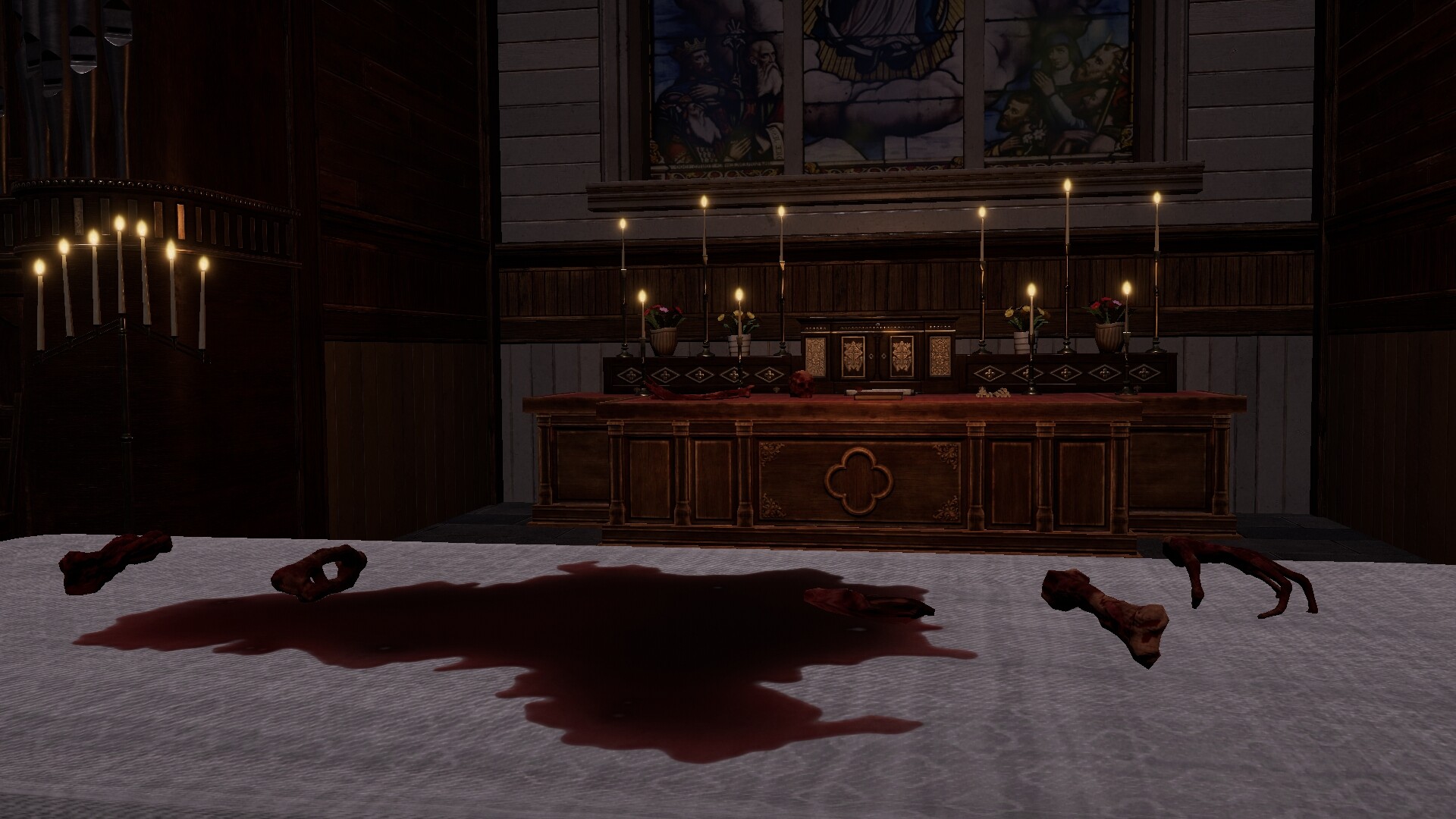
The official description makes clear the mansion is staged to feel “erased”—furnished rooms with missing names, locked doors, and artifacts left as if occupants vanished mid‑routine. Mechanically this sets expectations for close observation: absence becomes as informative as presence. Players will be scanning for inconsistencies (missing photographs, odd wiring, sealed compartments) and tracing financial or identity anomalies gleaned from safes and manifests. Reconstructing timelines from documents and system logs is a deliberate, detective-like activity rather than a reflex test—the Steam page also lists “Playable without Timed Input,” reinforcing a paced investigative experience.

Player scenarios — how a session might feel
- Evening detective: You spend an hour powering a wing of the mansion, unlocking a safe and reading encrypted fragments; the session ends with a new lead that reframes who the occupants were.
- Methodical investigator: You systematically restore circuits, catalog manifests, and map transfers to reconstruct a timeline—enjoying the cumulative feeling of assembling evidence.
- Explorative atmospheric run: You prioritize rooms for ambience and story beats, letting the house reveal itself through audio logs and returned systems rather than racing for the final solution.
How it compares — puzzle/mystery peers
Below is a compact editorial comparison on lawful criteria: genre, puzzle focus, atmosphere and likely player fit. These comparisons are for editorial discovery, not endorsement.
| Title | Primary genre | Puzzle / investigation focus | Atmosphere & pacing | Best for players who… |
|---|---|---|---|---|
| Trace of the Villa | Action · Adventure · Indie | Clue chains via restored systems, locked doors, safes and document reconstruction | Slow-burn mansion mystery; forensic/environmental reading | Prefer evidence-driven, single-player investigation and environmental storytelling |
| The Room | Adventure · Indie | Mechanical safe-and-box puzzles (lock manipulation and inspection) | Concentrated, tactile puzzling in contained spaces | Like focused, object-based puzzles and tactile lock mechanisms |
| The Room Two | Adventure · Indie | Similar to The Room: layered puzzle boxes and mechanical contraptions | Isolated, atmospheric puzzles with a cryptic tone | Enjoy escalating, handcrafted puzzle devices and a slow puzzle reveal |
| Escape Simulator | Adventure · Casual · Indie · Simulation | Interactive escape rooms; object manipulation and physics interactions; includes co-op and community rooms | Varied—from playful to tense depending on room; more modular and sandbox-like | Prefer high interactivity, community content, and co-op puzzle play |
YouTube discovery
If you want to see trailers or gameplay clips, search YouTube for Trace of the Villa using this discovery link (useful for trailers and user captures; a specific official video is not claimed here): Search Trace of the Villa on YouTube.
Final decision guide — who should wishlist
Wishlist Trace of the Villa if you value investigative pacing, environmental storytelling and puzzle loops that literally depend on restoring power and unlocking systems to read a space. If you prefer fast-action setpieces, high-m
Leave a Reply