
Trace of the Villa — power, locked rooms, and the long chain of clues
Trace of the Villa casts you as Jin, a searcher whose lead brings him to a remote, decaying mansion where restoring power is literally the first step toward truth. The game’s loop—reconnect systems, open sealed spaces, and assemble fragments of evidence—frames investigation as environmental puzzlework rather than combat or timed dexterity.

Quick facts
| Title | Trace of the Villa |
|---|---|
| Steam appid | 3483660 |
| Release date | 28 May, 2026 |
| Developer | Steadyturtle Co., Ltd. |
| Publisher | Steadyturtle Co., Ltd. |
| Genres | Action, Adventure, Indie |
| Categories | Single-player; Color Alternatives; Custom Volume Controls; Playable without Timed Input; Subtitle Options; Family Sharing |
Who this is for
If you prize environmental storytelling, patient reconstruction of events, and clue-chains that reward observation, Trace of the Villa is aimed at you. Players who like reading a scene for anomalies—missing names, sealed safes, and systems that only reveal their contents when power returns—will find the pacing and focus on evidence satisfying. It also suits players who prefer single-player, subtitle-friendly experiences listed in the Steam categories.
What the game is
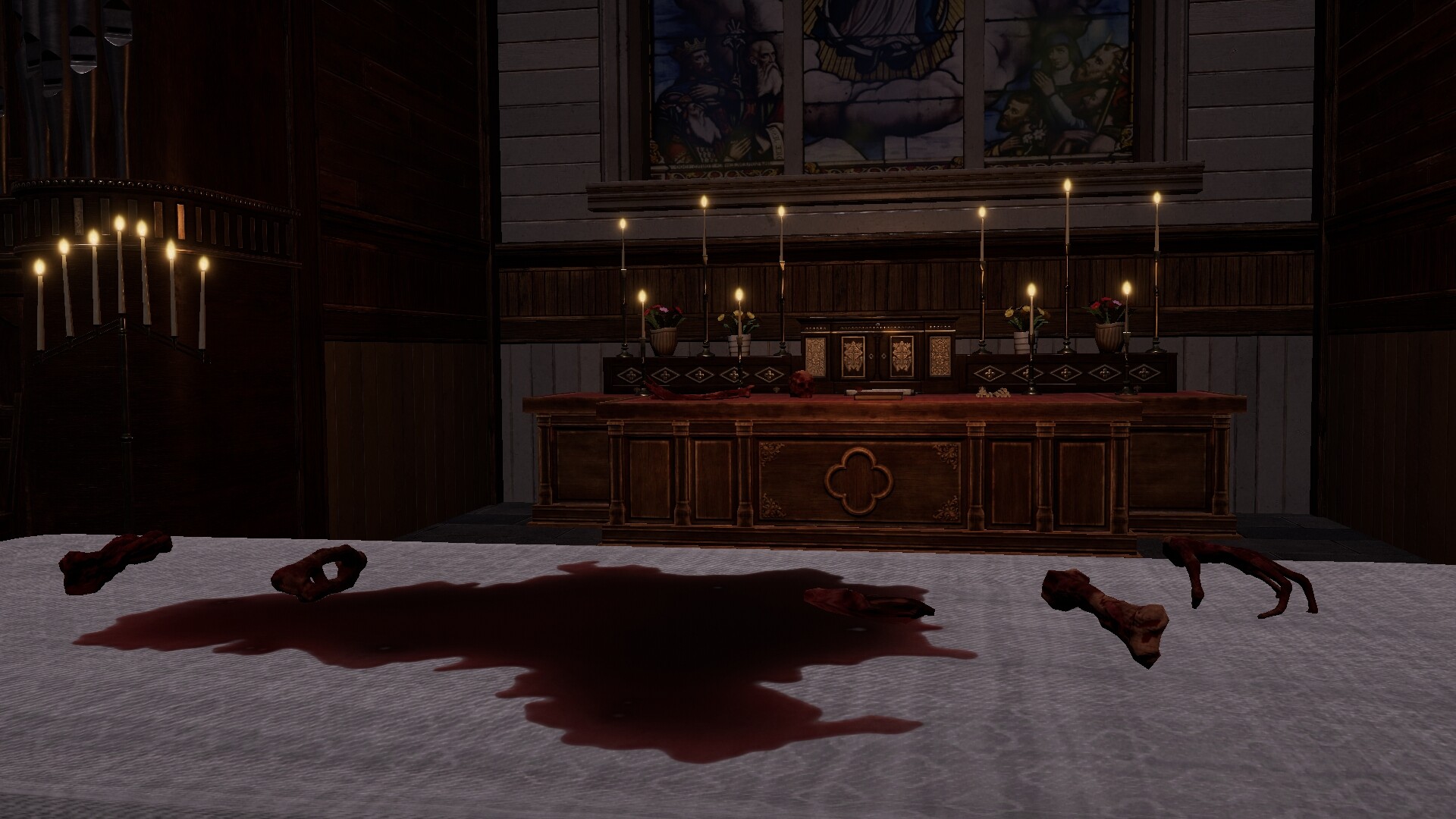
Officially described on Steam, Trace of the Villa follows Jin as he investigates a remote mansion after recovering manifests and hints suggesting his missing sister may still be alive. The mansion feels “erased”: rooms set as if mid-routine, locked doors, and personal belongings devoid of names. When Jin restores power to the estate, secured systems come back online, hidden compartments unlock, and safes yield fragments of encrypted documents and suspicious transfer records. The game blends action/adventure framing with detective-style evidence reconstruction.

When and where
Trace of the Villa is available on Steam; the official release date on the store is 28 May, 2026. The Steam page lists developer and publisher as Steadyturtle Co., Ltd. and includes standard PC-friendly accessibility and settings categories such as subtitle options and custom volume controls.
Why the theme matters
The central conceit—an erased household whose systems must be reawakened to reveal past movements—frames investigation as restoration. Restoring power is not just a scripting device; it’s the engine of discovery. It forces players to treat the mansion as a layered archive: the moment electricity returns, technology, locks, and hidden storage shift the map of possibility. That makes the game less about instant solutions and more about rebuilding what was taken from a place and, by extension, its people.
How you progress: locked-room thinking, clue chains, environmental reading
Trace of the Villa’s loop—restore systems, unlock spaces, recover fragments—encourages a specific investigative rhythm:
- Restore local power or systems to change the environment state and access new interactions (official description notes secured systems coming online).
- Search newly available rooms and compartments for documents, manifests, and transfer records; these items act as chain-links that point to the next target.
- Assemble encrypted fragments and corroborate movement patterns to reconstruct timelines—official text highlights encrypted documents and suspicious transfer records.
This design rewards players who take notes, mentally map locked spaces, and treat the mansion as a puzzle whose pieces are both physical and bureaucratic.
Player scenarios — who should wishlist this
- Investigation-first players: You enjoy reading rooms, tracing paper trails, and solving multi-step puzzles that require revisiting spaces after new tools or systems are available.
- Atmospheric adventurers: You favor slow-burn suspense and storytelling delivered through staged environments and found objects over overt horror set-pieces.
- Evidence assemblers: You like piecing together partially corrupted records, decrypting or matching fragments, and letting the narrative emerge from a chain of small discoveries.
- Casual explorers seeking single-player focus: The Steam categories list single-player and accessibility options that point to a deliberate, untimed experience.
How it stacks up: quick editorial comparisons
Below is a compact comparison of nearby titles to help decide if Trace of the Villa matches your taste. These entries are editorially focused on genre, investigation/puzzle emphasis, atmosphere, and pacing — not claims about quality or endorsement.
| Title | Genre / Release | Puzzle / Exploration focus | Tone & Pacing |
|---|---|---|---|
| The Room | Adventure, Indie — 28 Jul, 2014 | Tactile, single-room mechanical puzzles; focused, handcrafted objects. | Intimate, cryptic, deliberate tempo. |
| The Room Two | Adventure, Indie — 5 Jul, 2016 | Expanded tactile puzzle environments; multiple linked rooms and devices. | Layered, atmospheric, puzzle-driven pacing. |
| Escape Simulator | Adventure, Casual, Indie — 19 Oct, 2021 | Highly interactive escape-room style; physics and object manipulation; community levels. | Varied tempo depending on room; more playful and experimental. |
| Hi‑Fi RUSH | Action — 25 Jan, 2023 | Rhythm-based action; not puzzle-centric. | Fast, kinetic, music-synced combat and pacing. |
| Football Manager 2022 | Simulation, Sports — 9 Nov, 2021 | Management simulation; systems-heavy but no environmental mystery or locked-room puzzles. | Slow-burn, systems-driven managerial simulation. |
YouTube discovery
If you want to preview trailer or gameplay footage, search results for Trace of the Villa can be found here (use this as a discovery path; not all search results are official): YouTube search: Trace of the Villa trailer gameplay.
Decision checklist
- Do you like environmental storytelling that emerges from reactivated systems? — Likely fit.
- Do you need fast action rhythm gameplay? — This leans toward investigation and reconstruction rather than constant combat.
- Do you enjoy escape-room-style problem chains that span rooms and require evidence collation? — This is a primary design emphasis.
Leave a Reply