
Trace of the Villa — why environmental dread and silence beat jump scares
Trace of the Villa (Steadyturtle Co., Ltd., released 28 May, 2026) centers on Jin’s long search for his missing sister inside a remote, decaying mansion. The game trades cheap shocks for slow-burn tension built from rooms that feel “erased,” restored systems that reveal sealed secrets, and a clue-driven investigation that turns intimate details into dread.

Quick facts
| Title | Trace of the Villa |
|---|---|
| Steam App ID | 3483660 |
| Developer / Publisher | Steadyturtle Co., Ltd. |
| Release date | 28 May, 2026 |
| Genres | Action, Adventure, Indie |
| Categories | Single-player; Color Alternatives; Custom Volume Controls; Playable without Timed Input; Subtitle Options; Family Sharing |
| Premise | Jin searches a decaying, off-the-grid mansion for signs his missing sister may still be alive; restoring power and uncovering manifests illuminate a controlled, identity-erasing operation. |
Who, what, when, where, why, how
Who is this for?
If you prefer atmospheric mystery adventure over frequent jump scares, this is aimed at players who value environmental storytelling, slow-burn suspense, and puzzle work that rewards attention to detail. Steam categories show single-player and accessibility options (subtitles, custom volume, color alternatives), which makes it suited to solitary, methodical explorers.
What is the game?
Trace of the Villa is a story-rich, investigation-focused PC mystery that places Jin in a deliberately forgotten mansion. The official short description frames it as a search for a missing sister built around recovered manifests and hints that point deeper into a larger concealed operation.
When and where can you play it?
The game was released on Steam on 28 May, 2026. It’s listed for PC via Steam with typical single-player options and accessibility settings noted on the store page.
Why does quiet tension matter here?
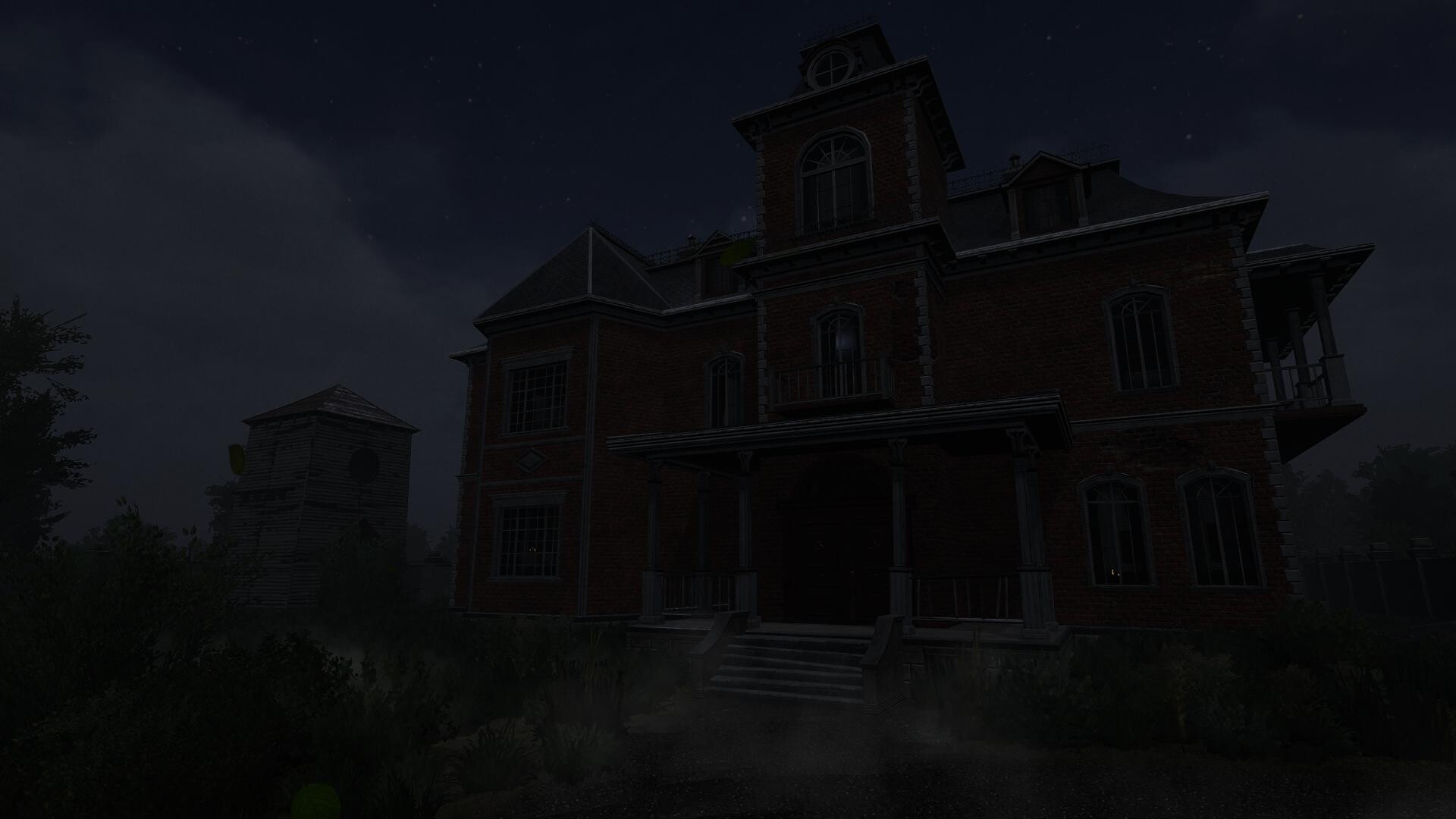
The mansion’s quiet is not emptiness but a design choice: rooms “remain furnished as if their occupants vanished mid-routine,” with “no photographs, no names, no history” — a removal of identity that turns ordinary domestic detail into a creeping unease. Restoring power and bringing locked systems back online turns the player into a slow amplifier of that dread: what you reveal is what makes the house feel alive again, and the ambiguity of those reveals sustains tension far longer than a single surprise moment.
How you progress — reading clues and restoring systems
Progress is clue-driven. Jin recovers manifests and hints, restores power to sealed parts of the estate, and uses unlocked systems and safes to gather fragments of encrypted documents and suspicious transfer records. Each solved puzzle reveals another layer of a concealed operation; the mechanic of powering the house and unlocking compartments ties exploration to narrative discovery rather than to scripted shocks.

How room design and silence become the antagonist
Design choices here lean on absence. A room that looks recently occupied but lacks identifying traces converts mundane props into clues and threats: a half-folded towel is now evidence, a closed drawer a question. Because systems can be restored, the house alternates between dormant and revealing states — and that toggling governs pacing more than sudden monsters. For players who respond to environmental dread, this encourages patient observation: the architecture and object placement do the narrative heavy lifting, and the silence amplifies every click, step, and unlocked compartment.
Player scenarios — who should wishlist this
Scenario 1 — You like slow-burn investigations
You enjoy embroidered mysteries, following fragmented documents, and piecing together timelines rather than watching a plot unfold through cutscenes. Trace of the Villa’s manifests, encrypted fragments, and power-restoration mechanics fit this playstyle.
Scenario 2 — You prioritize atmosphere and setting
If the idea of a lived-in-but-erased mansion — rooms frozen mid-routine with identities scrubbed from the record — intrigues you, this is a better fit than titles that prioritize combat or constant threats. The game’s official description emphasizes the suffocating silence and institutional concealment that creates its tone.
Scenario 3 — You want puzzle-led narrative progression
Players who prefer puzzles that unlock story beats — power switches, safes, hidden compartments that reveal documents — will find the game’s loop rewarding. The mechanics revolve around restoring systems and reading the traces those systems expose.
How Trace of the Villa compares to nearby titles
Below is a focused editorial comparison by atmosphere, puzzle focus, exploration style, pacing, and player fit. This is editorial discovery, not a claim of superiority.
| Title | Core atmosphere | Puzzle focus | Exploration style | Pacing / tone | Who it suits |
|---|---|---|---|---|---|
| Trace of the Villa | Decaying mansion, erased identities, institutional concealment | Clue-driven (manifests, safes, restoring systems) | Methodical, power-restoration reveals new areas | Slow-burn, investigative | Players who prefer environmental storytelling and patient puzzle work |
| Amnesia: The Dark Descent (2010) | Gothic isolation and dread | Light mechanical puzzles, heavy emphasis on hiding and survival | Exploration of a sprawling, oppressive estate | High-tension, immersion-focused | Players who want immersion and survival-focused horror |
| SOMA (2015) | Sci-fi undersea dread, existential atmosphere | Narrative and environmental puzzles tied to technology and identity | Linear exploration through confined, atmospheric locations | Slow, philosophical, tense | Players who want story-heavy, philosophical scares |
| Layers of Fear (2016) | Victorian-style psychological horror, shifting rooms | Environmental puzzles blended with narrative revelations | Mutable interiors that actively change around the player | Mood-driven, disorienting | Players who want surreal atmosphere and story-through-architecture |
| Poppy Playtime (2021) | Abandoned factory, toy-themed menace | Puzzle-adventure with tool-based mechanics | Set-piece rooms and corridors, puzzle-run progression | Upbeat premise with horror undercurrent, more tension and spike moments | Players who enjoy puzzle set-pieces and more frequent scripted encounters |
YouTube discovery
To see trailers and gameplay searches for Trace of the Villa, try this YouTube discovery link (search results): Steam page
Leave a Reply