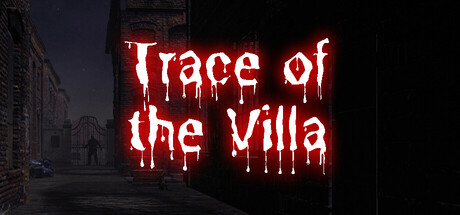
Trace of the Villa — How clue reading, object logic, and story puzzles shape the experience
Trace of the Villa centers on Jin’s search for his missing sister inside a remote, decaying mansion; the Steam page frames progress as restoring systems, opening locked compartments, and parsing manifests and encrypted fragments to reconstruct what happened. The game dresses its mystery in action/adventure trappings, but the experience described on Steam is explicitly driven by environmental clues, object logic, and layered story puzzles rather than twitch-based encounters.

Quick facts
| Title | Trace of the Villa |
|---|---|
| Steam AppID | 3483660 |
| Release date | 28 May, 2026 |
| Developer | Steadyturtle Co., Ltd. |
| Publisher | Steadyturtle Co., Ltd. |
| Genres | Action, Adventure, Indie |
| Categories / features | Single-player; Color Alternatives; Custom Volume Controls; Playable without Timed Input; Subtitle Options; Family Sharing |
What it is
Trace of the Villa follows Jin as he investigates a deliberately forgotten estate where rooms appear abandoned mid-routine. According to the Steam description, restoring power and accessing secured systems reveals hidden compartments, safes and fragments of encrypted documents that build a financial and identity-based trail. The narrative setup and itemized evidence on the store page point to a puzzle loop that rewards careful reading and logical assembly of clues.
Who it’s for
This is for players who prefer atmospheric mystery adventure and slow-burn suspense: those who enjoy reading environmental detail, testing object logic (how items and systems interact), and letting story puzzles reveal context over time. The Steam listing also notes accessibility features like subtitle options and the ability to play without timed input, which suits players who want to savour clues at their own pace.
When and where
Trace of the Villa is released on Steam for PC on 28 May, 2026. The Steam store page lists it under Action, Adventure, and Indie and exposes standard PC-focused categories and accessibility options on its product page.
Why the clue-driven angle matters
Not all mystery games reward patience equally. The Steam description positions Trace of the Villa as a story-first investigation: locked doors, encrypted fragments, and falsified identities form a breadcrumb trail rather than a sequence of combat arenas. For players drawn to narrative puzzle design and environmental storytelling, that approach turns each solved object or recovered manifest into a meaningful beat in the investigation, rather than a mere gate to the next corridor.


How you progress — reading clues, objects and story puzzles
From the store text: solving progression comes from restoring systems, accessing locked compartments, and piecing together documents and transfer records. That implies three overlapping puzzle strands:
- Clue reading — manifests and fragments act as primary evidence; players assemble timelines and motives from text and item context.
- Object logic — interacting with estate systems and safes suggests mechanical puzzles that depend on item use and environmental state.
- Story puzzles — decrypted documents and falsified records reshape interpretation, so narrative progress depends on cumulative discovery rather than a single scripted beat.
Specific player scenarios
- If you enjoy methodical investigation: you’ll find value in combing rooms for paperwork and using discovered systems to unlock the next layer of narrative evidence.
- If you prefer tension without twitch combat: the listing’s emphasis on restored systems and hidden compartments suggests suspense through revelation more than action-heavy encounters.
- If you need accessible pacing: Steam categories include “Playable without Timed Input” and subtitle options, which allow for a more measured, clue-first playstyle.
- If you like puzzle-adventure variety: expect a mix of textual analysis, mechanical problem-solving and narrative deduction rather than pure inventory-block puzzles alone.
How it compares to nearby puzzle/mystery games
Comparison is editorial discovery: these nearby titles are similar in putting puzzles and atmosphere first, but they differ in approach and pacing. The table below helps match playstyles rather than rank quality.
| Title | Genre / Core vibe | Puzzle focus | Exploration style | Story tone | Pacing / Player fit |
|---|---|---|---|---|---|
| The Room | Adventure / Indie — intimate, tactile puzzles | Mechanical safes and object puzzles; tactile inspection | Confined, single-room to multi-room mysteries | Mysterious, claustrophobic | Slow, puzzle-centric; fits players who like focused set-piece puzzles |
| The Room Two | Adventure / Indie — expanded cryptic locales | Layered object puzzles with a narrative thread | Structured chapters across evocative settings | Ominous and curiosity-driven | Measured pacing; good for players who like sequenced puzzle progression |
| Escape Simulator | Adventure / Casual — interactive escape rooms | Highly interactive object puzzles, physics-based interactions | Room-by-room, puzzle-box design; often toolbox-style | Light to varied, depending on room |
Leave a Reply