Trace of the Villa: how clue reading, object logic and story puzzles reveal evidence without spoiling the mystery
Trace of the Villa is an atmospheric mystery adventure from Steadyturtle Co., Ltd., arriving on Steam on 28 May, 2026. Its slow-burn investigation places you in a decaying mansion where recovered manifests, encrypted documents and other fragments form the primary way the story is revealed through puzzle-solving rather than exposition.

Quick facts
| Title | Trace of the Villa |
|---|---|
| Developer / Publisher | Steadyturtle Co., Ltd. |
| Release date | 28 May, 2026 |
| Steam AppID | 3483660 |
| Genres | Action, Adventure, Indie |
| Key categories | Single-player; Color Alternatives; Custom Volume Controls; Playable without Timed Input; Subtitle Options; Family Sharing |
| Store header | Trace of the Villa on Steam |
Who, what, when and where
Who: You play as Jin, a protagonist presented in the official Steam material who has spent years searching for his missing sister. What: The game positions itself as a narrative-led mansion mystery that uses recovered manifests, encrypted documents and secured systems to supply pieces of evidence. When / Where: Trace of the Villa released on Steam on 28 May, 2026 and is available as a PC title on its Steam store page.
Why the theme matters
The mansion in Trace of the Villa isn’t merely a backdrop — the Steam description emphasizes that rooms feel “less abandoned than erased,” and that restoring power and unlocking systems is how the house “begins to reveal what it was hiding.” That design choice makes puzzles literal instruments of discovery: solving them returns fragments of identity, financial traces, and encrypted clues that collectively act as evidence. For players who prefer environmental storytelling and investigation that accrues as you interact, that arrangement makes each solved lock or restored terminal meaningful on both mechanical and narrative levels.
How puzzles reveal story evidence (without spoiling plot beats)
Trace of the Villa focuses on three complementary puzzle threads that shape how the player reads the story:
- Clue reading: Manifests, transfer records and fragments recovered from the mansion act as primary documents. These are the sort of textual evidence that reward careful reading and cross-referencing rather than cutscenes.
- Object logic: Items left in rooms and the way personal belongings are arranged matter. The Steam copy notes “locked doors conceal hastily secured secrets” and “personal belongings sit undisturbed,” implying that inventory-focused reasoning and physical context drive deductions.
- Story puzzles: Restoring power, unlocking safes and decrypting files are described as unlocking narrative layers — each mechanic returns concrete artifacts (system logs, encrypted documents) rather than abstract narration, which helps the player assemble a timeline from evidence rather than being told the timeline outright.
Because these systems place evidence in playable interactions, the experience preserves surprises: solving puzzles yields materials that alter your understanding without requiring spoilers from the outside.
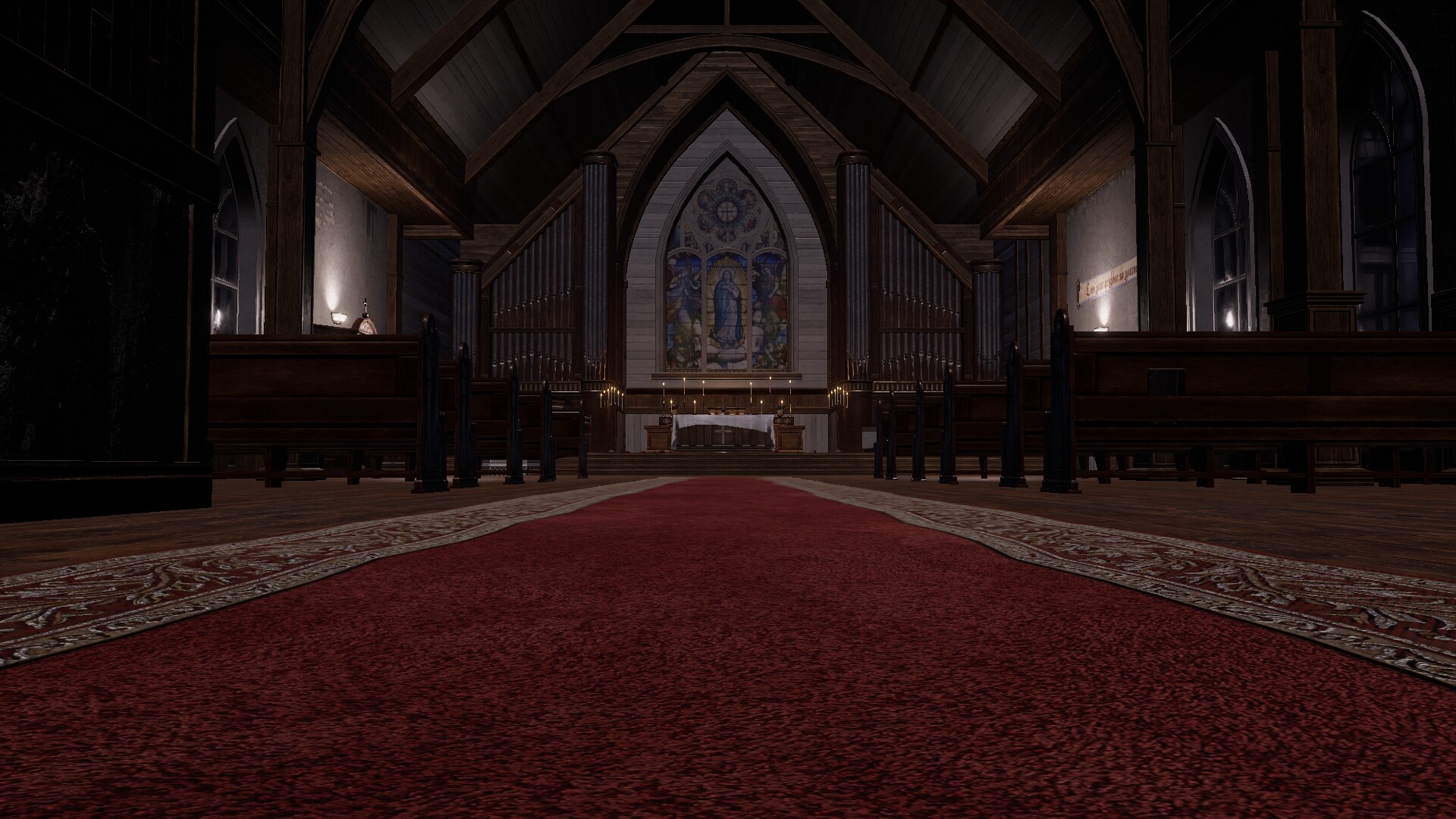
Screenshots — what the mansion looks like

Player scenarios — who should wishlist it
Wishlist Trace of the Villa if you:
- Prefer detective-style mystery where evidence accumulates through interaction rather than nonstop exposition.
- Enjoy slower, atmospheric pacing that favors reading documents, restoring systems and piecing timelines together.
- Like puzzle design that ties mechanical solutions to narrative payoff — e.g., decrypting a file yields a lead, not a cinematic.
- Value accessibility options such as subtitle options, color alternatives and non-timed input, which the Steam store lists among the game’s categories.
It may be less appealing if you want action-focused pacing or multiplayer components — the title is categorized as single-player on Steam.
How it compares — editorial discovery
Below is a compact comparison against nearby puzzle/adventure titles. The criteria are genre, atmosphere, puzzle focus, exploration style, story tone, pacing and suggested player fit. This is an editorial comparison using public store descriptions only.
| Title | Genre | Atmosphere | Puzzle focus | Exploration style | Pacing / Story tone | Player fit |
|---|---|---|---|---|---|---|
| Trace of the Villa | Action / Adventure / Indie | Mansion mystery, decaying and erased identities | Clue reading, object logic, decrypting manifests | Investigative, environment-driven | Slow-burn, evidence-led | Players who like environmental storytelling + investigative puzzles |
| The Room | Adventure / Indie | Mysterious, tactile puzzle boxes | Mechanical puzzle-boxes and object manipulation | Room-by-room focused | Focused and intimate | Players who enjoy tightly designed tactile puzzles |
| The Room Two | Adventure / Indie | Cryptic, immersive rooms and artifacts | Complex puzzle mechanisms with layered solutions | Set-piece rooms with narrative threads | Slow, atmospheric escalation | Players who liked The Room and want broader environments |
| Escape Simulator | Adventure / Casual / Indie / Simulation | Bright, highly interactive escape-room environments | Object interaction, physical puzzles, multiplayer options | Room-focused, sandbox interaction | Puzzle-forward, variable pacing (including co-op) | Players who like interactive objects and community rooms or co-op |
| Unpacking | Casual / Indie / Simulation | Zen, domestic and intimate | Spatial and contextual puzzles about objects and life stories | Room-by-room domestic spaces | Calm, reflective | Players who enjoy narrative through objects and non-violent pacing |
| hack_me | Indie / Simulation | Technical, hacker-simulator tone | Command-line, hacking tools, simulation-style puzzles | Interface-driven, task-focused | Utility-driven, procedural | Players who like simulation and systems puzzles over environmental storytelling |
When your playstyle meets the design
If you prize the labor of connecting small evidentiary dots — cross-referencing a manifest entry with a transfer record and a physical object in a room — Trace of the Villa’s documented approach to narrative puzzle design is likely to satisfy. If you favor puzzle boxes or tranquil object-placement experiences, the comparison table above shows where those games align and diverge.
Where to find trailers and gameplay videos
Use this YouTube search to find trailers or community gameplay footage: Search Trace of the Villa trailers and gameplay on YouTube. This is a discovery path; do not assume a particular video is official unless it is explicitly verified.
Leave a Reply