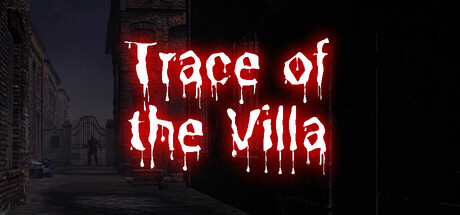
Trace of the Villa — how puzzle mechanics reveal evidence without spoiling the mystery
Trace of the Villa frames a patient, clue-driven investigation inside a remote, decaying mansion: you play as Jin, following manifests and scattered hints that suggest his missing sister may still be alive. The game unfolds as discovery-by-puzzle—locked systems, safes, and encrypted fragments that reveal evidence in increments rather than blunt answers.

Quick facts
| Title | Trace of the Villa |
|---|---|
| Steam AppID | 3483660 |
| Developer / Publisher | Steadyturtle Co., Ltd. |
| Release date | 28 May, 2026 |
| Genres | Action, Adventure, Indie |
| Key categories | Single-player; Color Alternatives; Custom Volume Controls; Playable without Timed Input; Subtitle Options; Family Sharing |
| Short premise | Jin follows a lead to a decaying, off-grid mansion and recovers manifests and hints indicating his sister may still be alive. |
Who should wishlist Trace of the Villa?
If you favor atmospheric mystery adventure and story-rich exploration that rewards careful observation, this is aimed at you. The official materials position the experience around investigative puzzle work—decoding encrypted fragments, restoring systems, and piecing together transactional records—so players who enjoy slow-burn suspense and environmental storytelling will likely appreciate the pacing and design choices.
What the game is — tone and structure
Trace of the Villa is presented as a narrative puzzle-adventure set largely inside a single, isolated estate. The plain description on Steam emphasizes a sense of erasure: rooms left mid-routine, missing names and photographs, and locked systems that only reveal fragments once Jin restores power. That setup suggests the game privileges atmosphere, object logic and clue-reading over spectacle.
When and where
Trace of the Villa released on Steam on 28 May, 2026. It appears on PC via Steam with the standard store presence and the features listed in the Steam page categories (single-player and accessibility/customization options such as color alternatives and subtitle support).
Why the theme matters — what the puzzles reveal
The official description lists concrete narrative artifacts that the gameplay surfaces: manifests, encrypted documents, suspicious transfer records and falsified identities. Those are not mere set dressing—each class of object acts as a different kind of puzzle-reward. Financial traces point to institutions and timing; manifests and logs establish presence or absence; encrypted fragments and safes gate information until the player demonstrates pattern recognition or mechanical skill. Because those elements are discovered piecemeal, the game can deliver mounting evidence about the estate’s purpose without resolving the central mystery too quickly.
How you read clues and progress
From the Steam text we can say this: progression is tied to investigation mechanics—restoring power, reactivating secured systems and unlocking compartments yields new nodes of information. That structure supports two puzzle philosophies at once: object logic (treating items and systems as interconnected tools) and story puzzles (where solved puzzles function as evidence that advances the narrative). In practice, the design promises incremental revelation—each solved safe or decrypted file is a data point the player can assemble into a timeline rather than a single explanatory cutscene.


Player scenarios — who will enjoy this most
- Careful note-takers: You like transcribing dates and cross-referencing logs to build a timeline. Trace of the Villa leans on manifests and records as core signals.
- Atmospheric explorers: You prefer slow-burn suspense and piecing together absence as much as presence; the mansion-as-evidence motif fits that taste.
- Puzzle-first narrativists: You want puzzles that both gate progress and add to the story. The description implies encrypted documents and safes that deliver narrative fragments when opened.
- Players who avoid twitch mechanics: The game lists “Playable without Timed Input” and other accessibility options, suggesting a measured, contemplative pace rather than reflex-based gameplay.
How Trace of the Villa compares to similar puzzle-adventure experiences
Below is an editorial comparison using lawful discovery criteria: genre, atmosphere, puzzle focus, exploration style, story tone and pacing. These comparisons are intended to help readers decide fit, not to claim superiority.
| Title | Genre / Basic tone | Puzzle focus | Exploration style | Story tone & pacing | Player fit |
|---|---|---|---|---|---|
| Trace of the Villa | Action / Adventure / Indie — mansion mystery, investigative | Evidence-based puzzles: manifests, safes, encrypted documents | Single, contained estate; environmental clues unlock systems | Slow-burn, investigative; reveals via recorded artifacts | Players who like atmospheric, narrative puzzle work |
| The Room | Adventure / Indie — tactile safe puzzles | Mechanical, object-focused puzzle boxes and safes | Discrete, self-contained puzzle rooms | Mysterious and tactile; puzzle-forward, focused sessions | Players who prefer handcrafted mechanical puzzles |
| The Room Two | Adventure / Indie — expanded cryptic locations | Complex object puzzles with layered mechanisms | Varied locations connected by narrative thread | Mysterious, atmospheric, puzzle-driven progression | Fans of immersive puzzle boxes and escalating complexity |
| Escape Simulator | Adventure / Casual / Indie — escape room simulation | Highly interactive, physics-enabled object puzzles | Multiple distinct rooms (and community-made levels) | Fast-paced, room-by-room problem solving; casual tone | Players who want tactile interaction and variety |
| Unpacking | Casual / Indie / Simulation — zen, domestic puzzles | Spatial, narrative-through-objects (non-verbal story) | Sequence of domestic spaces; slow, rewarding setup | Quiet, introspective; story emerges from belongings | Players who enjoy calm, non-threatening storytelling |
| hack_me | Indie / Simulation — hacker simulator | Interface-driven puzzle mechanics (simulated hacking) | System/terminal-based exploration rather than rooms | Simulator tone with gameplay focused on hacking tasks | Players who enjoy command/terminal puzzle systems |
YouTube discovery
Looking for trailers or gameplay clips? Use the official search path: Search Trace of the Villa trailers and gameplay on YouTube. This is a discovery link and not a claim that a specific video is an official
Leave a Reply