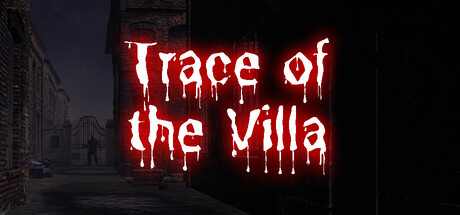
Trace of the Villa — How clue reading, object logic, and story puzzles reveal evidence without spoiling the mystery
Trace of the Villa places you in a remote, decaying mansion as Jin, a protagonist searching for his missing sister; puzzles and recovered documents gradually expose a hidden operation without handing you the ending on a platter. Released on 28 May, 2026 by Steadyturtle Co., Ltd., the game pairs exploration-driven investigation with environmental storytelling that rewards careful reading of clues and objects.

Who this is for
If you favor atmospheric mystery adventure and story-rich investigation on PC — readers who enjoy slow-burn suspense, environmental storytelling, and puzzle systems that treat evidence as discovery, not exposition — this is aimed at you. The game’s Steam tags and categories (Action, Adventure, Indie; Single-player, Subtitle Options, Playable without Timed Input, Color Alternatives, Custom Volume Controls) indicate a solo, accessibility-aware experience focused on exploration and narrative puzzles rather than twitch combat.
What the game actually is
Trace of the Villa follows Jin as he investigates a deliberately forgotten estate where rooms feel “erased” and personal identity appears stripped away. According to the Steam page, restoring power to the mansion brings secured systems back online, hidden compartments unlock, and safes yield fragments of encrypted documents and suspicious transfer records. Puzzles are seeded into that investigative loop: solve a mechanical or logic challenge, and you earn a tangible piece of the house’s evidence.
When and where
The game launched on Steam on 28 May, 2026. It is developed and published by Steadyturtle Co., Ltd. and appears on the Steam store as a PC title (Steam AppID 3483660).
Why that theme matters
Trace of the Villa leans into atmosphere: a decaying mansion, hush of erased lives, and administrative traces (manifests, transfer records, falsified identities) that hint at a larger operation. That emphasis makes clue-reading a narrative act: the puzzles are not purely gatekeeping devices, they’re how the world explains itself. If investigating the logistics and traces of a mystery — financial trails, locked systems, and carefully staged interiors — appeals to you, the game’s premise promises reward for meticulous attention rather than cinematic reveals.
How progression and puzzles reveal story evidence (without spoilers)
The Steam description outlines a clear design mantra: interaction restores functionality (power, systems) and investigation yields fragments (encrypted documents, manifests). That creates two complementary puzzle threads:
- Object logic: items and devices react predictably when you restore power or access a mechanism. Solving a mechanical puzzle often opens a compartment with records or a note that extends the timeline.
- Clue reading and document puzzles: decrypted fragments, transfer records, and manifests are presented as evidence. Each piece is ambiguous enough to provoke inference, but concrete enough to adjust your working theory about the mansion and the people who passed through it.
This design keeps the player in the role of investigator: puzzles unlock verifiable artifacts rather than text dumps that summarize plot beats. That’s how the game can reveal escalating evidence without resolving the central mystery prematurely — you assemble context step by step, not through a single reveal.


Player scenarios — who will enjoy it and why
- The methodical detective: You like piecing together timelines from receipts, manifests, and system logs. The game’s recovered documents and encrypted fragments are core to your satisfaction.
- The atmosphere-first explorer: You prioritize mood and environment; furnished rooms that feel “paused” and the slow return of systems give you the same payoff as a cinematic reveal, but through discovery.
- The puzzle-first player: You enjoy object-based puzzles that open new streams of evidence. If you prefer puzzles that logically lead to narrative fragments rather than abstract solutions, this fits.
- The accessibility-conscious player: Categories like Subtitle Options, Color Alternatives, and Playable without Timed Input make it a reasonable pick if you need settings to tailor pacing and readability.
Compact facts — Trace of the Villa
| Title | Trace of the Villa |
|---|---|
| Steam AppID | 3483660 |
| Release date | 28 May, 2026 |
| Developer | Steadyturtle Co., Ltd. |
| Publisher | Steadyturtle Co., Ltd. |
| Genres | Action, Adventure, Indie |
| Categories | Single-player; Color Alternatives; Custom Volume Controls; Playable without Timed Input; Subtitle Options; Family Sharing |
| Official short description | Jin has spent years searching for his missing sister, pursuing leads that took him to a remote, decaying mansion where he recovered manifests and hints that indicate his sister may still be alive, somewhere at the end of the trail he is about to follow. |
How it compares (editorial overview)
Below is a concise editorial comparison against a few nearby puzzle-adventure reference points. The goal is to help you decide fit by puzzle focus, tone, and exploration style — not to rank or endorse.
| Title | Genre / Tone | Puzzle Focus | Exploration Style | Pacing |
|---|---|---|---|---|
| Trace of the Villa | Action / Adventure / Indie — mansion mystery, psychological investigation | Object-based mechanics, document fragments, systems restoration tied to narrative evidence | Single-player, methodical room-by-room investigation of a decaying estate | Slow-burn, evidence-unfolding progression |
| The Room | Adventure / Indie — focused, tactile mystery | Intricate mechanical puzzles centered on single devices and safes | Isolated puzzle locations with intense, tactile object interaction | Concentrated puzzle sessions with escalating complexity |
| Escape Simulator | Adventure / Casual / Indie — interactive escape rooms | Highly interactive object manipulation and environment puzzles; emphasis on emergent solutions | Room-scale, sandbox-like escape scenarios; supports solo or co-op | Variable — short, room-focused bursts |
| Unpacking | Casual / Indie — zen, narrative-through-objects | Puzzle as placement and inference; narrative revealed by household items | Calm, domestic spaces that tell a life-story through possessions |
Leave a Reply