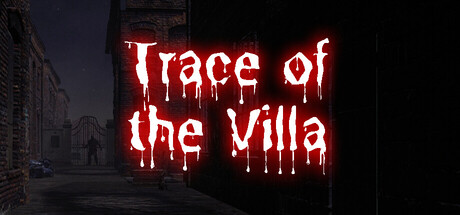
Trace of the Villa — an evidence-first mansion mystery built from puzzles
Trace of the Villa asks players to read rooms like case files: Jin follows manifests, encrypted fragments and domestic detritus through a decaying mansion to assemble a timeline and possible trail to his missing sister. Released 28 May, 2026 by Steadyturtle Co., Ltd., the game pairs clue-reading, object logic and layered story puzzles to reveal evidence without handing out spoilers.

Who, what, when, where, why, how
Who is this for?
Players who favor atmospheric mystery adventure on PC: those who prefer slow-burn suspense, environmental storytelling, and puzzle systems that reveal facts rather than narrate them. If you enjoy deciphering manifests, restoring systems, and piecing together motives from objects and documents, this is aimed at you.
What is the game?
Trace of the Villa is an action-adventure indie from Steadyturtle Co., Ltd. You play Jin, a sibling searching for his missing sister. The premise centers on a remote, deliberately neglected mansion where recovered manifests and encrypted fragments suggest a longer trail. The Steam page characterizes the house as “less abandoned than erased,” and puzzles unlock systems, safes and documents that gradually form an evidentiary picture.
When and where
Trace of the Villa launched on 28 May, 2026 and is available on Steam for PC. The Steam store lists the title under Action, Adventure and Indie genres and notes single-player support with accessibility features such as color alternatives, custom volume controls, subtitle options and an option to play without timed input.
Why the theme matters
Mansion mysteries work when mechanics and story are tightly coupled: here, the act of reading clues—manifests, transfer records, and encrypted notes—forms the narrative engine. That design lets players accumulate evidence and make inferences, which heightens the emotional stakes without spoiling outcomes; the game’s premise makes each unlocked document feel like forensic progress toward an answer.
How you progress — clue reading, object logic, story puzzles
- Clue reading: environmental clues and recovered manifests are presented as discoverable items. The player’s interpretation of these items drives the investigation forward.
- Object logic: puzzles are grounded in interactions with the house—restoring power, unlocking safes, and accessing secured systems—so solutions often require understanding how objects relate in the space rather than abstract code-cracking alone.
- Story puzzles: instead of exposition dumps, narrative beats emerge from solved puzzles; encrypted fragments, transfer records and other artifacts fill out a pattern that points to larger operations connected to the mansion.


Compact facts: Trace of the Villa
| Title | Trace of the Villa |
|---|---|
| Release date | 28 May, 2026 |
| Developer / Publisher | Steadyturtle Co., Ltd. |
| Genres | Action, Adventure, Indie |
| Key categories | Single-player; Color Alternatives; Custom Volume Controls; Playable without Timed Input; Subtitle Options; Family Sharing |
| Steam app | Trace of the Villa on Steam |
Who should wishlist it — specific player scenarios
- Investigation-first players: you like assembling timelines from documents and deducing relationships between artifacts and locations.
- Slow-burn mystery fans: you prefer incremental reveals and atmosphere over jump scares or rapid-fire plot twists.
- Spatial puzzle solvers: you enjoy object-based logic—restoring power, reactivating devices, and using environmental context as part of the solution.
- Accessibility-conscious players: Steam categories indicate subtitle options, color alternatives and the ability to play without timed input, which supports a measured, thoughtful pace.
How Trace of the Villa compares (editorial discovery)
Below is a focused comparison with a selection of puzzle and mystery titles. The aim is to help you judge fit by puzzle focus, atmosphere, exploration style and pacing.
| Title | Puzzle focus | Atmosphere / story tone | Exploration style | Pacing / player fit |
|---|---|---|---|---|
| Trace of the Villa | Clue reading, object logic, encrypted documents and manifests | Mansion mystery; erased identities and controlled movements | Room-by-room, evidence-driven exploration | Slow-burn; for players who like narrative built from found items |
| The Room | Mechanical, tactile safe-and-device puzzles | Mysterious, puzzle-box focus | Isolated locations with dense interactive puzzles | Focused puzzle experience; players who like tactile contraptions |
| The Room Two | Series of intricate mechanical puzzles | Expands on cryptic, atmospheric puzzle-box storytelling | Sequential environments with layered devices | Players who enjoyed the first title and prefer escalating puzzle complexity |
| Unpacking | Object placement as narrative; non-traditional puzzle | Zen, domestic and autobiographical tone | Slow, domestic spaces revealing life through possessions | Players who prefer low-pressure, story-through-objects experiences |
| Escape Simulator | Highly interactive escape-room puzzles, physics-based | Varied tones depending on room; puzzle-first | Room-based, often multiplayer-capable interactions | Players who enjoy cooperative or highly interactive puzzle rooms |
| hack_me | Hacking simulation and terminal-style puzzle mechanics | Tech-focused, simulation tone | Screen-based, command-driven interactions rather than environmental | Players interested in hacking simulations and command puzzles |
YouTube discovery
For trailers and gameplay clips, search YouTube (results vary by uploader). A convenient discovery link: Search Trace of the Villa on YouTube.
View Trace of the Villa on Steam
Referenced titles and trademarks belong to their respective owners. Comparisons presented here are editorial discovery only, based on genre, atmosphere, puzzle focus, exploration style and pacing as described in public sources.
Leave a Reply