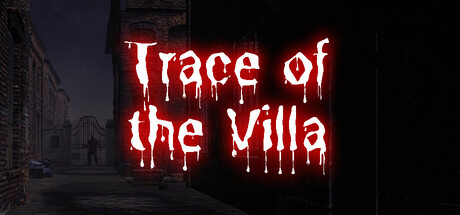
Trace of the Villa: how puzzles lay out evidence without giving the ending away
Trace of the Villa casts you as Jin, a searcher piecing together a missing-person trail inside a remote, decaying mansion. The game uses item investigation, locked systems and recovered documents to reveal evidence in fragments so the story emerges from gameplay rather than blunt exposition.

Who: Trace of the Villa is developed and published by Steadyturtle Co., Ltd. It lists genres as Action, Adventure, Indie and is a single-player Steam release intended for PC players who appreciate environmental storytelling and clue-driven exploration.
What the game is — premise and tonal hooks
The official short description summarizes the premise: “Jin has spent years searching for his missing sister, pursuing leads that took him to a remote, decaying mansion where he recovered manifests and hints that indicate his sister may still be alive, somewhere at the end of the trail he is about to follow.” Official copy further describes a house that feels “less abandoned than erased” and a progression where restoring power and unlocking systems yields encrypted documents, transfer records and other fragments of evidence.
When and where — Steam availability
Trace of the Villa released on 28 May, 2026 on Steam. The store page includes subtitle options and accessibility features like color alternatives and custom volume controls, and the game is categorized as Single-player with Family Sharing supported.
Why the theme matters — what the puzzle approach sells
Unlike puzzles that simply gate progress with an arbitrary lock, Trace of the Villa’s official description ties puzzles to forensic discovery: restoring systems, opening safes and finding encrypted documents are the mechanics by which Jin reconstructs events. That means each solved puzzle typically delivers a concrete clue—financial trails, falsified identities, transfer records—that shifts the player’s understanding incrementally. The design choice keeps the narrative stakes intact by revealing evidence in small, interpretable pieces rather than dumping exposition.
How you read clues and progress — mechanics without spoilers
The official material emphasizes three interlocking play signals: secured systems coming back online, hidden compartments unlocking, and safes yielding fragments of encrypted documents. From that we can expect a puzzle loop focused on observation (notice something out of place), object logic (use found tools and documents to manipulate the environment) and evidence synthesis (connect fragments to form a hypothesis). Because the description highlights “fragments” and “layers,” the game appears to favor cumulative discovery: you rarely get the full picture from a single puzzle; instead, the story coalesces as you piece multiple clues together.

Compact facts — Trace of the Villa
| Title | Trace of the Villa |
|---|---|
| Steam AppID | 3483660 |
| Release date | 28 May, 2026 |
| Developer / Publisher | Steadyturtle Co., Ltd. |
| Genres | Action, Adventure, Indie |
| Key categories / features | Single-player, Color Alternatives, Custom Volume Controls, Playable without Timed Input, Subtitle Options, Family Sharing |
| Official short description | Jin has spent years searching for his missing sister, pursuing leads that took him to a remote, decaying mansion where he recovered manifests and hints that indicate his sister may still be alive, somewhere at the end of the trail he is about to follow. |
Who should wishlist Trace of the Villa — specific player scenarios
- Clue readers: You enjoy assembling narrative threads from documents, logs and object interactions rather than being told the plot outright.
- Atmosphere-first players: You prefer slow-burn suspense and environmental detail—furnished rooms, powered-up systems, and locked safes that reveal backstory when opened.
- Puzzle-focused investigators: You appreciate object logic and small cognitive leaps that reward careful inspection, rather than reflex-based or timed challenges (the store lists “Playable without Timed Input”).
- Accessibility-minded players: If color alternatives, subtitle options and custom volume controls are important to you, they’re present on the Steam page.
- Not your cup of tea: If you want heavy-handed narrative reveals, constant action set-pieces without investigation, or multiplayer co-op, the single-player, evidence-driven design may feel deliberate and slow.
Comparisons for context (editorial discovery)
Below is a focused comparison on puzzle focus, atmosphere and exploration style to help decide if Trace of the Villa matches your tastes.
| Title | Core puzzle style | Story presence | Exploration style | Pacing / Player fit |
|---|---|---|---|---|
| Trace of the Villa | Document fragments, locked systems, safes and environmental object logic (official description notes encrypted documents and manifests) | Evidence-led; story revealed in fragments tied to puzzles | Mansion-based, investigative, restoring systems to unlock new areas | Slow, clue-driven; for players who like piecing evidence together |
| The Room | Mechanical and object-based safes and puzzles; tactile manipulation | Mysterious invitation and atmosphere that unfolds via puzzles | Contained room-to-room puzzle spaces | Focused, tactile puzzling for players who enjoy handcrafted mechanisms |
| The Room Two | Similar to The Room: layered mechanical puzzles and devices | Expands the cryptic atmosphere and narrative hints through puzzle progression | Progressive, scene-based exploration | Players who like escalating mystery and tactile puzzle design |
| Unpacking | Spatial and object-placement puzzles that reveal life-story through items | Nonverbal narrative built from possessions and scenes | Room-by-room, domestic spaces with emergent storytelling | Zen, observational players who like narrative via objects rather than documents |
| Escape Simulator | Interactive escape-room puzzles with physics and item manipulation | Light narrative scaffolding; focus is puzzle interaction | Highly interactive rooms; physics-driven object use | Players who want mechanical interactivity and optionally co-op solutions |
YouTube discovery
If you want trailers or gameplay footage, search results can be found here: Trace of the Villa trailer & gameplay on YouTube. (Use this as a discovery path; the store assets include an official trailer thumbnail.)
View Trace of the Villa on Steam
Disclaimer: referenced titles and trademarks belong to their respective owners. Comparisons are editorial discovery only and not endorsements.
Leave a Reply