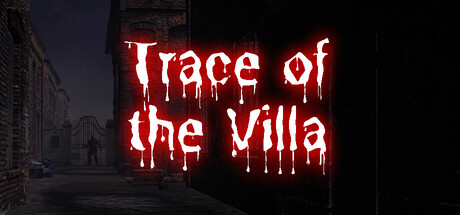
Trace of the Villa: when puzzles surface proof instead of spoiling the mystery
Trace of the Villa is an atmospheric mystery adventure that lets you read a case file room by room: Jin arrives at a decaying mansion and, through objects and locked systems, uncovers manifests and hints that point down a trail. Released on 28 May, 2026 by Steadyturtle Co., Ltd., the game emphasizes environmental storytelling and puzzle-driven evidence rather than overt narration.

Who is this for?
Players who favor slow-burn suspense and clue-driven exploration will find the tone here familiar and rewarding. If you enjoy atmospheric mystery adventure and narrative puzzle design—reading documents, restoring systems, and examining personal effects to assemble a timeline—this game targets that same appetite. The protagonist, Jin, and his search for a missing sister provide a personal through-line that grounds the puzzle work in motive rather than spectacle.
What the game is (short, factual)
Trace of the Villa is an Action / Adventure / Indie title on Steam developed and published by Steadyturtle Co., Ltd. The official short description: “Jin has spent years searching for his missing sister, pursuing leads that took him to a remote, decaying mansion where he recovered manifests and hints that indicate his sister may still be alive, somewhere at the end of the trail he is about to follow.” The longer official description on Steam explains a gameplay loop where restoring power and unlocking secured systems yields fragments of encrypted documents, transfer records, and other evidence.
When and where
Trace of the Villa launched on Steam on 28 May, 2026. It is available through the Steam store page for PC; use the official store link to wishlist or purchase:
Why the theme matters: evidence over exposition
The game’s published text stresses that the mansion feels “less abandoned than erased” and that restored systems reveal “fragments of encrypted documents and suspicious transfer records.” That phrasing signals a design choice: rather than spoon-feeding answers through cutscenes, the game layers material evidence—manifests, safes, secured systems—so players assemble the story themselves. For players who prefer inference and deduction to explicit narration, that approach keeps tension high while protecting crucial plot beats from being bluntly revealed.
How clue reading, object logic, and story puzzles shape progression
Official details mention restoring power, unlocking hidden compartments, and decrypting fragments. Those are concrete puzzle vectors that combine mechanical interaction (power switches, safes, encrypted text) with object logic (what an item implies about occupancy, identity, or timeline). In a game structured this way, progress comes from two complementary activities:
- Close reading: examining manifests and transfer records for anomalies or patterns that suggest who was present and when.
- Environmental problem-solving: reactivating systems and opening secured containers to reveal the next piece of evidence rather than a full explanation.
Because the evidence is presented as pieces—documents, system logs, locked-room details—players gain stories incrementally. That makes each solved puzzle feel like uncovering testimony rather than producing exposition, and it preserves surprises while still allowing interpretation.


Fast facts
| Title | Trace of the Villa |
|---|---|
| Steam appid | 3483660 |
| Release date | 28 May, 2026 |
| Developer / Publisher | Steadyturtle Co., Ltd. |
| Genres | Action, Adventure, Indie |
| Steam categories | Single-player; Color Alternatives; Custom Volume Controls; Playable without Timed Input; Subtitle Options; Family Sharing |
How it compares — compact guide
Below is a short editorial comparison using lawful criteria: genre, atmosphere, puzzle focus, exploration style, and player fit. These comparisons are discovery-focused, not endorsements.
| Title | Release | Core puzzle style | Atmosphere & pacing | Player fit |
|---|---|---|---|---|
| Trace of the Villa | 28 May, 2026 | Document-based evidence, locked systems, object logic | Slow-burn mansion mystery, investigative tension | Players who like environmental storytelling and piecing timelines together |
| The Room | 28 Jul, 2014 | Physical puzzle boxes, tactile mechanical puzzles | Claustrophobic, uncanny object-focused puzzles | Those who enjoy intricate mechanical puzzles in isolated spaces |
| Escape Simulator | 19 Oct, 2021 | Highly interactive escape rooms, object manipulation | Varied tone depending on community rooms; puzzle-heavy and kinetic | Players who want active object interaction and room-scale puzzle design |
| Unpacking | 1 Nov, 2021 | Zen spatial puzzles and environmental inference | Quiet, domestic, slow reveal of life through objects | Players who prefer low-tension, reflective narrative through belongings |
Player scenarios — who should wishlist this
- You enjoy detective-style play where reading manifests and logs yields implications rather than blunt answers.
- You prefer puzzle design that ties mechanical tasks (powering systems, opening safes) to narrative discovery.
- You like atmospheric, slow-burn suspense and are comfortable with inference-driven storytelling.
- You want an experience where each solved object puzzle functions as a piece of testimony, letting you assemble the broader case.
YouTube discovery
If you want to see trailers or gameplay videos, search using this YouTube discovery path (useful for trailers and player videos; not a verified official video link):
YouTube discovery
For trailer and gameplay discovery, use YouTube search rather than relying on unverified embeds: Find Trace of the Villa trailer and gameplay searches on YouTube.
Leave a Reply