
Trace of the Villa and the Power of Quiet, Unsettling Suspense
Trace of the Villa trades jump scares for a slow-burning investigation into an estate that feels “less abandoned than erased.” The game leans on unexplained spaces, missing identities, and staged domestic stillness to build tension that lingers long after you leave a room.

Quick facts
| Title | Trace of the Villa |
|---|---|
| Steam AppID | 3483660 |
| Release date | 28 May, 2026 |
| Developer / Publisher | Steadyturtle Co., Ltd. |
| Genres | Action · Adventure · Indie |
| Categories | Single-player; Color Alternatives; Custom Volume Controls; Playable without Timed Input; Subtitle Options; Family Sharing |
| Official short description | Jin has spent years searching for his missing sister, pursuing leads that took him to a remote, decaying mansion where he recovered manifests and hints that indicate his sister may still be alive, somewhere at the end of the trail he is about to follow. |
Who should consider wishlisting Trace of the Villa?
This is for players who prefer slow-burn psychological investigation over reflex-based horror: people who want to read atmospherics as clues, who favor environmental storytelling, and who don’t expect constant shocks. If your taste runs to story-rich adventure where suspense is driven by omission — empty rooms, missing names, falsified paperwork — this is the kind of Steam indie horror that will suit you.
What the game is (and what it isn’t)
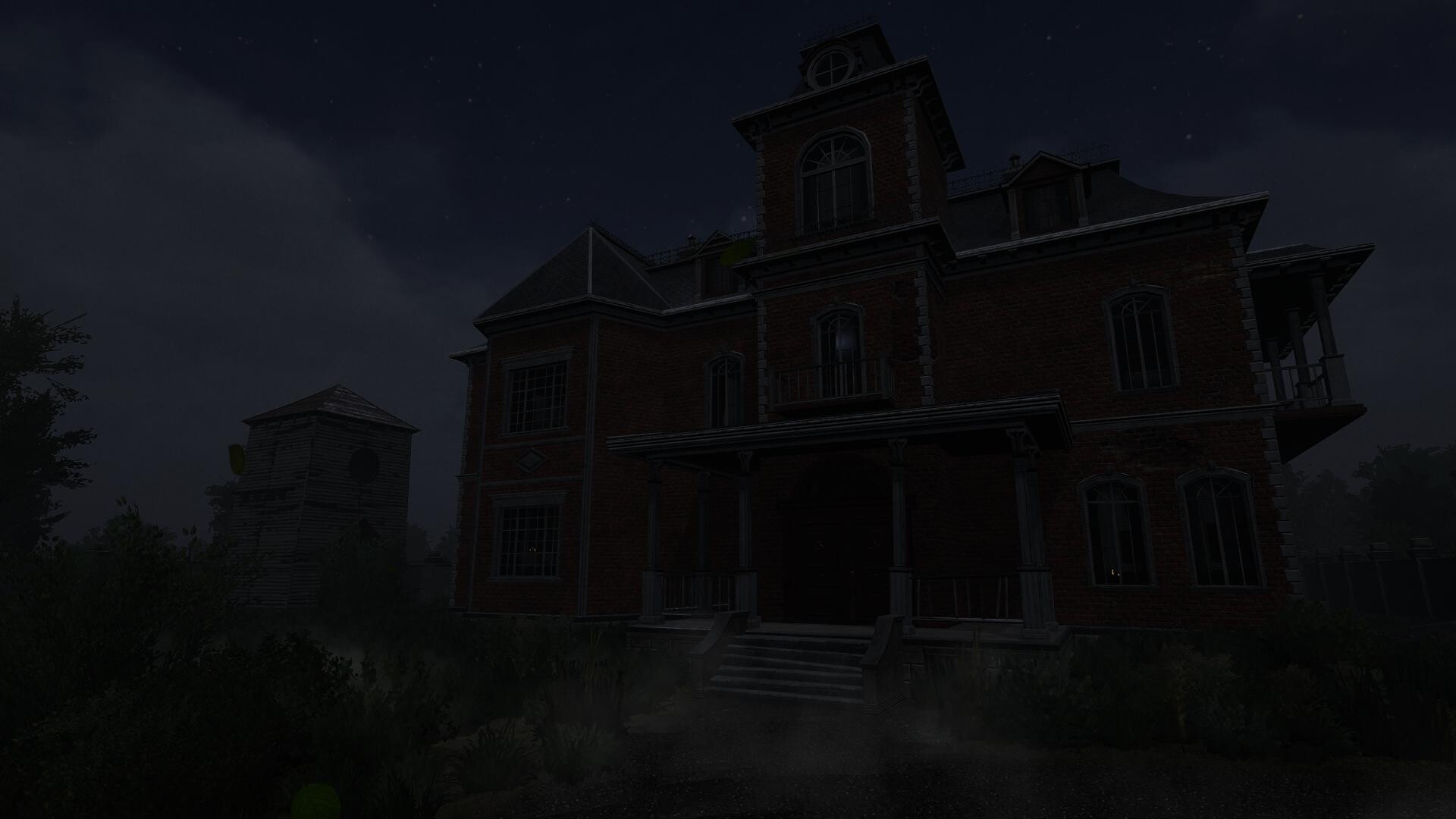
Trace of the Villa centers on Jin, a protagonist whose long search for a missing sister leads him to a cut-off, decaying mansion. According to the official Steam description, the house feels deliberately forgotten: furnished rooms, locked doors, personal items preserved but with no photographs or names — a setting that emphasizes identity erasure. When Jin restores power, the estate returns systems and reveals encrypted documents, safes, and transfer records that sketch a larger, concealed operation. The experience focuses on clue-driven exploration and narrative puzzle design rather than gaudy set pieces.
When and where
Trace of the Villa released on Steam on 28 May, 2026. It is available on PC via its Steam store page.
Why quiet tension and identity erasure matter
Games that emphasize unexplained spaces and missing identifiers convert what could be a one-note scare into a persistent unease. The absence of photos, names, or a paper trail is itself a puzzle: it reframes ordinary rooms as evidence of intention. Trace of the Villa’s premise—people moved through a place under strict control, arrivals without records, departures without witnesses—uses procedural absence to provoke questions. That kind of ambiguity forces players to infer motive, timeline, and scale, producing an investigative rhythm where dread grows from inference rather than spectacle.
How you play: reading the house
The official description outlines a progression built on restoration and discovery. Jin restores power, unlocks secured systems, and opens hidden compartments and safes that yield fragments—manifests, encrypted documents, suspicious transfer records. Players who like environmental puzzles and piecing together timelines will find the loop familiar: investigate rooms; follow tangible traces (manifests, safes, secured systems); solve puzzles that reveal another layer of concealment; reassess the map of suspects and movements. The payoff is narrative context more than a single reveal.

Player scenarios — does this fit you?
- Slow-burn atmospheric player: You enjoy lingering in rooms, cataloguing objects and letting a place unsettle you. The game’s emphasis on absence and staged domestic stillness will reward patience.
- Puzzle-first investigator: You like deciphering manifests, unlocking safes, and following a chain of documents to reconstruct events. The game’s unlocked systems and encrypted fragments offer steady puzzle progression.
- Narrative explorer: Your focus is on story tone and implied systems of control rather than action. The theme of identity erasure and missing records will appeal to you.
- Reflex horror seeker: If you want frequent jump scares and combat-driven encounters, this game’s description suggests it’s not optimized for that playstyle.
How it compares — calm dread vs. other psychological horror
Below is an editorial comparison focusing on atmosphere, puzzle emphasis, exploration style, and pacing. This is an editorial discovery aid, not a claim of superiority or endorsement.
| Title | Genre / Tone | Puzzle focus | Exploration style | Pacing | Player fit |
|---|---|---|---|---|---|
| Trace of the Villa | Action / Adventure / Indie — mansion mystery, identity erasure | Clue-driven puzzles, safes, encrypted documents | Slow, methodical room-to-room investigation | Slow-burn suspense built from omission | Players who prefer atmospheric, document-led investigations |
| Amnesia: The Dark Descent | Action / Adventure / Indie — immersion and dread | Puzzle and survival elements; environment-as-threat | First-person immersion with emergent fear moments | Steady escalation of tension with survival mechanics | Players who want immersion and dread mechanics |
| SOMA | Action / Adventure / Indie — sci-fi existential horror | Puzzle elements with strong narrative puzzles | Exploration in confined, atmospheric settings | Pacing favors contemplative narrative beats | Players interested in existential questions and atmosphere |
| Layers of Fear (2016) | Adventure / Indie — psychological, shifting mansion | Environmental puzzles tied to story chapters | Hallucinatory, changing spaces that alter routes | Uneven, chapter-based pacing leaning to psychological beats | Players who like surreal shifts in a Victorian-mansion setting |
| Poppy Playtime | Action / Adventure / Indie — horror-puzzle factory | Puzzle gadgets and spatial puzzles (GrabPack mechanics) | Linear factory exploration with mechanical puzzles | More set-piece puzzle moments with occasional chills | Players who prefer mechanical puzzles with occasional scares |
YouTube discovery
Search for trailers and gameplay footage via YouTube: Trace of the Villa — YouTube search results. This will help you judge visual tone and
Leave a Reply