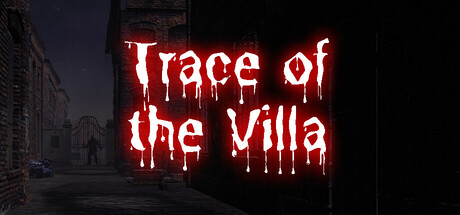
Trace of the Villa: why the slow burn of erased identities matters more than loud shocks
Trace of the Villa centers on absence—the feel of rooms that were never meant to be found and people whose names have been stripped away. Its approach trades jump scares for a creeping atmosphere of uncertainty, asking players to assemble meaning from gaps and locked drawers rather than from sudden shocks.

Who this is for
If you prefer atmospheric mystery adventure and psychological investigation over twitch reflexes, Trace of the Villa is aimed at you. The game’s Steam metadata lists it as Action, Adventure, Indie with single-player focus and accessibility touches (Color Alternatives, Custom Volume Controls, Playable without Timed Input, Subtitle Options). It suits players who enjoy slow-burn suspense, clue-driven exploration, and environmental storytelling rather than loud horror set pieces.
What the game is
Trace of the Villa follows Jin, who has spent years searching for his missing sister and traces a lead to a remote, decaying mansion. According to the official Steam description, the house “feels less abandoned than erased”: furnished rooms with no photographs or names, locked doors, and personal effects left mid-routine. When Jin restores power, secured systems come back online, hidden compartments unlock, and safes reveal fragments of encrypted documents and suspicious transfer records. The story that emerges points to falsified identities and movements masked behind fals, suggesting the mansion played a role in a larger, carefully concealed operation.
When and where
Trace of the Villa released on 28 May, 2026 on Steam. Developer and publisher are both listed as Steadyturtle Co., Ltd. The Steam appid is 3483660; you can view the store page directly at the Steam link below.
| Title | Trace of the Villa |
|---|---|
| Steam appid | 3483660 |
| Release date | 28 May, 2026 |
| Developer / Publisher | Steadyturtle Co., Ltd. |
| Genres | Action, Adventure, Indie |
| Notable categories | Single-player · Color Alternatives · Custom Volume Controls · Playable without Timed Input · Subtitle Options · Family Sharing |


Why the theme of unexplained spaces and identity erasure matters
Psychological horror that prioritizes uncertainty makes players partners in meaning-making. In Trace of the Villa, rooms without photographs or names are not accidental set-dressing; they are narrative pressure points. The absence of conventional anchors—family photos, official records, recognizable names—forces players to treat small objects, manifests, and encrypted scraps as testimony. That design choice elevates tension from momentary fright to sustained unease: the game’s “horror” comes from not knowing what a cleared wall or a missing ledger signifies and from the ethical ambiguity implied by falsified identities.
How you progress: reading gaps, restoring systems, unlocking timelines
The official description outlines a detective-like loop: restore power, re-enable systems, and follow what the house reveals. Secured systems coming back online and hidden compartments unlocking are explicit beats—puzzles and safes yield fragments that point to larger financial trails and falsifications. Progress here is less about combat or timed reactions and more about puzzle-solving, decrypting documents, and assembling a timeline from partial records. That means pacing is deliberate: each solved puzzle should recontextualize previous discoveries rather than simply trigger a set-piece.
Player scenarios — who should wishlist Trace of the Villa
- Players who like atmospheric mystery adventure and slow-burn suspense over reflex-based scares: the design centers on exploration and reading evidence.
- Fans of environmental storytelling and narrative puzzle design: the mansion’s state and available fragments form the primary narrative delivery.
- Players sensitive to sudden cinematic jump scares but happy with sustained unease: accessibility options (subtitles, playable without timed input) reduce stress around reflex challenges.
- Those who prefer single-player investigative experiences with a focused story arc: developer and publisher are Steadyturtle Co., Ltd., and the Steam listing emphasizes single-player presentation.
How Trace of the Villa compares to nearby psychological/horror titles
Below is an editorial comparison focused on genre, atmosphere, puzzle emphasis, exploration style, story tone, and pacing—intended to help readers decide which experience fits their taste.
| Title | Release | Atmosphere / Tone | Puzzle / Exploration focus | Pacing |
|---|---|---|---|---|
| Trace of the Villa | 28 May, 2026 | Decaying mansion, erased identities, investigative dread | Clue-driven: restored systems, safes, encrypted documents and manifests | Slow-burn, methodical |
| Amnesia: The Dark Descent | 8 Sep, 2010 | Immersive, intimate terror in a haunted setting | Exploration and survival-driven puzzles; heavy focus on immersion | Relentless tension with survival mechanics |
| SOMA | 21 Sep, 2015 | Sci-fi existential dread beneath the ocean | Exploratory puzzles tied to narrative and identity themes | Measured, narrative-heavy |
| Layers of Fear (2016) | 15 Feb, 2016 | Shifting Victorian mansion, surreal psychological horror | Environmental puzzles that feed a fracturing narrative | Unsettling, chapter-driven |
Leave a Reply